Based on the linked source; automatically prepared and checked against the original report.
Limits of Stay Put
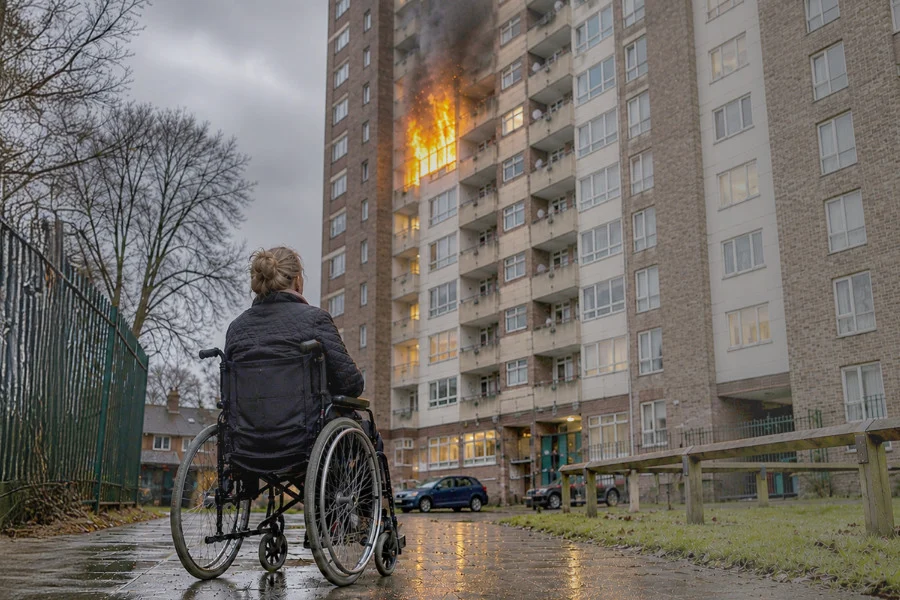
The company’s Beyond Stay Put white paper examines reliance on Stay Put, which advises residents unaffected by fire or smoke to remain in their flats. Evac+Chair argues that this approach needs building-specific alternatives if compartmentation fails, conditions worsen, or the strategy becomes unsafe.
RPEEP implementation concerns
The paper considers Residential Personal Emergency Evacuation Plans, introduced in April, which require identification and preparation for people who may need evacuation assistance. Evac+Chair reports a gap between understanding and application: most interviewed housing, property and care professionals rated their knowledge between five and seven out of ten, while one senior property manager rated confidence in applying obligations at two.
Practical barriers and care settings
The research identifies incomplete resident information, inconsistent assessments, building limitations, and uncertainty over responsibility, staffing, training and equipment. It warns that recording needs in an RPEEP is insufficient without practical support. Separate research cited by the company found 78% of care professionals considered Stay Put appropriate only sometimes or rarely for residents with mobility or cognitive impairments, while 79% believed its use in care homes should be reconsidered. Evac+Chair says plans should include trained staff and suitable equipment.