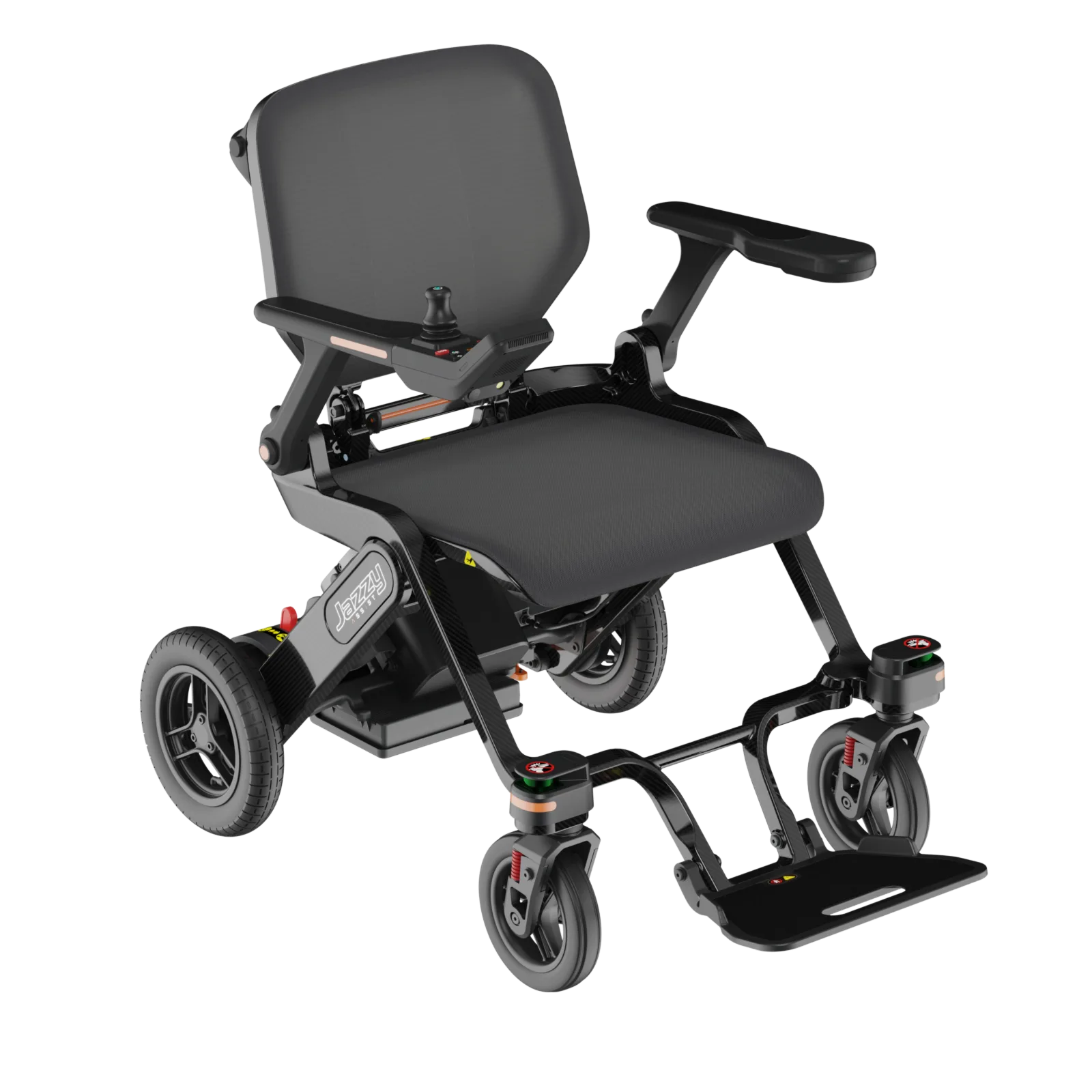
Manufacturer descriptions provide examples, not independent test results. Our questions are an editorial checklist, not confirmation of an undocumented function.
In brief
- Physical clearance and assistance are separate checks.
- Ask what the system actually changes.
- Keep user override and operating limits in the comparison.
A named function needs a named source
Pride’s UK Jazzy Assist page describes EZ-Pass turning assistance for confined approaches. This is a manufacturer description of a particular function, not an independent finding that every doorway can be negotiated.
Start with your route
Write down the opening, approach angle, threshold and space for turning on each side. Ask for a demonstration in a comparable space. Overall width and turning radius remain relevant even when a chair has an assisted function.
Understand what changes when assistance is active
Ask whether the system adjusts steering, changes speed, issues a warning or stops movement. Ask how it signals its status and how the user overrides or disables it. A camera view, a sensor alert and an intervention should be recorded separately.
Keep operating limits attached to the feature
Request the manual for the exact model, market and software version. Ask which surfaces, obstacles and environmental conditions are outside its documented scope. Do not interpret the presence of sensors as evidence of autonomous navigation or universal obstacle avoidance.