UK adaptive skiing. Lesson arrangements as published by Disability Snowsport UK and The Snow Centre, checked 2026-10-25; The Snow Centre page itself was bot-blocked on open, so its details rest on its indexed page summary plus the DSUK page.
In brief
- Sit-ski equipment is provided, so you do not need to buy before trying
- Arrive at least 30 minutes early for your first indoor lesson
- Check sit-ski availability before choosing a dry slope or resort
What sit-skiing is and who it suits
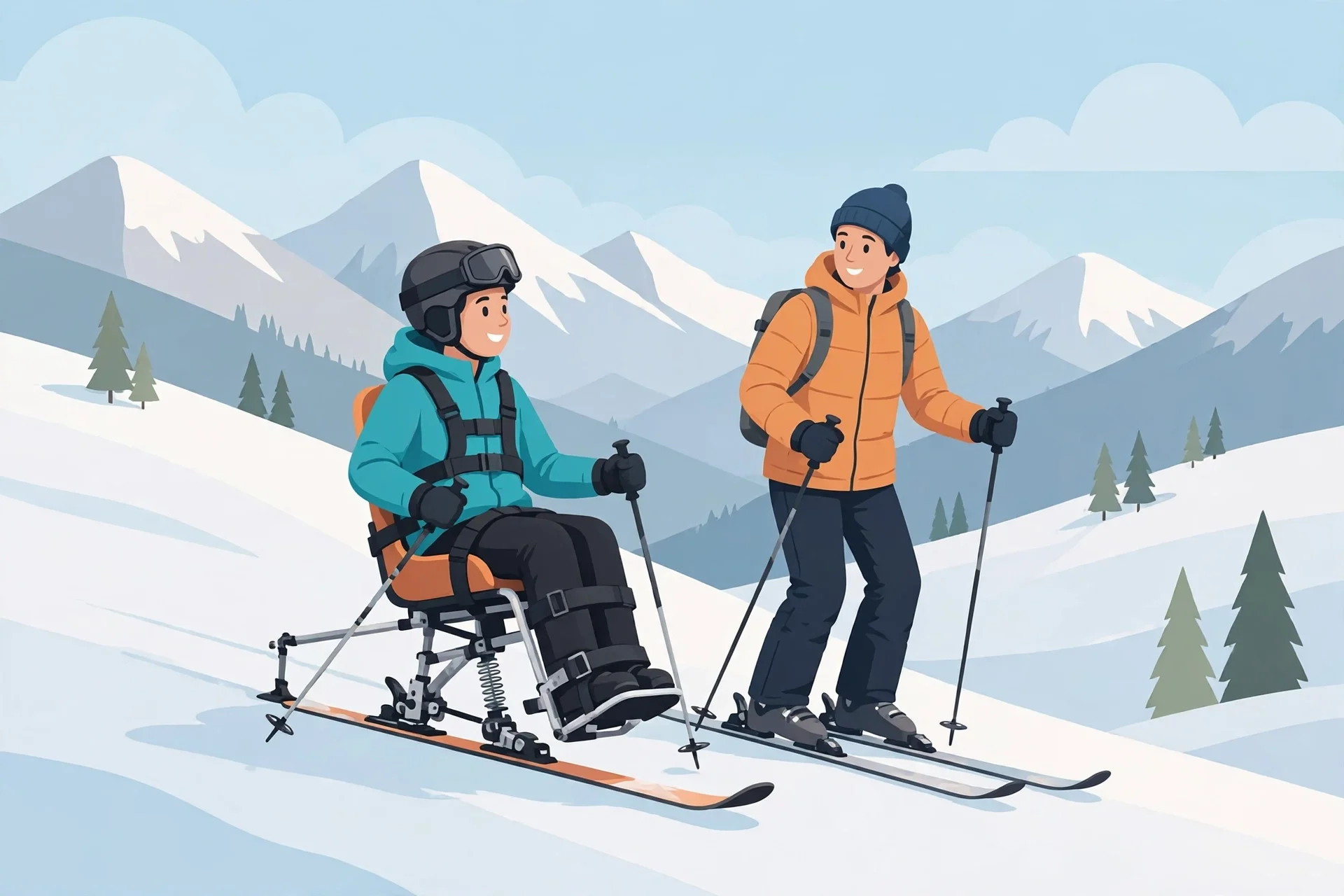
In sit-skiing, the skier sits in a bucket seat mounted on a single ski or a pair of skis, and uses outriggers, short poles with small skis on the end, for balance and turning. Disability Snowsport UK, the charity behind many UK adaptive ski schools, provides adaptive equipment for sit-skiers, so you do not need to buy a sit-ski to try a lesson. Helmets are included in lesson prices at its mountain school, and instructors work one to one or in small groups depending on your needs. Sit-skiing suits people who cannot stand on skis, including many wheelchair users, but the right setup depends on your trunk control, arm strength and any other conditions, so the instructor will assess you on the day and adjust the equipment.
Your first lesson: what actually happens
At an indoor centre such as Hemel Hempstead, Disability Snowsport UK advises arriving at least 30 minutes before the lesson to park, get changed, and meet your instructor at the adaptive snowsports meeting point. If you are sit-skiing, bring warm outdoor boots or borrow snowboard boots from the rental desk, and helmets are obligatory and available in the rental area. A larger changing room that accommodates a wheelchair is available at the Hemel Hempstead centre. Expect the first lesson to focus on balance, stopping, and short gentle runs rather than speed or distance. Tell the instructor about your chair, your transfer method, and anything that affects your comfort or safety, because the lesson plan is built around you.
Indoor slopes, dry slopes and mountain resorts
Indoor snow centres let you learn on real snow close to home, with predictable conditions and easy access to changing rooms and cafes. Dry slopes offer another local option, though not every slope can currently welcome sit-skiers, so check before you travel. Mountain resorts, such as Cairngorm Mountain in Scotland, offer the full winter experience, with group and individual lessons, but they need more planning: travel, accommodation, and lift access all have to be checked in advance. Disability Snowsport UK lists lessons at Glasgow Ski and Snowboard Centre, Bearsden Snowsports Club, Midlothian Snowsport Centre and Cairngorm Mountain, with recreational groups returning at Glenshee and Midlothian in the winter months. Book early for winter weekends, and ask about cancellation terms in case of poor snow.