
Policy announced by Air Canada on 2026-08-28 (company press release); latest detailed public summary published by Emerging Horizons on 2026-10-02. Applies to Air Canada flights; the complimentary Cargo transport covers travel within Canada only. Facts verified via web search on 2026-10-04 and cross-checked across multiple independent outlets (Emerging Horizons, TheTravel, Travel Radar, GlobeNewswire press release). Direct page fetch was unavailable due to a browser-service outage; both source URLs are confirmed real and were quoted verbatim inside the source material.
In brief
- Air Canada now lets passengers bring up to three mobility aids free of charge — wheelchairs, adaptive sports equipment, lifts, and transfer devices.
- Passengers can track their aid's loading and unloading status in the Air Canada app, and oversized aids ship free via Air Canada Cargo within Canada.
- The policy is Air Canada-specific: check other airlines' rules separately on multi-carrier itineraries.
What Changed in the Policy
Air Canada announced a new mobility aid travel policy on August 28, 2026, designed to make flying simpler and more predictable for customers who travel with mobility aids, including people taking part in adapted sports. The policy was described in detail in an October 2, 2026 report, which is the latest public summary of what the airline now offers.
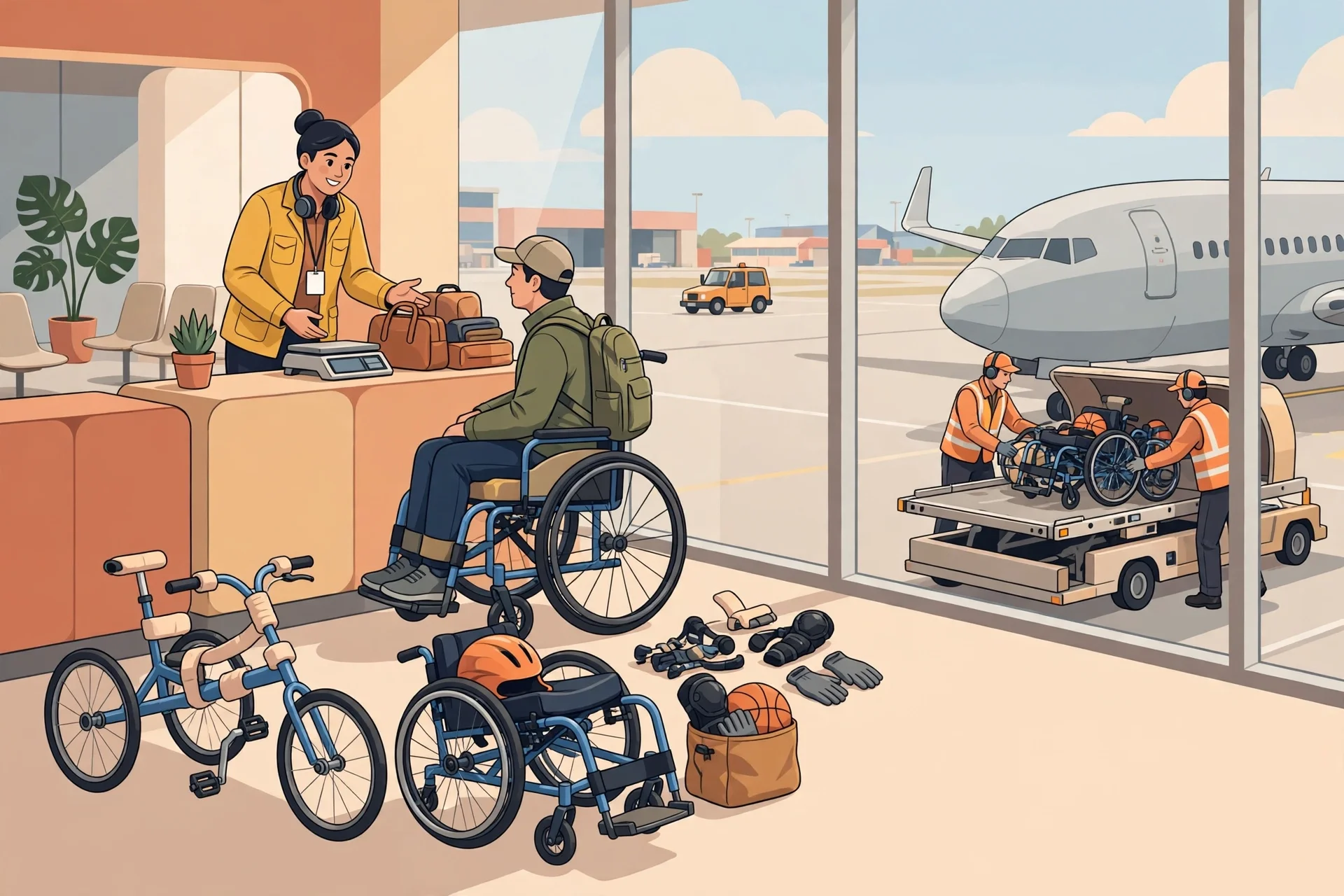
The headline change is a clear, published allowance: passengers may now travel free of charge with up to three mobility aids. That can be any combination of personal mobility aids, adaptive sports equipment, or personal and patient lifts and similar transfer devices. Examples covered under the policy include wheelchairs and walkers, adaptive sports equipment such as adaptive skis or handcycles, patient lifts, and other transfer devices.
Two other practical improvements come with the change. Passengers can follow the loading and unloading status of their mobility aid through the Air Canada app, which answers the anxious question every wheelchair user knows: where is my chair right now? And when an aid is too large to travel on the same aircraft as the customer, Air Canada Cargo will move it free of charge within Canada, so an oversized device does not have to hold up the whole trip.
Kerianne Wilson, Air Canada's Director of Customer Accessibility, said the policy is about giving customers more consistent choices, clearer expectations, and greater confidence when they travel with mobility equipment — and about listening to people with lived experience of disability as the airline keeps working on accessibility.
Why Three Aids Makes a Real Difference
For many wheelchair users, one chair is not enough for a full trip. A frequent traveler might need a everyday manual chair plus a sports chair for a competition, or a wheelchair plus a transfer device plus a shower chair for a longer stay. Previously, working out what could come along — and at what cost — was often a negotiation with unclear rules.
The new allowance explicitly covers work, leisure, and adapted sport travel. That last category matters: adaptive athletes and recreational travelers with disabilities can now bring a wheelchair alongside sports equipment like adaptive skis or a handcycle under one clear rule, instead of hoping each item gets approved at the counter.
The tracking feature tackles a different pain point. A wheelchair is not luggage; it is the passenger's legs. Being separated from it during a connection causes real distress, and visible loading status in the app gives people something concrete to rely on rather than a promise at check-in.
One important boundary to keep in mind: this is an Air Canada policy. It does not automatically apply to other airlines, and rules on partner or codeshare segments may differ. Travelers mixing airlines on one itinerary should check each carrier's mobility aid rules before booking.
What to Do Before You Fly
If you are planning a trip with Air Canada and mobility aids, a few steps will help you make the most of the new policy.
First, read the airline's official mobility aids and assistance page and note which of your devices fit the covered categories. If you travel with a powered device, confirm battery requirements with Air Canada in advance — powered mobility aids have their own handling rules that sit alongside this policy.
Second, tell the airline about your aids when you book or as early as possible, especially if any item is oversized or you plan to use the free in-Canada Cargo option for equipment that cannot fly in the same hold.
Third, download the Air Canada app before departure so you can use the aid-tracking feature during your journey, and keep the contact details for accessibility assistance handy in case a connection goes sideways.
Finally, it is still worth photographing your equipment before handing it over and checking its condition on arrival. The policy improves the rules of the journey, but a quick record of your chair's condition remains the simplest protection if anything goes wrong in transit.