Based on Changi Airport's published wheelchair and accessibility information and WHILL's September 2026 service announcement. Assistance policies can change; confirm with your airline before travel.
In brief
- Book airline wheelchair assistance at least 48 hours before departure and keep the reference number.
- Free self-service wheelchairs are available at Changi information counters, first-come first-served.
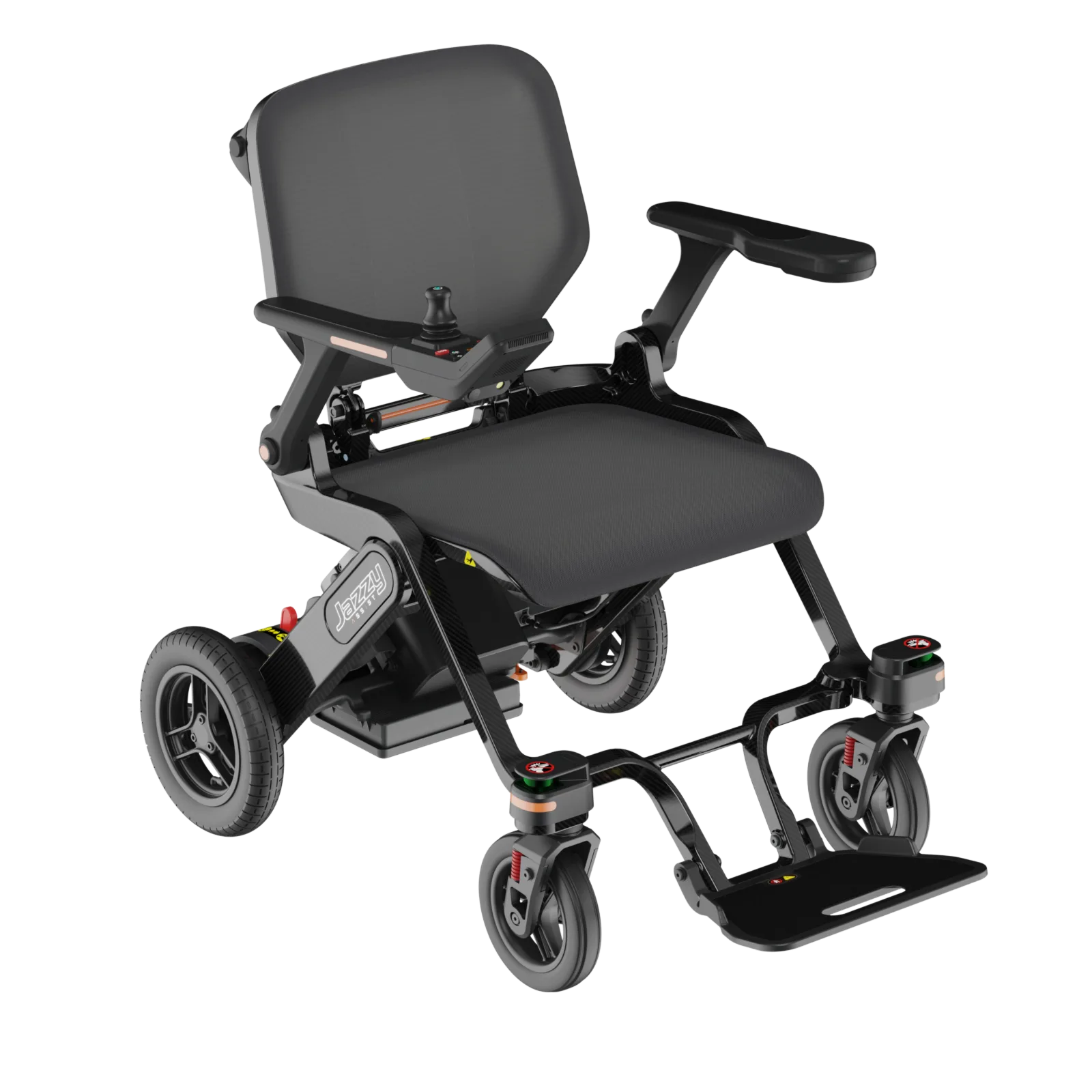
- WHILL autonomous wheelchairs now serve transit areas of Terminals 2 and 3 for independent riders.
Before you fly: book assistance with your airline
Airlines remain the primary provider of wheelchair assistance at Changi, and the airport recommends requesting it at least 48 hours before your flight — through the airline's website, app or customer service, and confirmed again before travel day. When you book, note the traveller's needs precisely: can they walk short distances, climb aircraft steps, or transfer independently? These details decide whether staff bring a wheelchair to check-in, to the gate or onto the aircraft. Changi also offers a paid concierge wheelchair service, which the airport likewise suggests booking about 48 hours ahead. Keep your airline's assistance reference number where the whole travel party can find it.
At the airport: your wheelchair options
Changi provides free self-service wheelchairs at information counters across the terminals, available on a first-come-first-served basis — useful as a backup if airline assistance is delayed, but not something to rely on at peak times. For transit passengers, there is a newer option: WHILL's autonomous wheelchairs operate in the transit areas of Terminals 2 and 3, following a rollout announced in September 2026, and they suit travellers who can board and ride independently between gates and lounges. If the person you are accompanying needs a pusher or cannot transfer alone, stick with the airline's staffed assistance rather than a self-service or autonomous option.
Travelling as the companion: practical tips
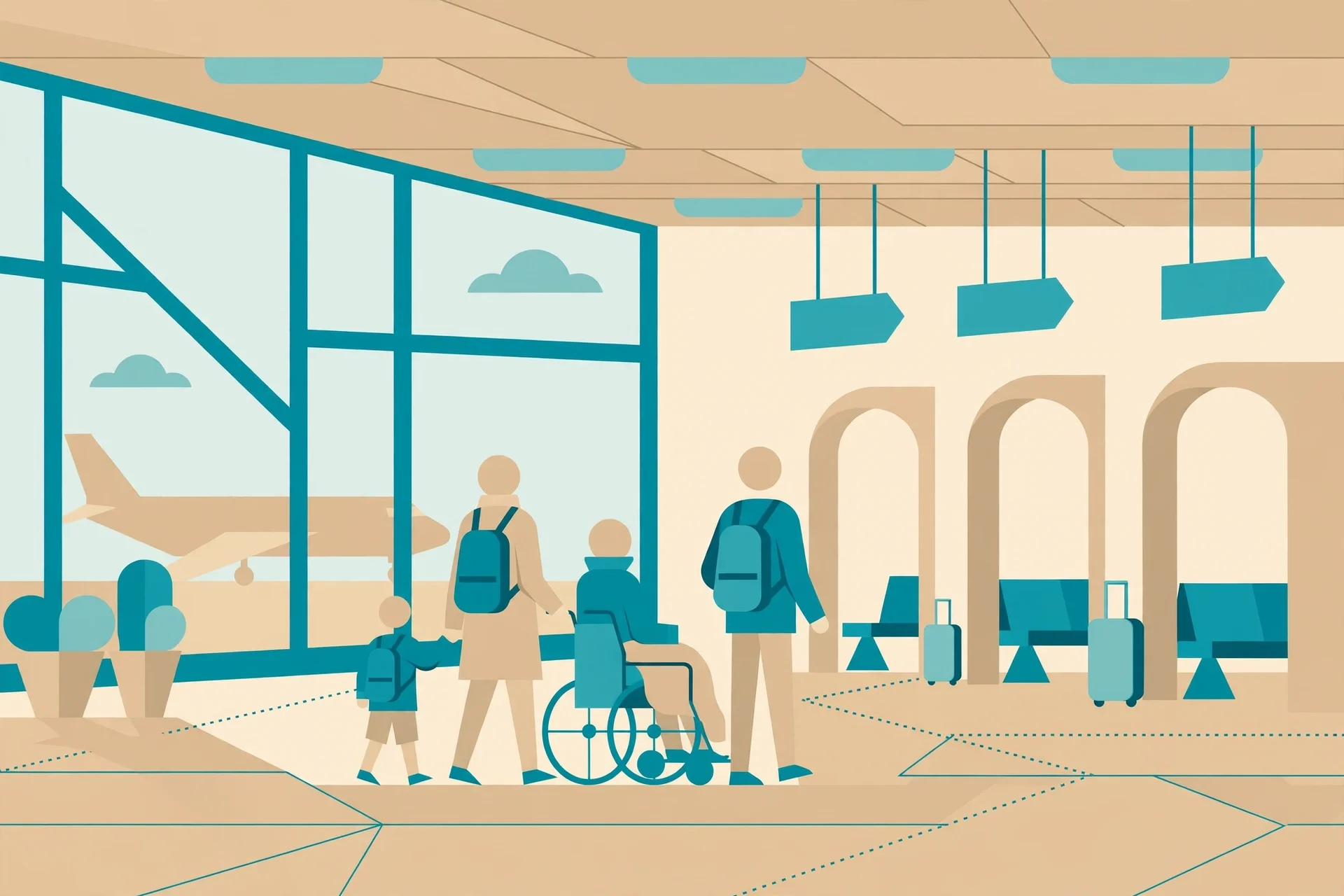
Stay with the traveller from check-in until the airline's assistance team takes over, and agree a clear handover point — especially for departures, where you may not be able to follow them through security. For arrivals, confirm where assistance ends: at the aircraft door, at baggage reclaim or at the arrivals hall. Bring any transfer aids the traveller normally uses, allow extra time for the slower pace of assisted boarding, and keep medication, documents and a phone charger in hand luggage rather than checked bags. If anything was arranged by phone, get it in writing — a booking reference or email confirmation avoids the most common assistance failures.