
Applies to Singapore Changi Airport (SIN), all four terminals, verified against the airport's official wheelchair page on 2026-10-09. IATA accessibility and battery-powered mobility aid guidance referenced as industry background.
Which wheelchair option should I book?
Changi offers three routes, and they suit different travellers. The airport itself provides complimentary self-assist wheelchairs across all four terminals. You can borrow one from an information counter in the departure hall, transit area or arrival hall, and there are wheelchairs at the concierge counters in Jewel Changi too. These are for airport use only and are handed out first-come, first-served — you can also reserve one ahead of your arrival through the airport's booking page. This option works well if you can self-propel or have a companion pushing. Your airline's wheelchair service is the second route and the one the airport recommends for travellers who need a trained attendant: book it through your airline or travel agent when you book your flight, at least 48 hours before departure. The third route is a paid concierge wheelchair service run by an airport partner, which assigns a dedicated assistant for your whole journey through the airport — book at least 48 hours ahead.
What does the airline wheelchair service actually include?
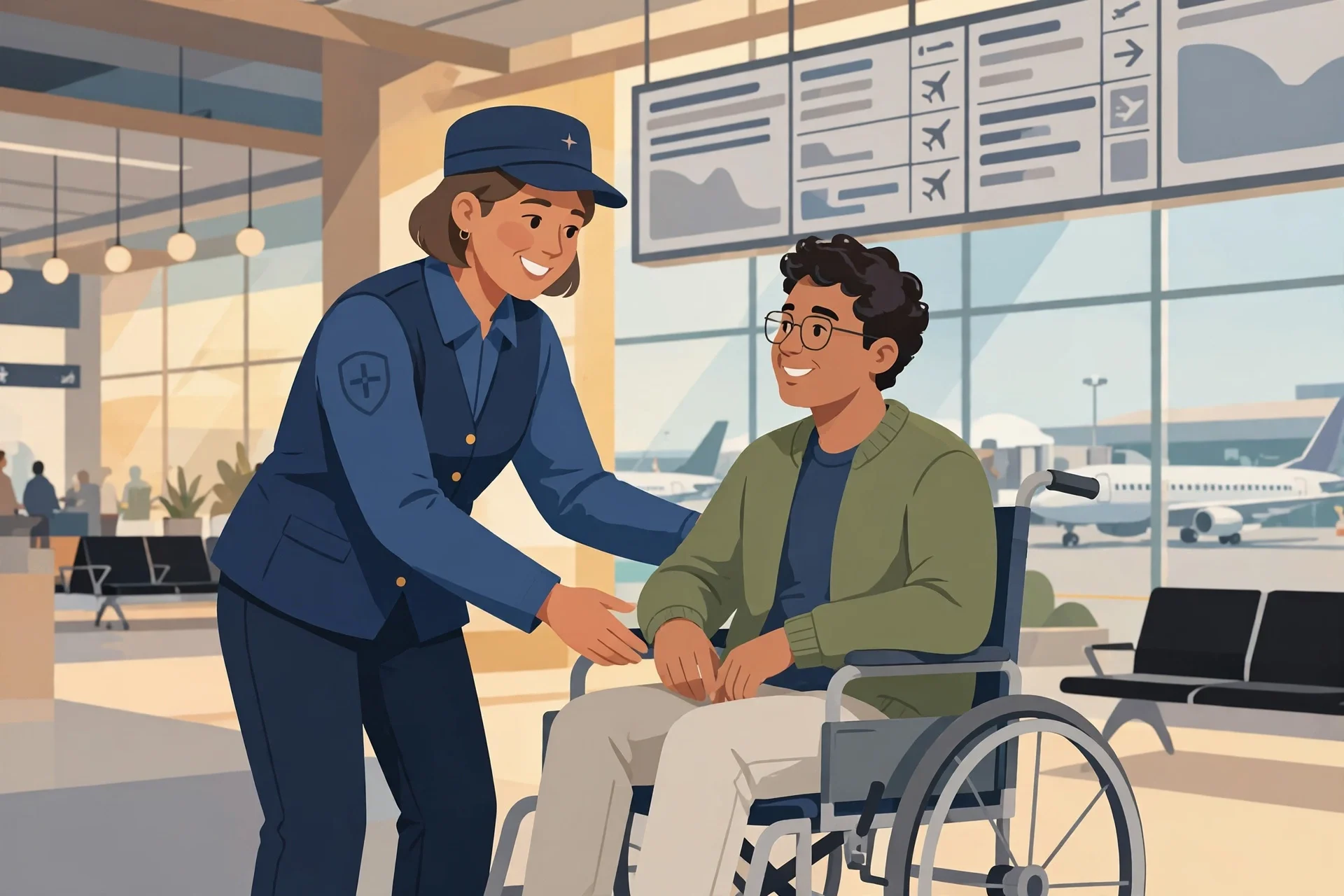
When you book airline wheelchair assistance, the airline arranges for staff to meet you and help you through the terminal — typically from check-in, through security and to the gate, and on arrival through immigration to baggage reclaim. Airline staff may ask whether you can walk short distances, which sounds blunt but is how they match the level of assistance to your needs. Two things travellers often get wrong: first, assistance is arranged by the airline, not by the airport, so a request to Changi's own channels does not guarantee airline assistance. Second, extra charges may apply depending on the airline, so check the airline's own accessibility page rather than assuming the service is free in every case. Requests made less than 48 hours before departure should go directly to the airline, and during busy periods some waiting time is possible.
What if I am flying with my own power wheelchair?
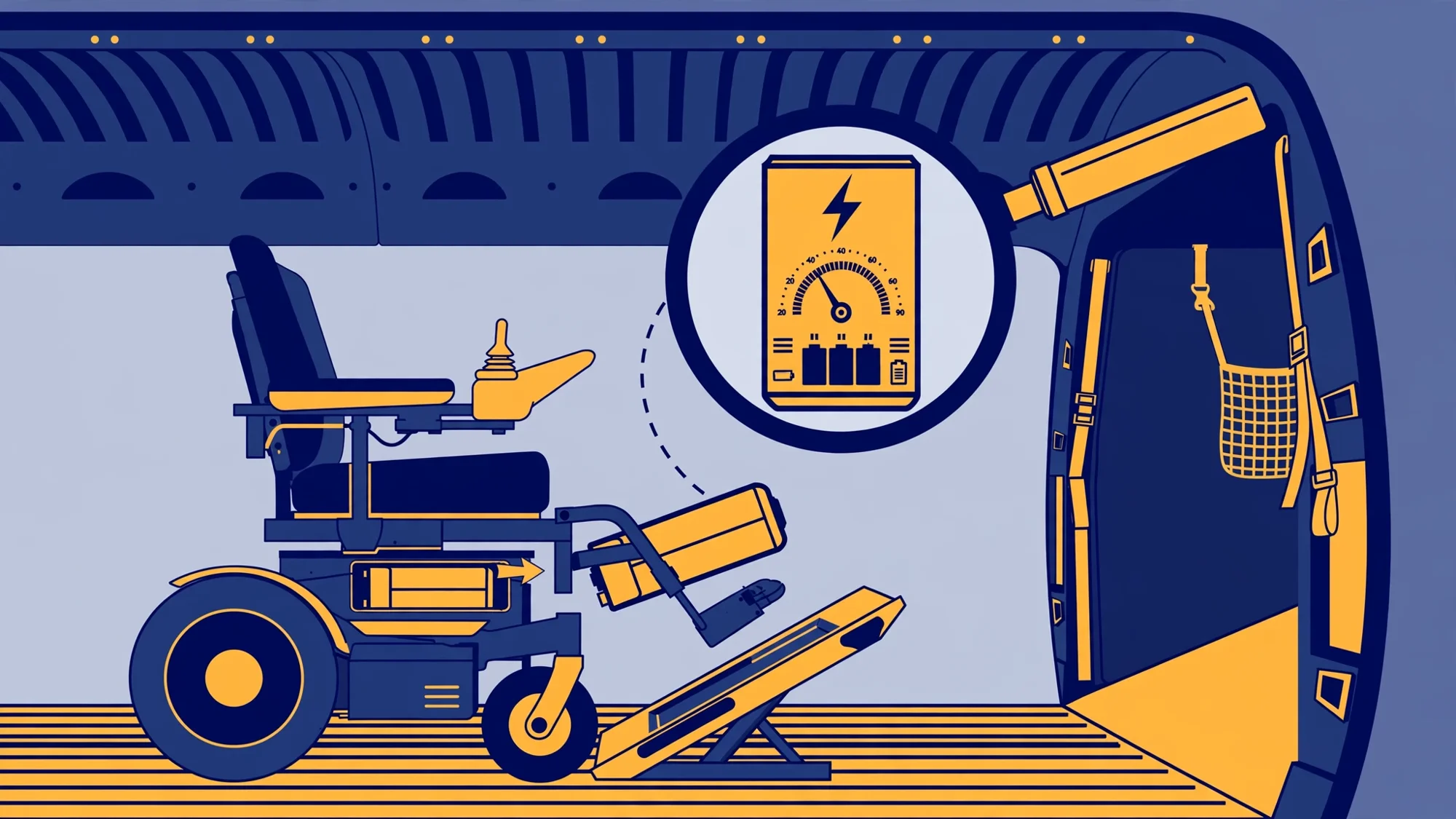
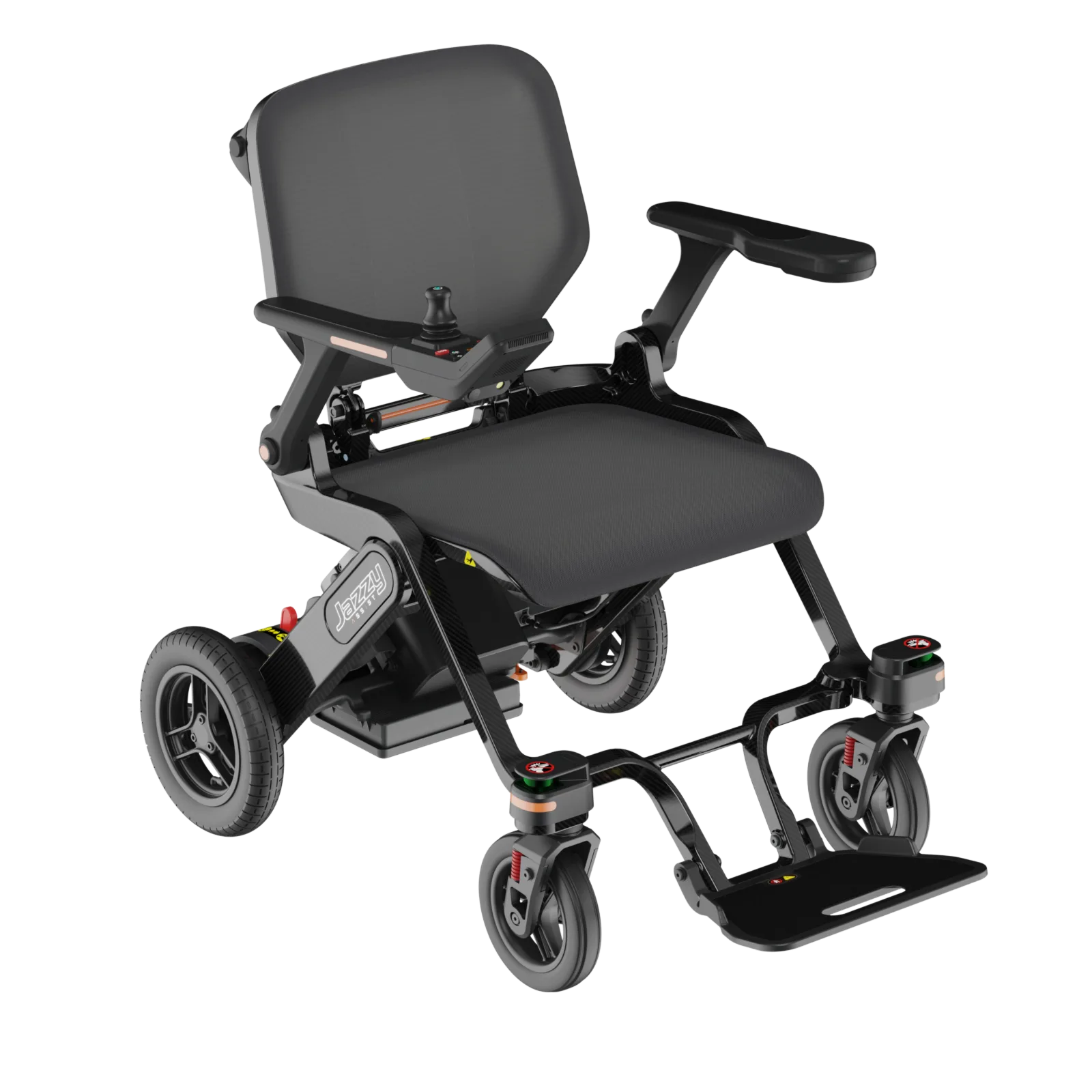
Your battery-powered wheelchair is handled under separate rules from passenger assistance. IATA publishes guidance for airlines on transporting battery-powered wheelchairs and mobility aids safely, which covers the information passengers need to give airlines so their chair can be accepted and loaded. In practice that means telling the airline in advance about your chair's battery type and weight, and checking its specific mobility-aid policy before you book. Changi's airport-provided wheelchairs cannot substitute for your own chair, and airline assistance staff will not carry your powered chair — so sort the transport arrangement with the airline first, then layer passenger assistance on top. If your battery type is one the airline cannot accept, no amount of on-the-day asking changes the outcome.
How early should I arrive, and what should I double-check?
Arrive earlier than the airline's standard recommendation, because assistance handover can add time — and self-identify to airline staff at the airport as the passenger who requested assistance even if the booking is notated, since staff cannot match a request to a person who never speaks up. A practical checklist: confirm your wheelchair request is visible on your booking before you travel; note the airline's 48-hour deadline; save the airport's information-counter locations for your terminal; and if you booked a loan wheelchair for arrival, confirm the pickup point in the arrival hall. Pre-notification is the single biggest factor in getting assistance that matches your needs — the same principle applies at Changi as at airports worldwide.