IATA 2027 manuals released 7 September 2026; rules take effect in 2027. US/ICAO baseline figures from aviation press, September-October 2026. Applies internationally; airlines and states may impose stricter variations.
What the 68th edition of the DGR changes
The 68th edition of the Dangerous Goods Regulations introduces clearer packaging instructions and new restrictions for spare batteries and power banks, and it adds operator obligations for lithium battery-powered mobility aids with batteries exceeding 300 watt-hours. It also folds in new State and Operator Variations, including variations from 17 states, which means individual countries and airlines can set stricter conditions on top of the baseline. The separate Battery Shipping Regulations go further for specialist cargo, adding provisions for hybrid batteries that combine lithium-ion and sodium-ion cells and revised packing instructions for sodium-ion and prototype batteries. These editions were released on September 7, 2026 and take effect in 2027. Until then, the current 2026 rules still govern what you can carry.
Power banks: the two-battery limit is coming
Some of the 2027 power-bank provisions formalise changes that were already emerging during 2026. After an ICAO addendum in March 2026, an IATA operator guidance document separated power banks from other spare batteries, limited passengers and crew to two power banks for personal use, and prohibited recharging a power bank in flight. The 68th-edition DGR taking effect in 2027 incorporates those changes into the formal rulebook. Note the nuance: IATA is an airline trade body, not a national regulator, but its guidance is a strong signal of what carriers may enforce at the gate. Current US rules and the ICAO 2026 addendum still allow a power bank over 100Wh through 160Wh with airline approval, while IATA's 2026 operator guidance already presents a 100Wh maximum ahead of the 2027 change. Always check the operating airline before travel, especially on international itineraries.
2026 vs 2027: what wheelchair users should compare
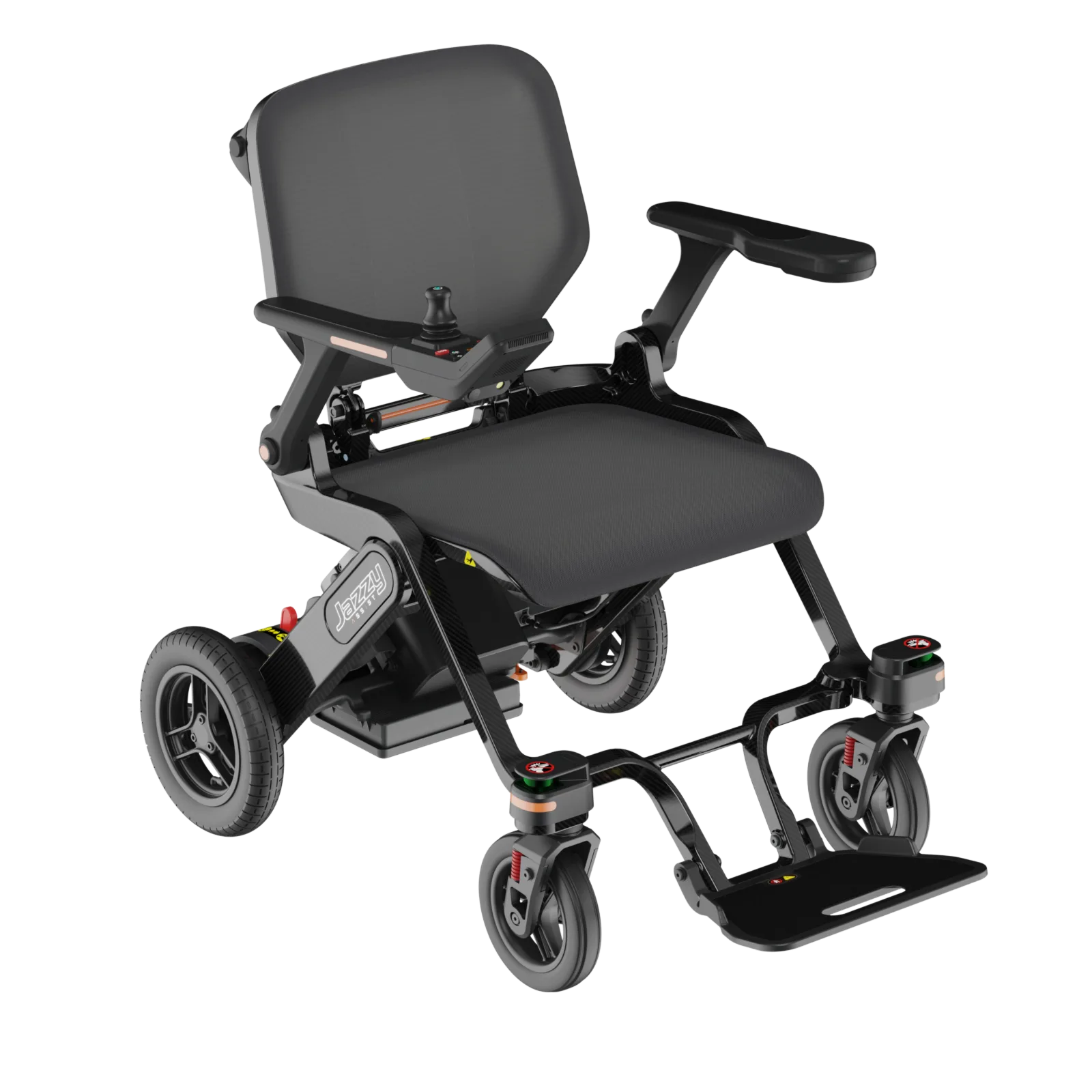
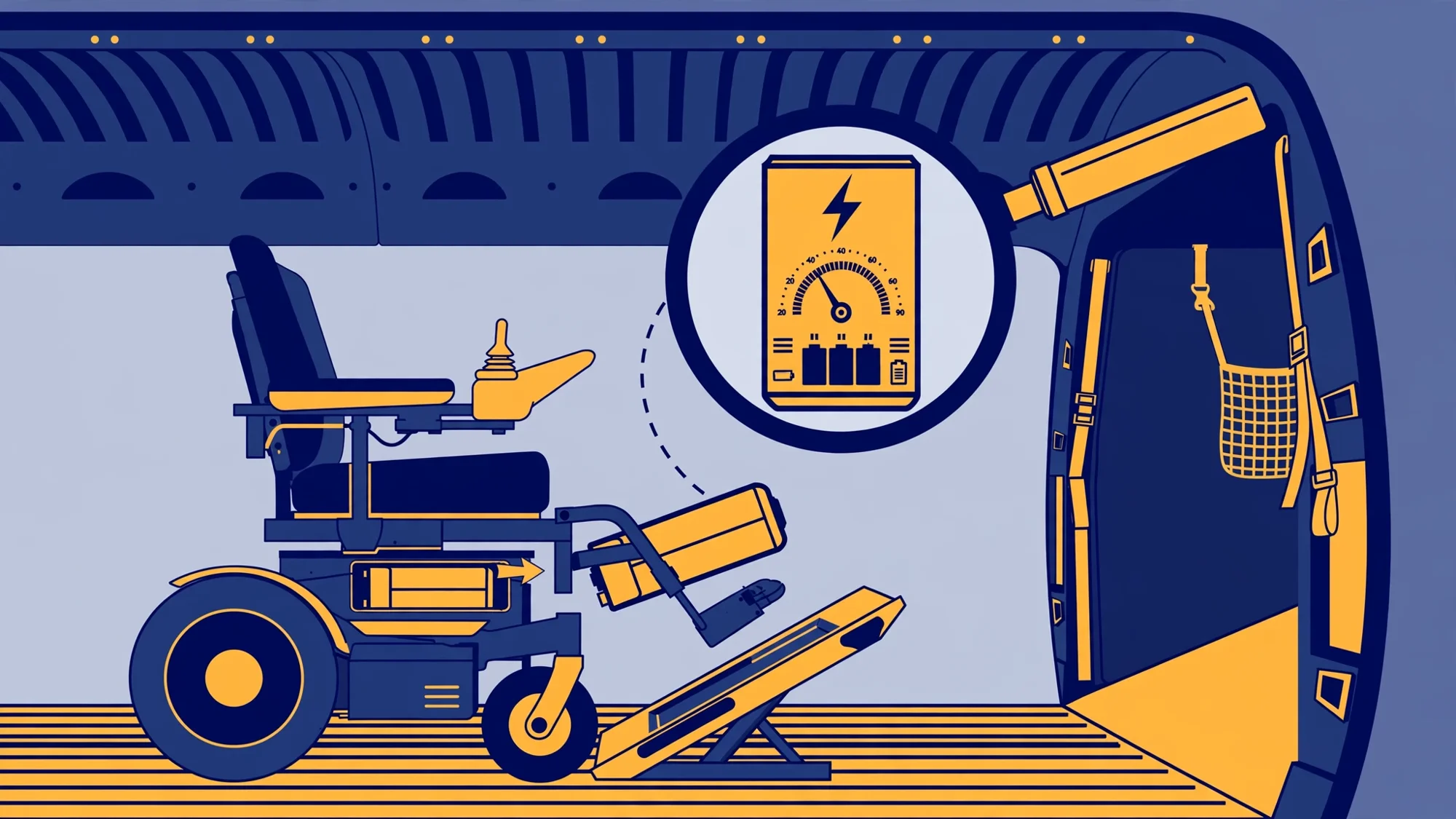
Under the rules in force through 2026, the familiar thresholds apply: a lithium-ion battery up to 100Wh needs no airline approval; a battery over 100Wh through 160Wh needs airline approval, with no more than two spares carried in the cabin; a battery over 160Wh falls outside the ordinary passenger-baggage exception, though mobility aids and some medical equipment have separate provisions. For battery-powered wheelchairs, the battery must meet UN testing requirements, the operator must secure the device against damage, and the battery is either left installed (if adequately protected by the chair's design) or removed following the manufacturer's instructions and carried in the cabin. In 2027, the new operator obligations for mobility aids over 300Wh add a compliance layer for airlines on the highest-capacity chairs. If your chair's battery exceeds 300Wh, expect your airline to ask for more documentation and to apply stricter loading procedures.
How to prepare your battery paperwork now
Whether you fly in late 2026 or in 2027, the same preparation pays off. Read the watt-hour rating from the battery label (volts multiplied by amp-hours, or milliamp-hours divided by 1,000 then multiplied by nominal voltage). Keep the manufacturer's instructions for removing the battery, because crew may ask you to demonstrate removal if the chair's design does not protect the battery adequately. Tell the airline about the battery size when you book, not at the gate. Bring instructions for isolating the electrical circuits. And if you carry spare batteries or power banks, remember the two-item limit and the ban on recharging them in flight. Airlines can be stricter than the IATA baseline, so the airline's own dangerous-goods page is the final word for your route.
The bigger picture: rules are going digital
The battery changes sit inside a wider shift. The 47th edition of the Airport Handling Manual adds guidance for biometric passenger processing and expands requirements for autonomous ground service equipment operating around aircraft. IATA is also embedding its standards into digital compliance tools, including automated checks for shipments and digital load verification that it says can cut loading errors by more than 80 percent. For passengers, the practical takeaway is narrower: battery rules for mobility aids are getting more detailed as chemistries diversify, and the direction of travel is toward stricter, better-documented handling. Keep your paperwork current and your battery's watt-hour rating memorised, and the 2027 changes should feel like an evolution rather than a surprise.