20 years of campaigning, and why it started
This year marks 20 years of campaigning by the Changing Places Toilet Consortium, which began in 2005 as a movement of disabled people, families, carers and supporters who knew standard accessible toilets were not enough. Over two decades the campaign has pushed accessibility up the agenda of developers, venues and government, and facilities now appear in hospitals, transport hubs, airports, railway stations, motorway service areas, shopping centres, visitor attractions, sports and leisure venues, schools and community buildings across the UK. Momentum accelerated in 2021: from January that year, rules in England made Changing Places provision compulsory in certain new, larger buildings, and the UK Government announced a £30m fund to install facilities in existing buildings, with councils invited to opt in. More than 2,000 facilities have now been installed, and the consortium says over 250,000 disabled people in the UK need this level of provision to get out and about.
What's inside a Changing Places toilet
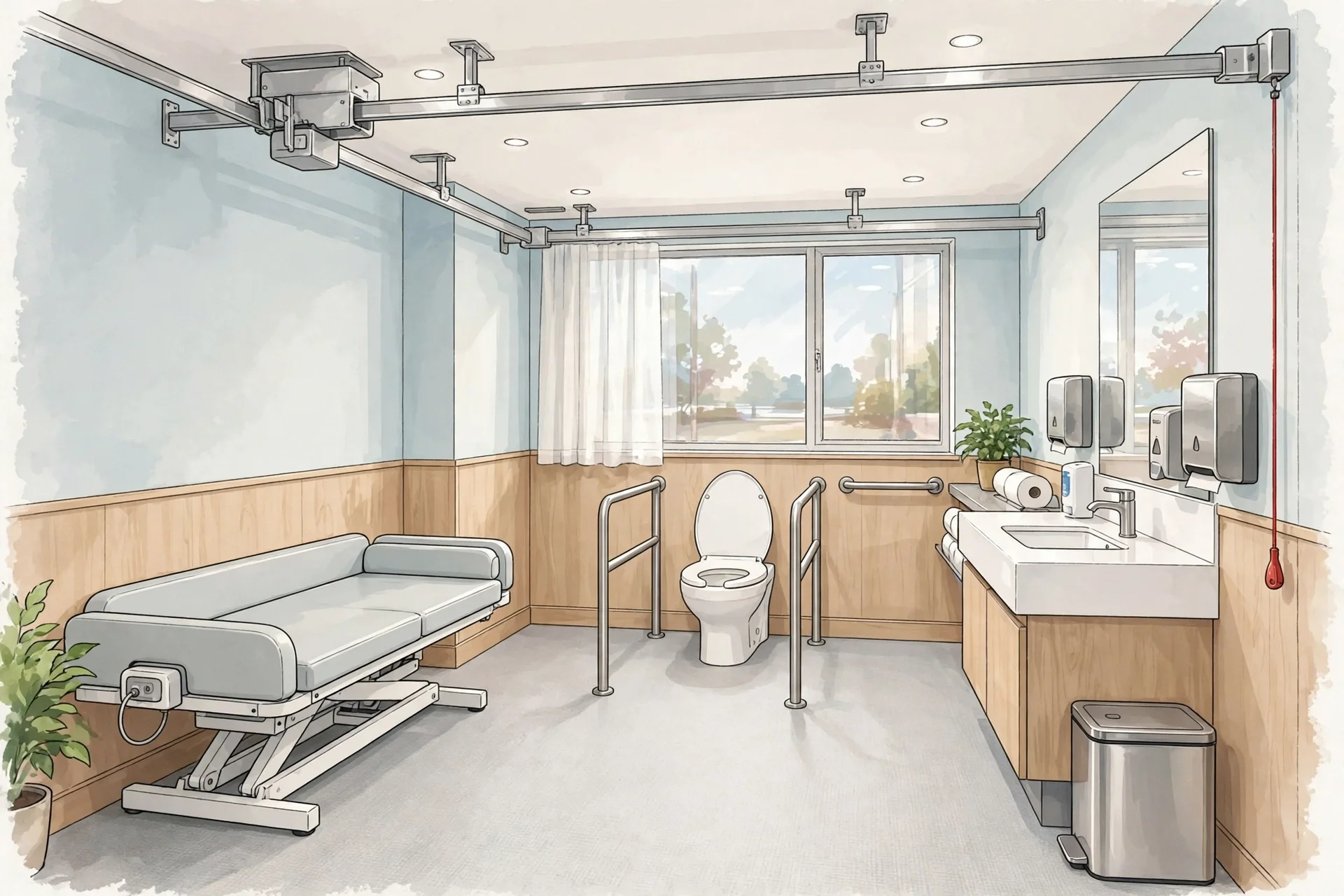
A Changing Places toilet is a larger accessible facility built around three pieces of equipment that standard accessible toilets do not have: a height-adjustable adult-sized changing bench, a ceiling track hoist, and a peninsular toilet with space for carers on either side. A privacy curtain, generous floor area and room for a wheelchair user plus up to two carers complete the picture. The key difference from a standard accessible toilet is simple: the standard version gives you grab rails and turning space, but no changing bench or hoist, and most are too small to accommodate more than one person. That is why, for people who need carer assistance to use the toilet or be changed, a standard accessible toilet is effectively unusable — and why the campaign describes these facilities as the difference between being able to leave home for the day or not.
Finding your nearest one before you travel
Planning a day out starts with the official locator map on the Changing Places website (changing-places.org/find_a_toilet), which lists registered facilities across the UK and lets you search by location. Facilities are managed by the venues that host them, so opening hours match the venue — a shopping centre unit is available during shopping hours, a leisure centre one during leisure hours — and it is worth checking access details before you travel. Motorway service areas are worth knowing about for longer journeys: dozens of services in England now have Changing Places toilets, though coverage is still patchy on some routes, so check the map before you set off. Some campaigners also use the Changing Places app to review facilities and report problems, which helps keep the map accurate.
Where the campaign goes next
The £30m fund announced in 2021 targeted existing buildings — leisure centres, cinemas, arts and tourism venues — while building regulations now require provision in many new builds. But the campaign's own anniversary message is honest about the gap: the true measure of success is not the number of installations but the barriers still removed, and thousands of venues still have no facility. Advocacy groups continue to press councils and developers, and venue operators are encouraged to register new facilities on the official map so people can find them. For wheelchair users and their families, the practical takeaway is worth repeating: before any day trip, conference or holiday, the Changing Places locator is the five-minute check that decides whether the destination is actually accessible.