Applies to High Wycombe station, England. The new gates are a pilot; the wider DfT rollout of taller barriers is a planned programme, not yet complete. Contactless pay-as-you-go on the new gates is still in testing.
What was unveiled at High Wycombe
Chiltern Railways unveiled the new gates at High Wycombe station on Friday 9 October 2026. Designed by Cubic Transportation Systems, the FEnX gates are the first of this next generation of gateline technology to open to the public anywhere in the UK, and they are now in use at the station.
The gates have been installed at both entrances serving platforms 1, 2 and 3, so the change affects the station's main passenger flows rather than a single side entrance. The launch event was attended by Chiltern's interim managing director Tony Baxter, Wycombe MP and Chief Secretary to the Treasury Emma Reynolds, and Cubic's managing director for Europe, the Middle East and Africa, Kevin Maslin.
The gates serve two purposes at once. First, they tackle fare evasion, which the operator says costs the railway millions of pounds each year, preventing reinvestment, driving up prices for paying passengers and undermining trust in the system. The FEnX gates combine a taller, stronger physical barrier with an intelligent detection system that can spot when someone tries to enter without paying, for example by tailgating or pushing through, giving staff better visibility of potential evasion.
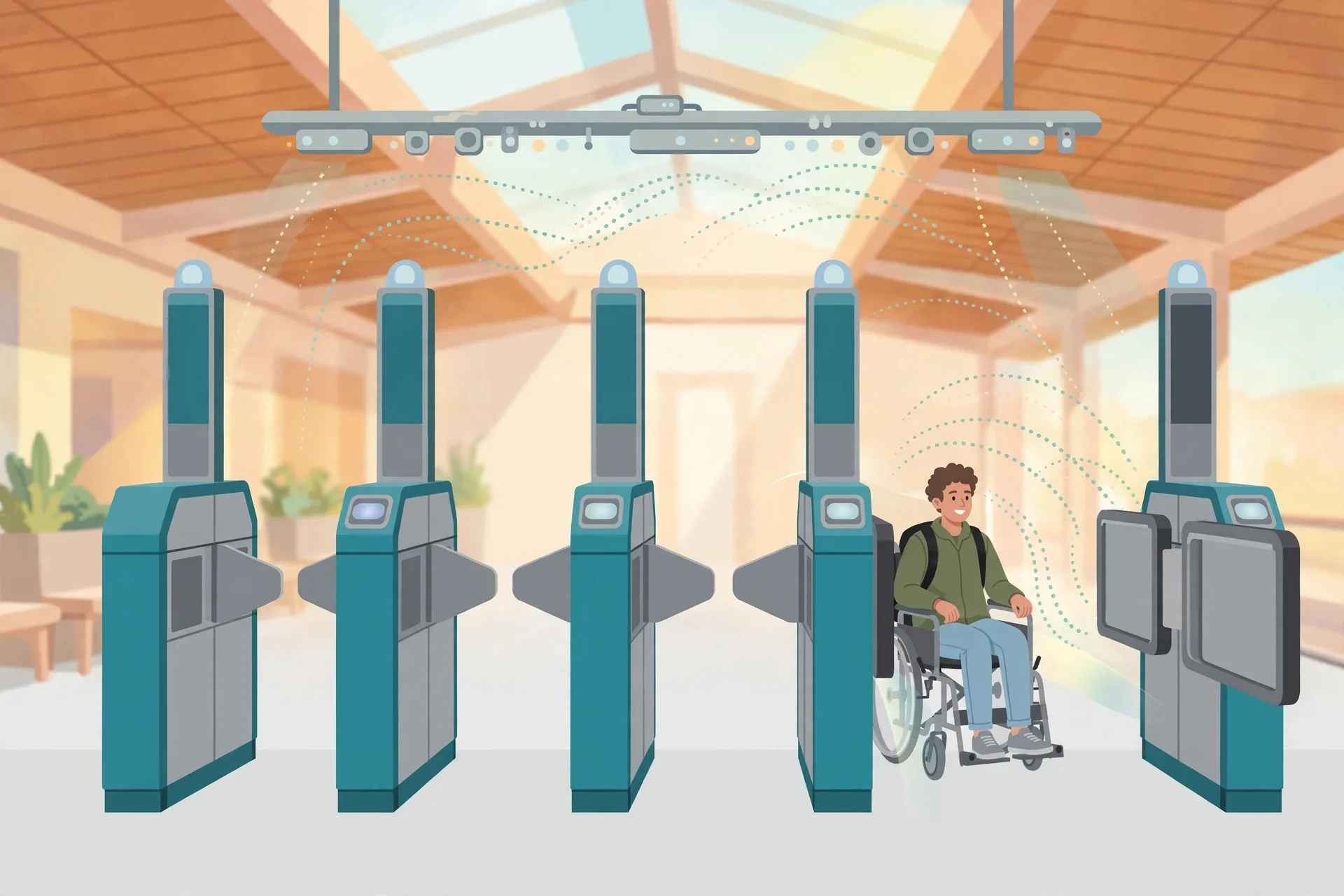
Second, and of most interest to disabled passengers, the gates are designed around accessibility from the ground up. Unlike a conventional barrier upgrade that simply makes the same old gates taller, the FEnX system reads how customers are moving through the gateline and responds to their mobility needs, which Chiltern says will make journeys quicker and easier for everyone.
How the gates help wheelchair users
For wheelchair users, the most important change is how the gates behave around people who move at a different pace. The sensors can recognise when someone needs more time and keep the gate open longer when appropriate. That matters at the gateline, where a standard barrier that snaps shut too early is one of the most stressful moments of a station journey for anyone using a wheelchair, a mobility scooter, or travelling with luggage or a pushchair.
The physical design removes another old barrier: ramps. Chiltern says that unlike the previous gates, the FEnX installation provides a completely flat surface for people with accessibility needs, with no ramps to negotiate. Rolling through on the level is safer and simpler, particularly for powered wheelchairs and scooters, where a ramp lip or gradient at the gateline can cause grounding or sudden changes in momentum.
Safety around the paddles themselves is handled by advanced sensors and computer vision. The system can change paddle speeds depending on what is happening at the gate, so the paddles close more slowly if the cameras detect a person stopped in the aisle. That reduces the risk of the barrier closing onto a wheelchair user who has paused, a small but genuinely meaningful safety improvement for anyone who has ever been caught by an impatient gate.
Emma Reynolds welcomed the gates partly on accessibility grounds, saying it was good news that they would improve the customer experience for passengers with disabilities. Kevin Maslin described the installation as an example of the shared ambition between Chiltern and Cubic to create a more accessible and modern railway network, and said the companies look forward to installing FEnX gates at many more stations across the UK.
What happens next: pay-as-you-go and the wider rollout
There are two caveats wheelchair users and contactless travellers should know about before changing their routine. First, pay-as-you-go contactless is not yet live on the new gates. The technology is still at a testing phase and will be available in the coming weeks; in the interim, passengers who travel using pay-as-you-go with contactless can use the card validators installed next to the gates.
Second, High Wycombe is a pilot, not a nationwide launch. The installation sits within a Department for Transport scheme worth £33.4 million aimed at combating fare evasion, and the programme plans to roll out taller barriers across the national network over the coming period. That means what you see at High Wycombe is a preview of what many commuters may eventually meet at their own stations, but the wider rollout is still a plan, and no dates for other stations have been announced.
For now, the practical picture is simple. If you use High Wycombe station and travel by wheelchair, the gates are already in use: roll through the wide lane, take your time, and the sensors should hold the gate open. If you are unsure about any part of your journey, Chiltern Railways' passenger assistance service remains the right route for arranging help. And if you travel regularly by rail and hold, or are thinking about, a Disabled Person's Railcard, the coming months may also bring more of these accessibility-focused upgrades to stations near you, worth watching as the DfT programme develops. We will keep this guide updated as the rollout reaches more stations and as contactless pay-as-you-go goes live on the new gates.