Guidance reflects IATA's 2026 passenger lithium-battery rules and Southwest's policy changes as reported in September 2025; individual airline policies differ and change, so verify with your carrier before each trip.
Folding Chairs: Easier to Fly With, With Limits
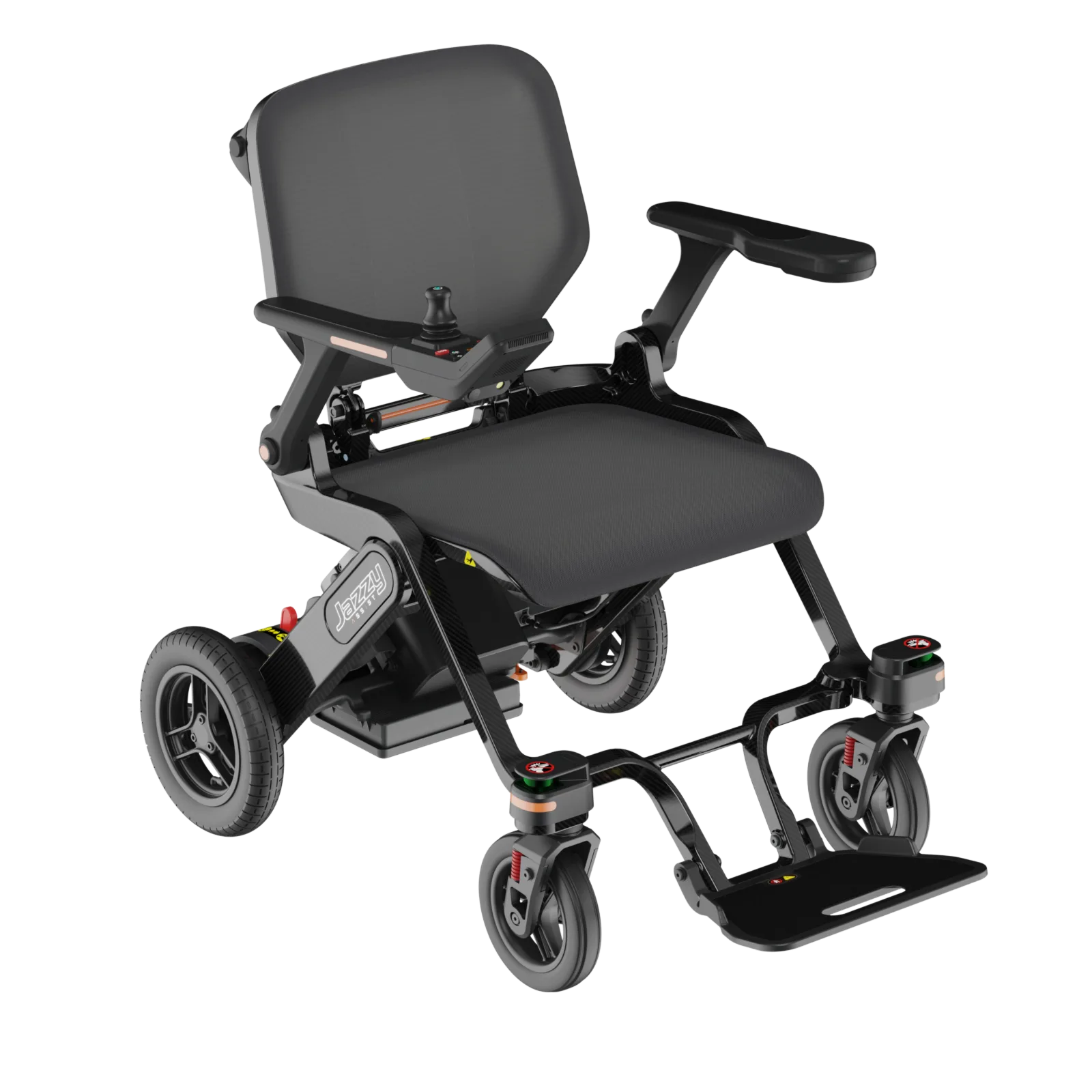
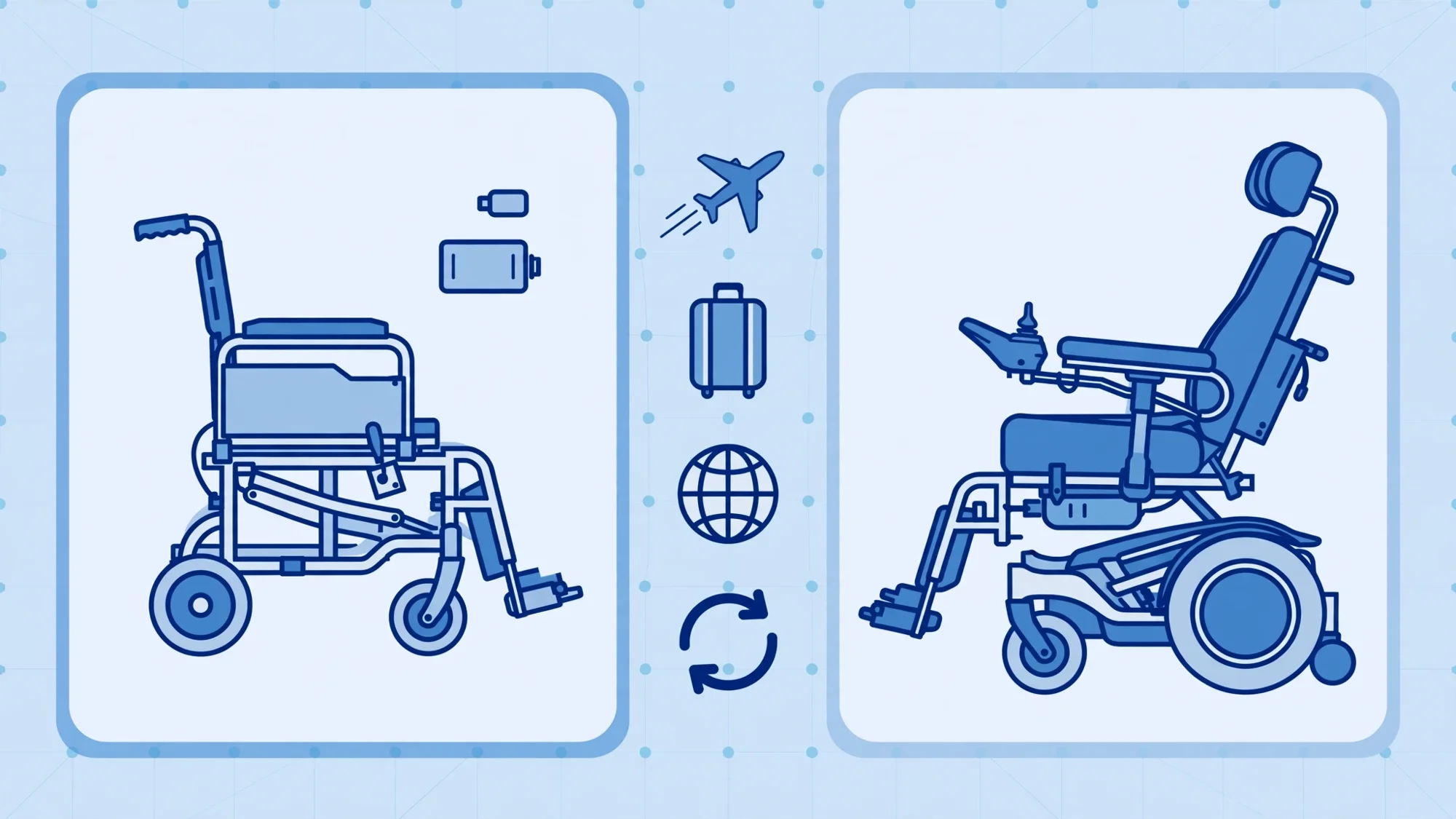
Folding power wheelchairs are the traveler's friend: they fold to a fraction of their size, which lowers the risk of damage and in some cases allows the chair to be carried into the cabin. The catch is performance — folding chairs typically have shorter driving range and simpler seating than full-size models. Battery design matters enormously. IATA's 2026 guidance for passengers travelling with lithium batteries says batteries of 100Wh or less generally need no airline approval, batteries between 100Wh and 160Wh need the operator's approval, and you can carry at most two spare batteries; batteries installed in the equipment itself follow the equipment rules. Many folding chairs use removable batteries in this range, which gives you flexibility — but you must still get approval where required, and airline rules vary, so confirm before you book.
Full-Size Chairs: Comfort That Travels in the Hold
Full-size power wheelchairs win on comfort: powered tilt, recline, and seat elevation that matter on long travel days and for pressure relief. The downside is they have to be checked into the hold, where they face a real risk of handling damage — the very thing wheelchair users report most at airports. Southwest illustrates how strict the rules can be: from September 2025 it requires lithium-powered wheelchairs to travel in the hold, with removable batteries carried in the cabin, while non-removable batteries must be disconnected and protected against short circuits; from January 2026 it caps a single battery at 300Wh, limits each battery in a dual-battery setup to 160Wh, and adjusts the spare-battery allowance accordingly, according to reporting by Paddle Your Own Kanoo. Always check your airline's specific wheelchair and battery policy before every trip, since carriers handle this differently.
A Decision Framework for Frequent Flyers
Start with flight frequency: if you fly monthly or more, the folding chair's lower damage risk and simpler battery logistics usually win, unless you need advanced seating. Next, ask whether you genuinely need tilt, recline or elevation — if pressure management or posture support is non-negotiable, a full-size chair may be worth the risk of hold travel, paired with extra precautions. Third, check the battery: removable batteries that fit within IATA's 100–160Wh approval framework give you more options across airlines. Finally, prepare a handover routine for check-in: photograph the chair from all angles, document its condition, switch it off, secure loose parts, and give handlers a written checklist. Airlines differ and policies change, so verify your carrier's wheelchair and battery rules before every flight — never assume one airline's rules apply to another.