Skip to content
HomeNewsair travel
News / AIR TRAVEL

ICAO Unveils New Global Accessibility Strategy for Air Travel

The UN aviation agency ICAO has unveiled a new global accessibility strategy for air travel, announced at a joint ICAO/ACI/IATA symposium in Montreal on 14–15 October 2026. Backed by a 2025 ICAO Assembly resolution and due for Council approval in January 2027, it is the first worldwide framework aimed at making the whole air journey accessible — including for travellers with non-visible disabilities.

ICAO Unveils New Global Accessibility Strategy for Air Travel

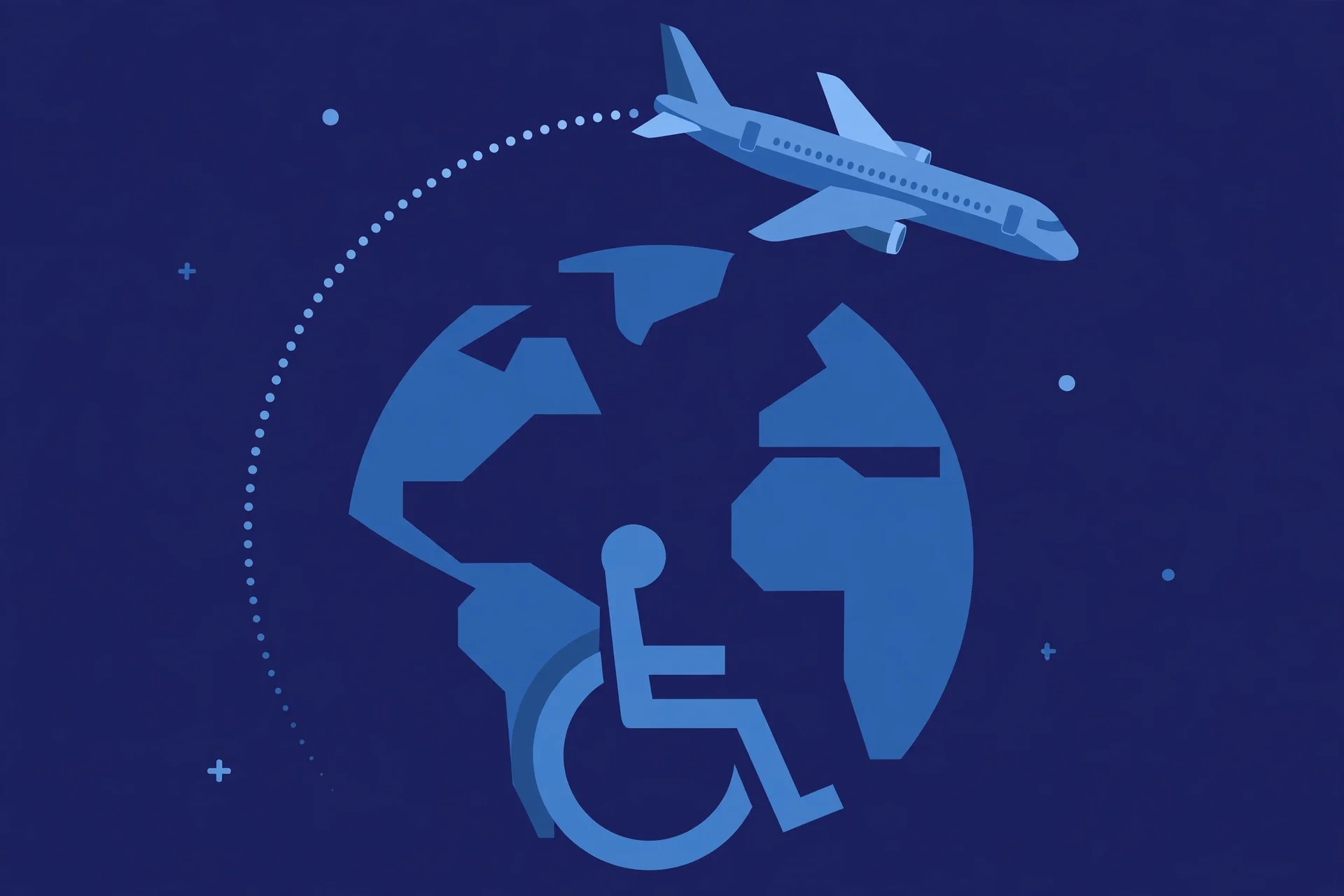
Illustration of a passenger aircraft flying over a stylised globe with an accessibility symbol.

Global ICAO framework; national rules (US DOT, EU, UK CAA) continue to apply until transposed. Strategy pending ICAO Council approval expected January 2027.

What was announced

ICAO used its second joint symposium on accessibility in international civil aviation — co-hosted with Airports Council International (ACI) and IATA in Montreal on 14–15 October 2026 under the theme of advancing a global commitment to inclusive, accessible air transport — to unveil a new accessibility strategy. According to ICAO's own news report, published 20 October, the strategy is the product of governments and industry working together, and it responds to a stark figure from the World Health Organization: roughly one in six people worldwide, about 1.3 billion, live with significant disability. The formal mandate comes from Resolution A42-14, adopted at the ICAO Assembly in 2025, and the ICAO Council is expected to approve the strategy in January 2027.

What the strategy covers

Two design choices stand out. First, the strategy addresses the "entire journey" — not just the flight, but booking, airport navigation, boarding, connections and arrival. Second, it explicitly includes passengers with non-visible disabilities and neurodivergent travellers, groups that existing assistance systems often handle poorly because their needs are not obvious to staff. Session recordings from the symposium are available on ICAO TV for anyone who wants the detail behind the headlines. As with any ICAO framework, the strategy sets global direction; the binding rules will follow through national regulations and airline implementation, so the practical effects will phase in over time rather than arriving all at once.

What it means for wheelchair users

For wheelchair users, the significance is structural: until now, accessibility in aviation has been governed by a patchwork of national rules — the US DOT's disability regulations, the EU's passenger-rights framework, the UK's CAA guidance — with no single global baseline. An ICAO-level strategy creates a reference point that national regulators and airlines can align to, which matters most on international itineraries where you cross between regulatory regimes mid-journey. Watch for three milestones: Council approval expected in January 2027, subsequent guidance material from ICAO, and then national consultations as countries transpose the framework into domestic rules. None of this changes your next flight, but it is the mechanism by which boarding, seating and assistance standards could eventually converge worldwide.

Sources & further reading

Governments and industry working together to improve air travel for persons with disabilities – ICAO (Uniting Aviation)ICAO/ACI/IATA Symposium on Accessibility in International Civil Aviation – ACI World

Our editorial approach

CONTINUE EXPLORING

A little more useful reading.

Dubai Airport Trials Self-Driving Wheelchairs for Faster Gate TransfersNEWS

Dubai Airport Trials Self-Driving Wheelchairs for Faster Gate Transfers

Airport services company dnata has begun trialling a self-driving wheelchair at Dubai International's Terminal 1 D concourse: the chair uses four LiDAR cameras to carry passengers from the lounge to the boarding gate, with manual override available at any moment. dnata describes it as a potential future service with no confirmed launch date, and says the trial could expand to Terminal 3. The announcement came with new hardware — three ambulifts, 24 custom-built accessible shuttle buses and stackable power wheelchairs — and new figures on the scale of dnata's accessibility operation.

Read the story
Emirates Unveils New Accessible Travel Concepts at AccessAbilities Expo 2026NEWS

Emirates Unveils New Accessible Travel Concepts at AccessAbilities Expo 2026

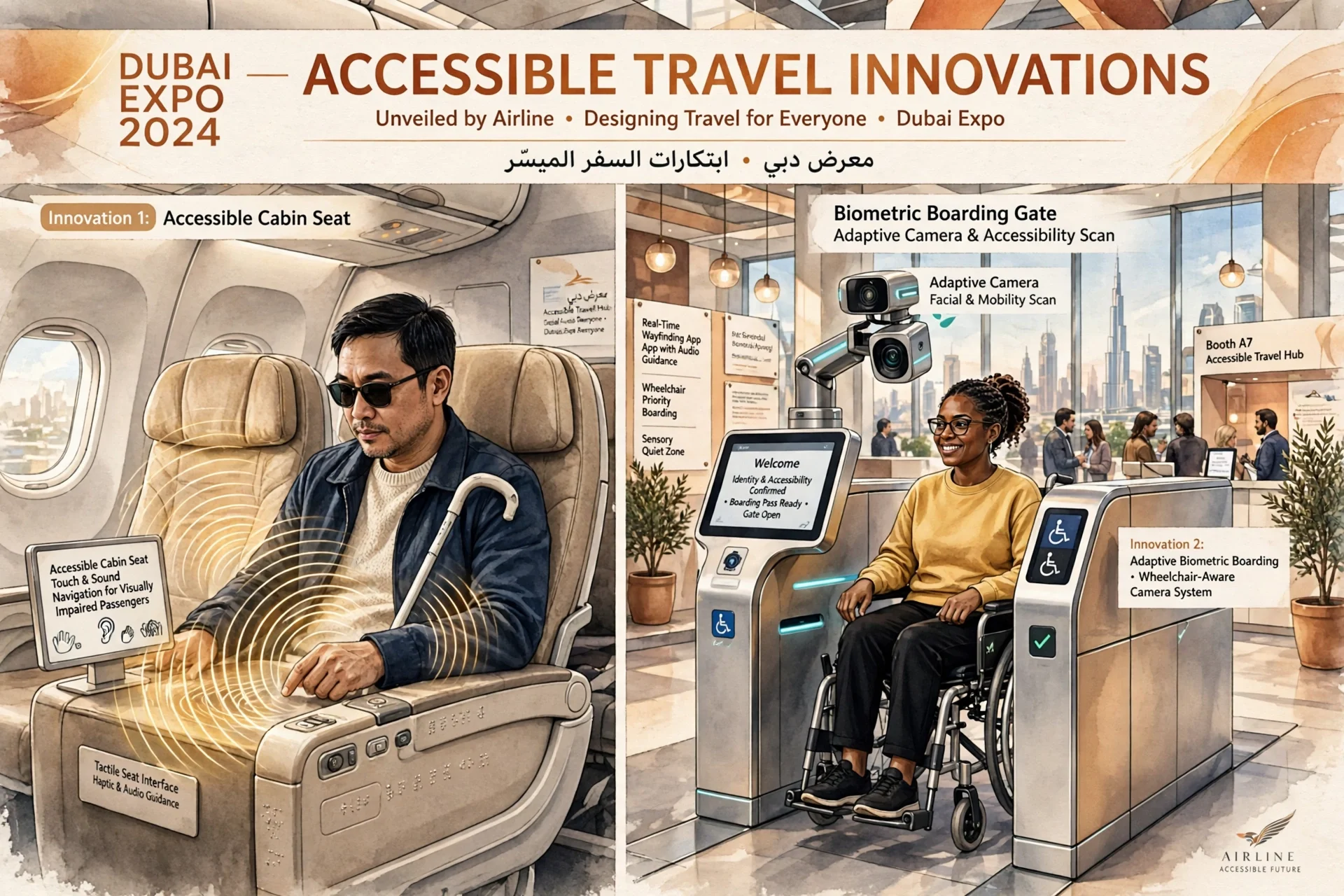
At AccessAbilities Expo 2026 in Dubai (19–21 October), Emirates presented three accessibility concepts still in development: a cabin familiarisation experience for blind and low-vision passengers, an accessible lounge suite with a powered lift-and-swivel seat, and a height-adaptive biometric boarding gate. The airline also confirmed upgraded self-service kiosks at Dubai Terminal 3 and said its autism travel rehearsal programme has now run 80 sessions across six continents, benefiting more than 400 families.

Read the story
Airport Lounge Access for Wheelchair Users: A Practical GuideGUIDES

Airport Lounge Access for Wheelchair Users: A Practical Guide

Wheelchair users can generally use airport lounges, but getting in depends on the lounge's own entry rules, while moving around inside depends on that lounge's layout. At airports like London Heathrow, the official passenger-assistance team can escort you to the lounge when you book help at least 48 hours ahead. This guide explains which lounges welcome wheelchairs, how to arrange the escort, and what to check before you book.

Read the guide