Intervals and checklists verified 2026-10-07 against the University of Washington SCI manual wheelchair maintenance checklist and Motion Composites' manufacturer maintenance schedule. Always defer to your own chair's owner manual for model-specific figures.
Weekly: the five-minute habit
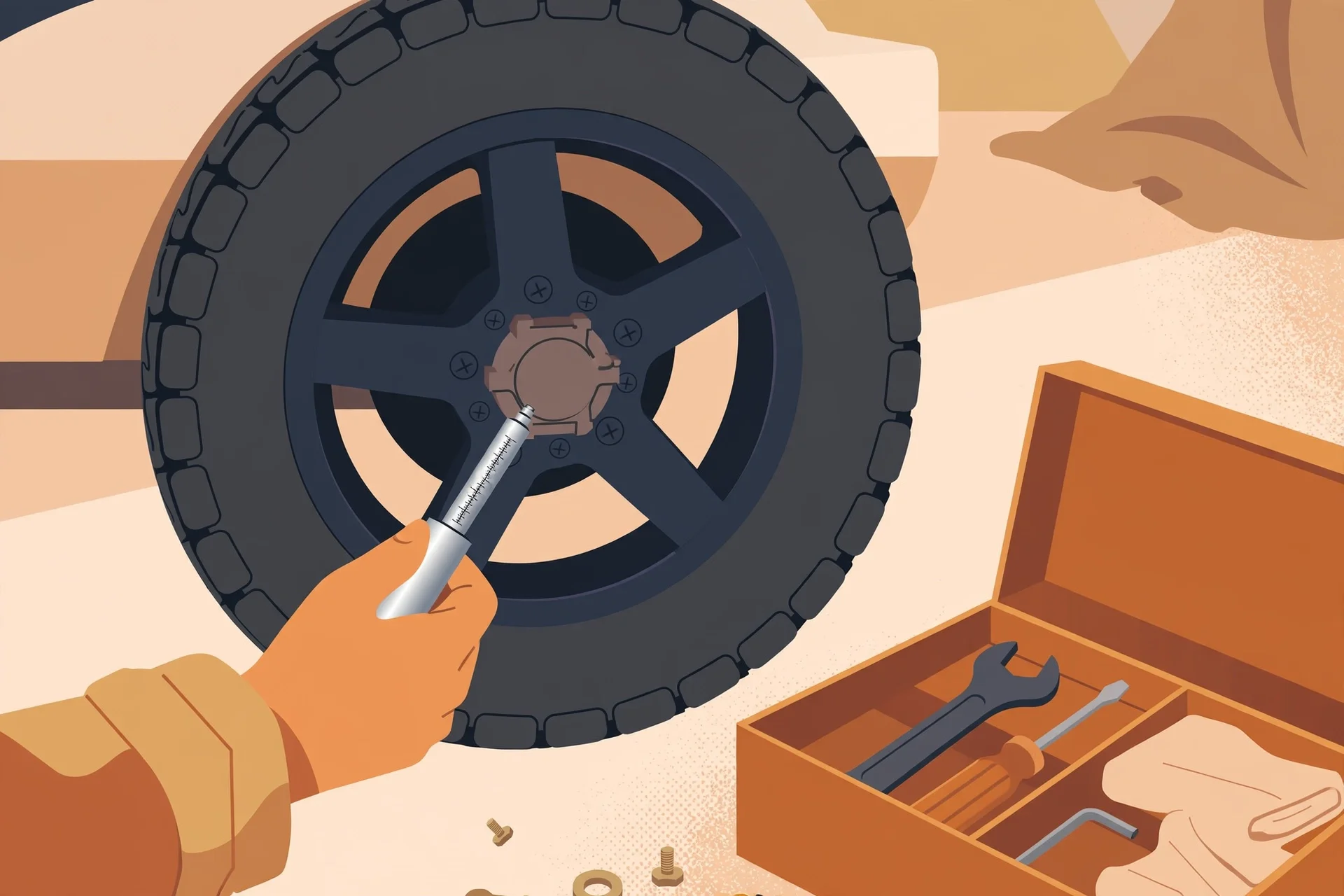
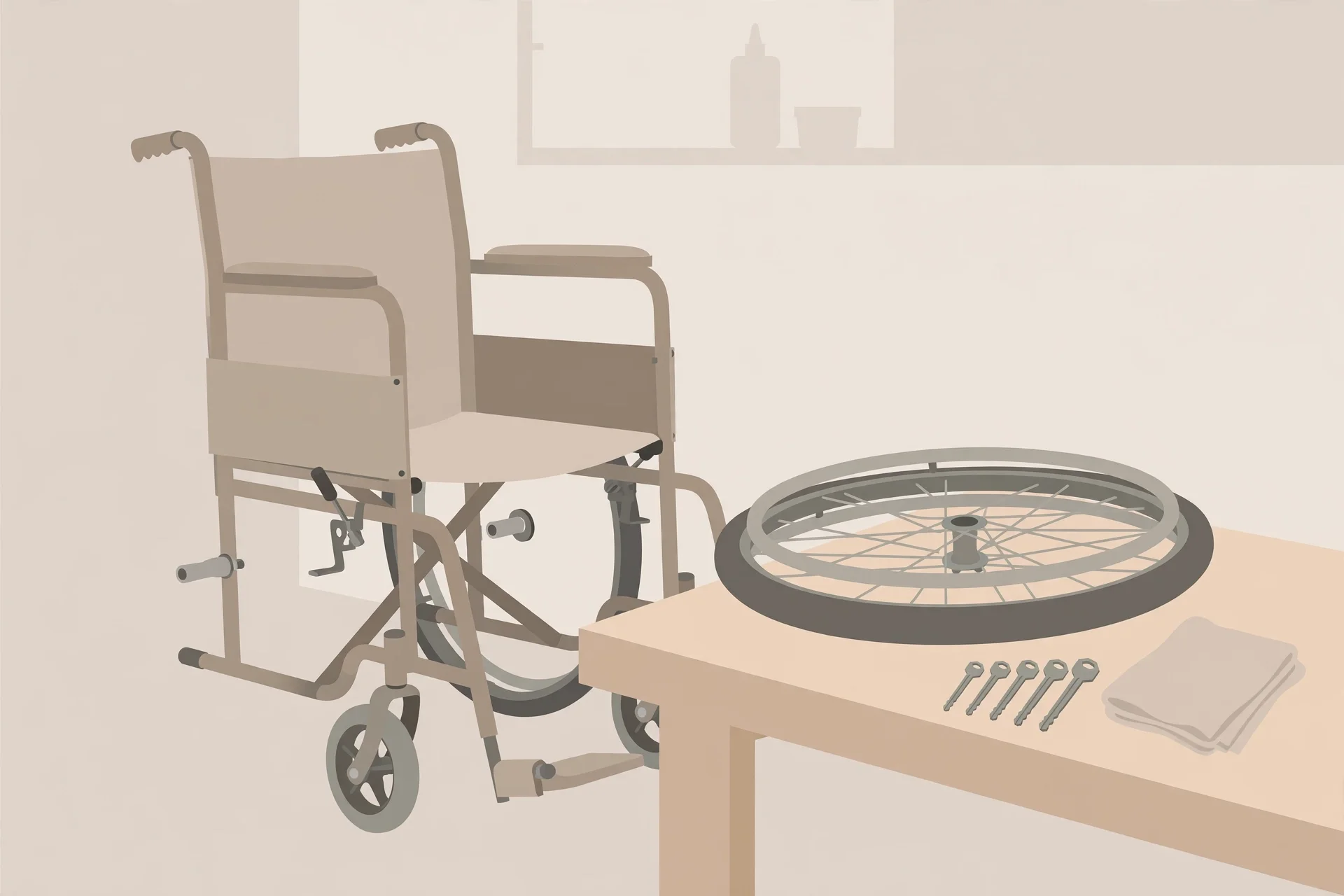
Every week, work through the same short list. Wipe down the chair to remove dirt and grit that works into bearings and upholstery. Check tyre pressure on pneumatic tyres and inflate to the recommended figure; solid tyres get a visual check instead. Test the wheel locks — they should engage firmly and hold the wheels still, because a lock that slips is a transfer accident waiting to happen. Check for loose spokes by sight and touch; a single loose spoke is a warning, several means the wheel needs professional attention. Finally, look at the cushion for bottoming out or damage, since a failed cushion stops protecting your skin long before it looks worn. Manufacturer guidance adds a useful rule of thumb: if anything loosens, starts making a noise, or seems out of place, check it immediately rather than letting a small annoyance become a failure. Keep a basic toolkit where you keep the chair — Allen keys, an adjustable wrench and a bike pump cover most weekly tasks.
Monthly: hardware, castors and upholstery
Once a month, go deeper. Check every nut and bolt and tighten what has worked loose — but not overtight; stripped threads are worse than a slightly loose bolt. Clean and inspect the castors: spin them and watch for wobble, flutter or grinding, and pick hair and lint out of the axles and bearings, which is the single most common cause of premature castor wear. Inspect the frame for cracks, especially around welds and the crossbrace on folding chairs, and wipe the frame down — a coat of wax on a folding frame keeps it opening and closing smoothly. Check the upholstery for sagging, rips or tears; seat fabric that has stretched or torn changes your sitting position and can contribute to pressure problems, so replace it rather than tolerating it. Look over the handrims for rough edges or peeling coating, confirm the footrests sit at the right height and lock securely, and check that the backrest upholstery tension is still even. This monthly pass takes about twenty minutes and catches nearly everything that goes wrong gradually.
Annually and beyond: technicians, tools and the emergency kit
Once a year, have the chair inspected and serviced by an authorised dealer or qualified technician — manufacturers recommend this explicitly, and some insurance or warranty terms expect it. The technician will check wheel alignment, bearing condition, brake adjustment and frame integrity in ways that go beyond a home inspection. Between services, keep an emergency kit with you: a spare inner tube if your tyres are pneumatic, tyre levers, a pump, the Allen keys that fit your chair, and a small adjustable wrench. Know the limits of DIY: wheel and bearing replacement, frame welding and anything involving the seating system belong to the professionals. And keep your owner's manual — every torque setting, pressure figure and maintenance interval in this guide is a summary; the manual for your exact model is the authority. A well-maintained manual chair lasts years longer than a neglected one, and it does so quietly, without drama, one weekly check at a time.