NHS provision categories and assessment criteria verified 2026-10-07 against Gloucestershire and Homerton NHS wheelchair service pages. NHS rules apply to England; Scotland, Wales and Northern Ireland run separate arrangements. Private buyers should treat the NHS framework as guidance, not eligibility advice.
How the NHS frames the choice
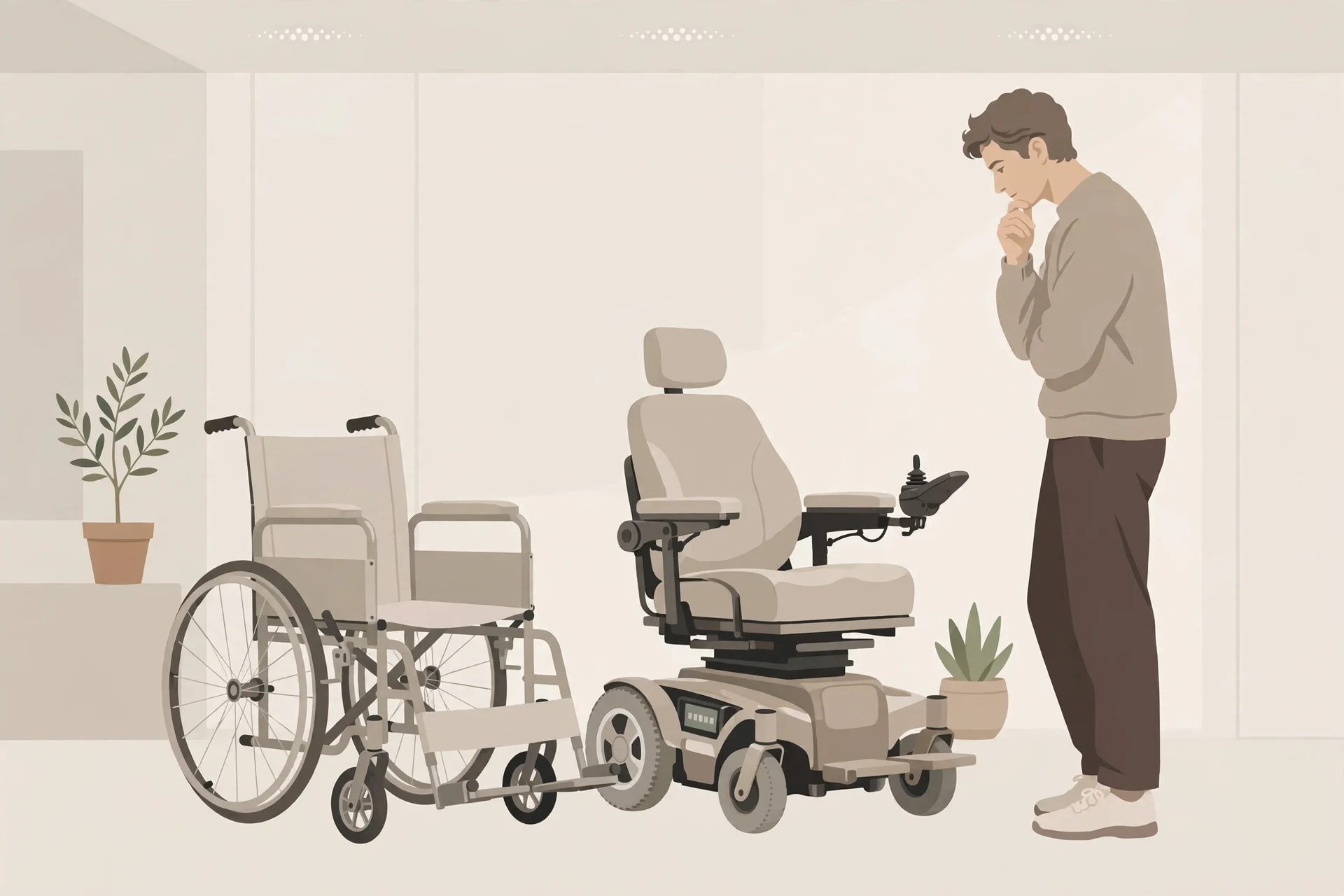
NHS wheelchair services in England describe their provision in clear tiers, and the logic transfers directly to private buying. Transit or attendant-propelled manual wheelchairs are for people who need to be pushed by a carer. Self-propelling manual wheelchairs are for people who can move themselves using their arms. Powered wheelchairs — indoor and indoor/outdoor models — are for people who cannot use a manual chair independently indoors, and provision is subject to a safety-awareness and driving-skills assessment. That three-way split captures the real decision better than any feature list. Start by asking which tier describes you honestly: if you can self-propel around the house but not for a full day out, you may be a candidate for a manual chair plus a power add-on rather than a full powerchair. Eligibility for NHS provision generally requires a long-term, permanent need and regular use; short-term needs under six months are typically not covered, and powered chairs for outdoor-only use are excluded. Even if you are buying privately, running through the same questions — can I propel, where, for how long, and who pushes when I cannot — prevents the most expensive mistake in wheelchair buying: purchasing independence you cannot actually use.
Side-by-side comparison
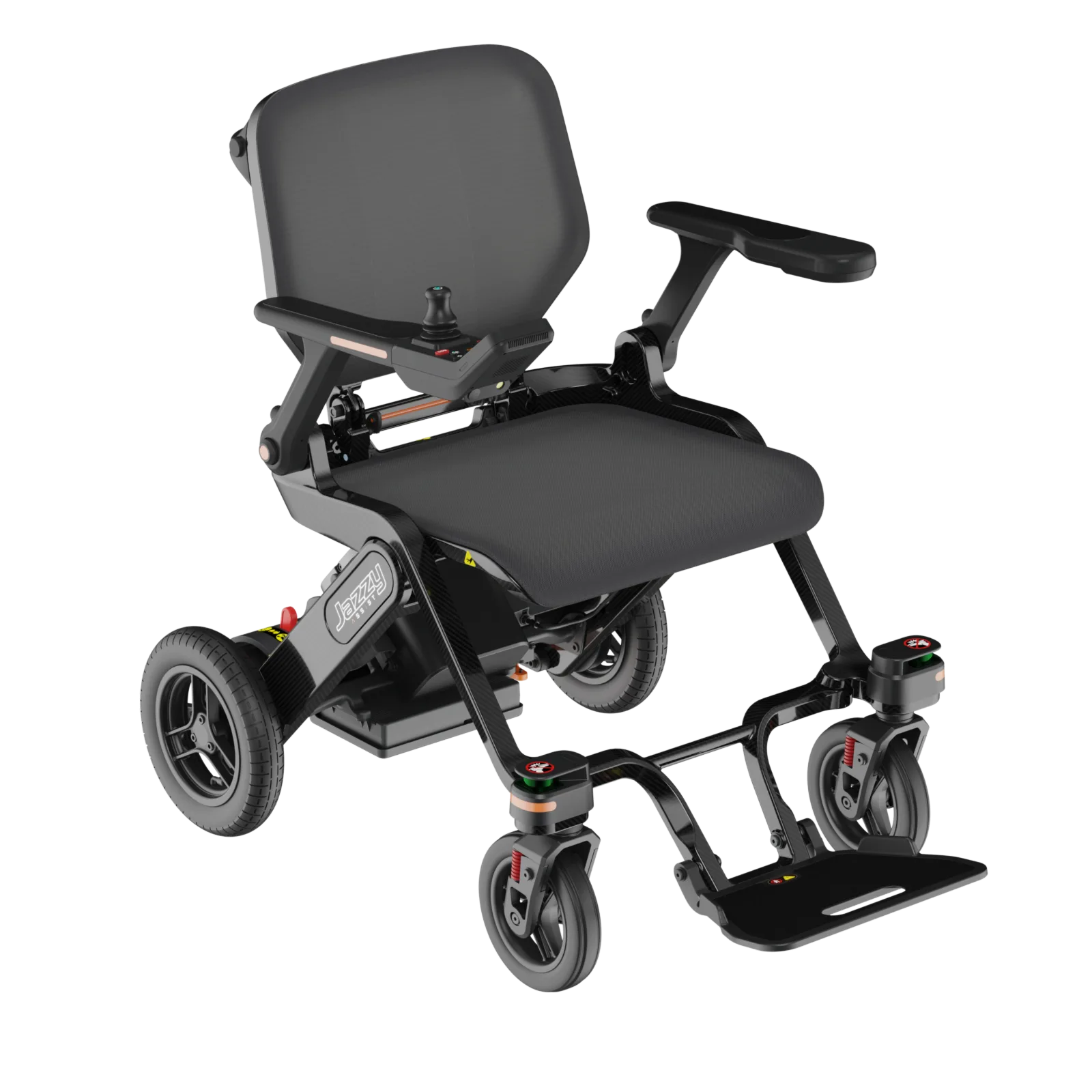
Manual self-propelled chairs are lighter (often 10–15 kg), fold or break down for car transport, need no charging, and cost far less to buy and maintain — but they demand upper-body strength and stamina, and long days mean sore shoulders. Attendant-propelled transit chairs are the lightest and cheapest option, but they trade all independence for portability; they suit people who always have a carer at hand. Powered wheelchairs give true independent mobility indoors and out, handle distance and slopes without effort, and offer powered seating options (tilt, recline, seat elevation) that manual chairs cannot match — at the price of weight (often 90–150 kg), bulk that complicates car transport and narrow doorways, daily charging, and higher servicing costs. Power add-ons for manual chairs sit in the middle: they preserve the light, transportable frame while adding powered assistance for hills and distance, though they add cost and complexity to a simple chair. There is no universally best option, only the best match for your strength, your home, and your transport.
What the assessment looks at
An NHS wheelchair assessment is broader than most people expect, and its checklist is worth borrowing. The team looks at diagnosis and how long the limitation is expected to last, the ability to sit safely and maintain posture, upper-body strength, coordination and stamina, and the home layout — door widths, storage space and access. Transport needs matter too: who will use or push the chair, and how it will travel. The assessment also weighs risks such as pressure damage, falls, poor trunk support, or the inability to propel a manual chair safely. If needs are complex, specialist seating measurements or follow-up appointments follow. The outcome can be a standard manual chair, a transit chair, powered mobility, specialist seating — or, sometimes, no NHS wheelchair if the clinical criteria are not met. People who are eligible may also be offered a Personal Wheelchair Budget, which gives a choice between accepting the NHS-prescribed chair, topping up toward a different model, or taking the budget to buy independently. Ask your service whether this option exists in your area before you spend your own money.
Five questions for private buyers
First, where will the chair live and charge? A powerchair needs a dry charging spot and room to manoeuvre; a manual chair needs far less. Second, how will it travel? If the chair must go in a car boot regularly, weight and folding behaviour may decide the question alone. Third, what is your honest daily range? Map a typical week — shops, appointments, social visits — and check it against what you can propel or what a battery can deliver. Fourth, who maintains it? Manual chairs need basic checks you can learn; powerchairs need dealer servicing, and NHS-supplied powerchairs come with planned preventative maintenance and a repair service. Fifth, what might change in two years? A progressive condition argues for a modular or powered solution with room to adapt; a stable situation rewards simplicity. Answer these five before you compare models, and the shortlist almost writes itself.