UK Motability Scheme only. Process, supplier role and lease terms from the Motability Foundation's official WAV guide (verified 2026-10-09); supplier examples and listing data from an accredited WAV supplier's Motability range page.
What a WAV supplier actually does
A Wheelchair Accessible Vehicle (WAV) is a vehicle converted so you can travel in it while staying in your wheelchair. On the Motability Scheme, the supplier is the company that converts, supplies and then supports your vehicle — not a regular car dealer. Supplier staff are trained specialists: they talk through your needs on the phone first, then bring candidate WAVs to your home for a demonstration, with no pressure to lease. If you order, they place your application, deliver the WAV to your home, and stay involved for the whole lease: a check-in one month after delivery, a yearly WAV check, routine servicing and repairs, tyre repair and replacement, RAC breakdown assistance and critical repairs within 72 hours. The all-inclusive package also covers insurance and up to three named drivers, so someone else can drive you even if you cannot.
Passenger WAVs, drive-from-wheelchair WAVs and Nearly New
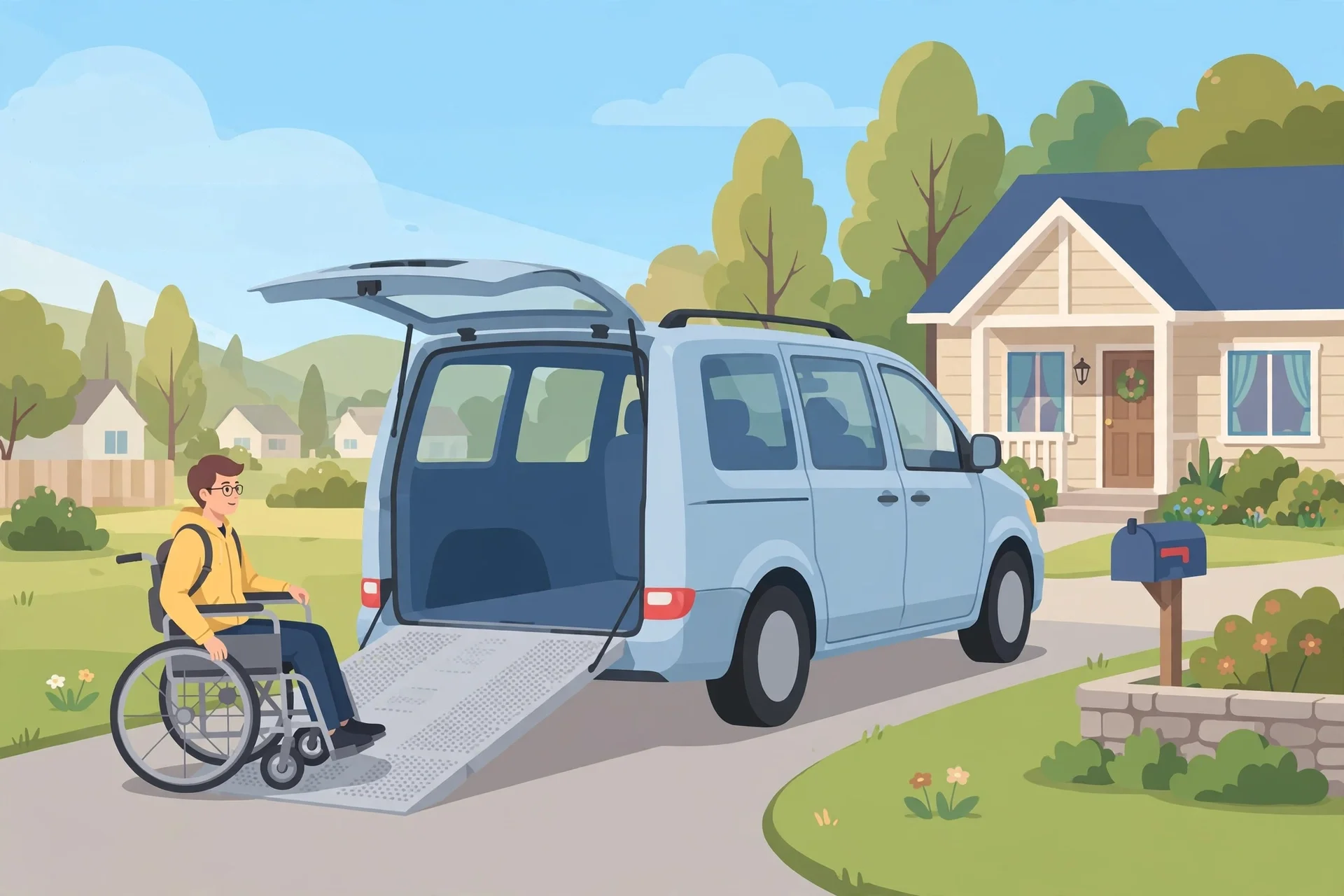
Most people choose a passenger WAV — the most common type on the Scheme. You get in via a ramp or lift, usually at the rear (some offer side entry), and another person secures your chair with tie-downs plus a three-point seatbelt for you. Nearly all WAVs position the wheelchair passenger behind the front seats or towards the back; a few let the wheelchair passenger sit beside the driver. Drive-from-wheelchair WAVs, sometimes called Independent Driving Solutions, are larger specially adapted vehicles that let you stay in your chair while driving — they cost more and take longer to build, but offer real independence. Nearly New WAVs are another route: vehicles returned early from leases, up to four years old and in good condition, on a three-year lease instead of five, typically costing less. If you can transfer out of your wheelchair into a standard car seat, adapted cars with driving aids and storage solutions may suit you better than a WAV at all.
Rear ramp or side entry: think about where you park
How you get in and out of the WAV shapes daily life, so decide before you fall for a particular model. Rear ramps are the most common access: simple, reliable, and available as built-in manual or automatic ramps. Side ramps can be more convenient for kerbside loading, but side-entry ramps can be steeper, so you may need extra help. Some large WAVs use a lift instead of a ramp, which lets you get in and out independently once you can secure yourself — at higher cost and extra weight. Think about how you park at home and at the places you visit regularly: a rear ramp needs clear space behind the vehicle, a side ramp needs clear space beside it. If your wheelchair and occupant together weigh over 140kg, not every restraint system is suitable, so raise this with the supplier early.
The home demonstration is the whole point
Trying out a WAV at home is the only reliable way to know it fits your life, and the Scheme's own guidance says exactly that: you can have as many demonstrations as you like, from as many suppliers as you like, and take as long as you need. Start by shortlisting vehicles on the Scheme's WAV search tool at motability.co.uk/wavsearch, then find suppliers at motability.co.uk/wavsuppliers — they all offer nationwide service. During each demonstration, visit the roads and places you actually use, load your luggage and equipment, practise getting in and out, and ask about running costs for the fuel type you choose. The Motability Foundation's WAV guide specifically suggests thinking about whether your needs might change in the future, because a WAV is a multi-year commitment. Customers consistently say they wished they had spent more time researching — the demonstration is where that research happens.
Sizes, suppliers and advance payments
WAVs come in four sizes — small, medium-small, medium-large and large — and your wheelchair's size and weight plus your seated height are the starting filters. The table below shows a sample of what accredited suppliers list, to give you a feel for the market. Advance payments vary widely: smaller conversions start from a few thousand pounds, while large WAVs with upfront-passenger layouts can require much larger advance payments. Remember that at the end of your lease you return the WAV — you cannot buy it — so the advance payment is a sunk cost, not a deposit on ownership. If you need help with the cost, the Motability Foundation offers means-tested grants for Scheme customers.
| Supplier example | Typical WAV styles | Notes | |---|---|---| | Allied Mobility | Passenger WAVs, drive-from-wheelchair | One of the largest UK WAV specialists, nationwide service | | Brotherwood | Passenger and drive-from-wheelchair WAVs | Long-established converter | | GM Coachwork | Passenger WAVs incl. upfront-passenger layouts | Full three-year manufacturer warranty, annual service checks | | McElmeel Mobility | New and pre-owned WAV conversions | Largest supplier in Northern Ireland, Motability Premier Partner | Prices and advance payments change quarterly — check current listings on motability.co.uk and each supplier's site before deciding. Verified 2026-10-09.