UK focus. Product specifications are manufacturer-published (Sunrise Medical) and subject to change; charity details from NHS service directory and council guidance.
Why children's wheelchairs are a different product
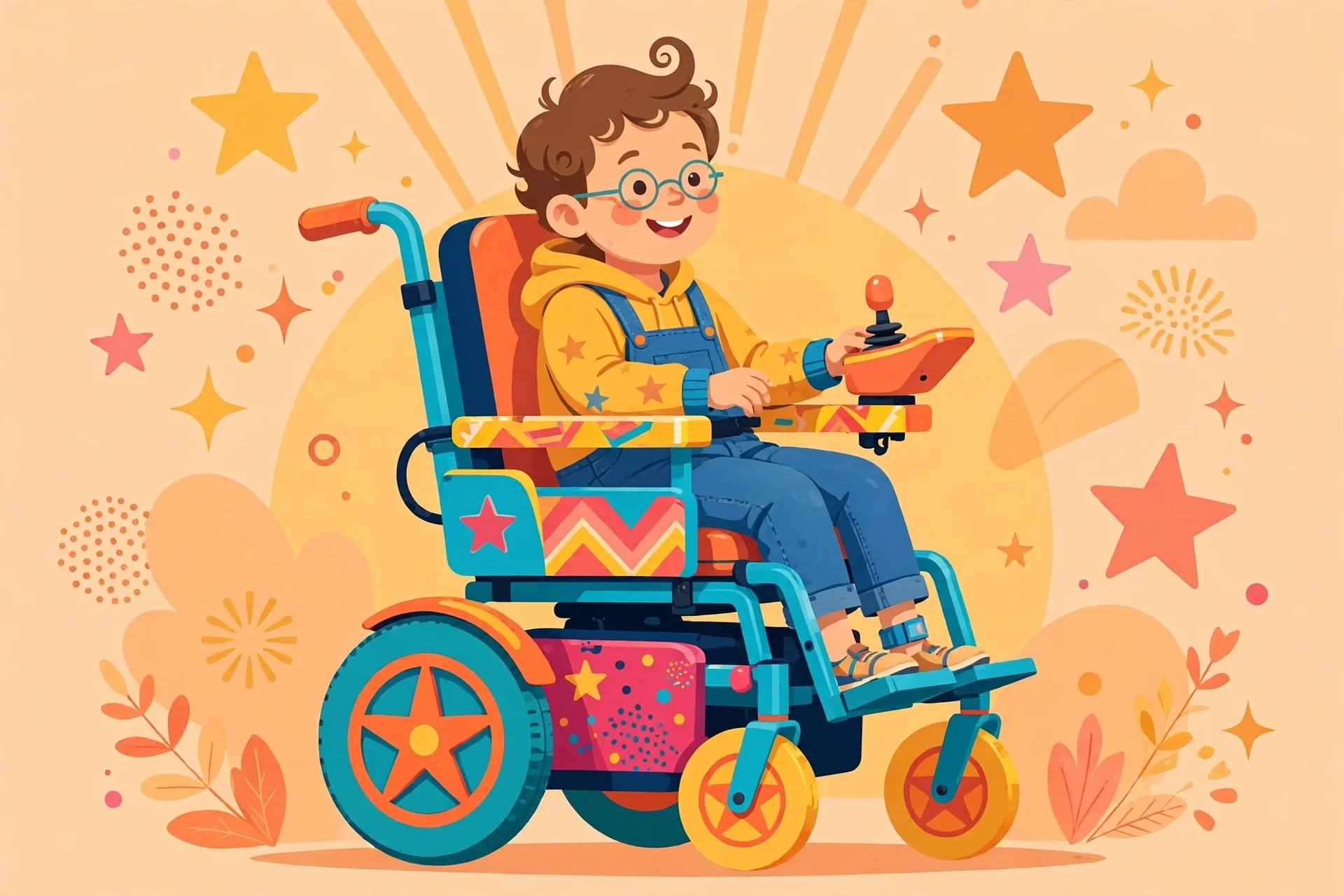
A child who gets the wrong wheelchair early can develop postural problems, miss out on play and learning, and face a harder path to independent mobility later. The right chair, fitted early, does the opposite: it lets a child explore, keep up with friends, get to school independently and build the confidence that comes from moving under your own control. That is why paediatric provision is treated as a developmental intervention, not just equipment supply.
Three things make children's chairs fundamentally different. First, growth: a chair that fits at age six must adapt through growth spurts without a full replacement every year. Second, environment: classrooms, playgrounds, narrow home hallways and the family car all demand compact dimensions and tight manoeuvrability. Third, purpose: alongside posture and pressure care, the chair has to enable play, learning and social life — seat elevation so a child can sit at eye level with friends matters as much as any clinical specification. Any assessment for a child should weigh all three, and parents should expect the process to involve paediatric therapists, not just a standard adult pathway.
What to look for: growth, fit and controls
Growth adaptability is the headline feature. Look for seating systems that adjust in width and depth without new parts — for example, a seat that grows from 28 to 40 cm wide and 26 to 40 cm deep — plus adjustable footplates, legrests, back height and armrests. Postural support should be modular: cushions, backrests, headrests and harnesses that can be added or changed as needs evolve, with options from specialist seating ranges for complex postural needs.
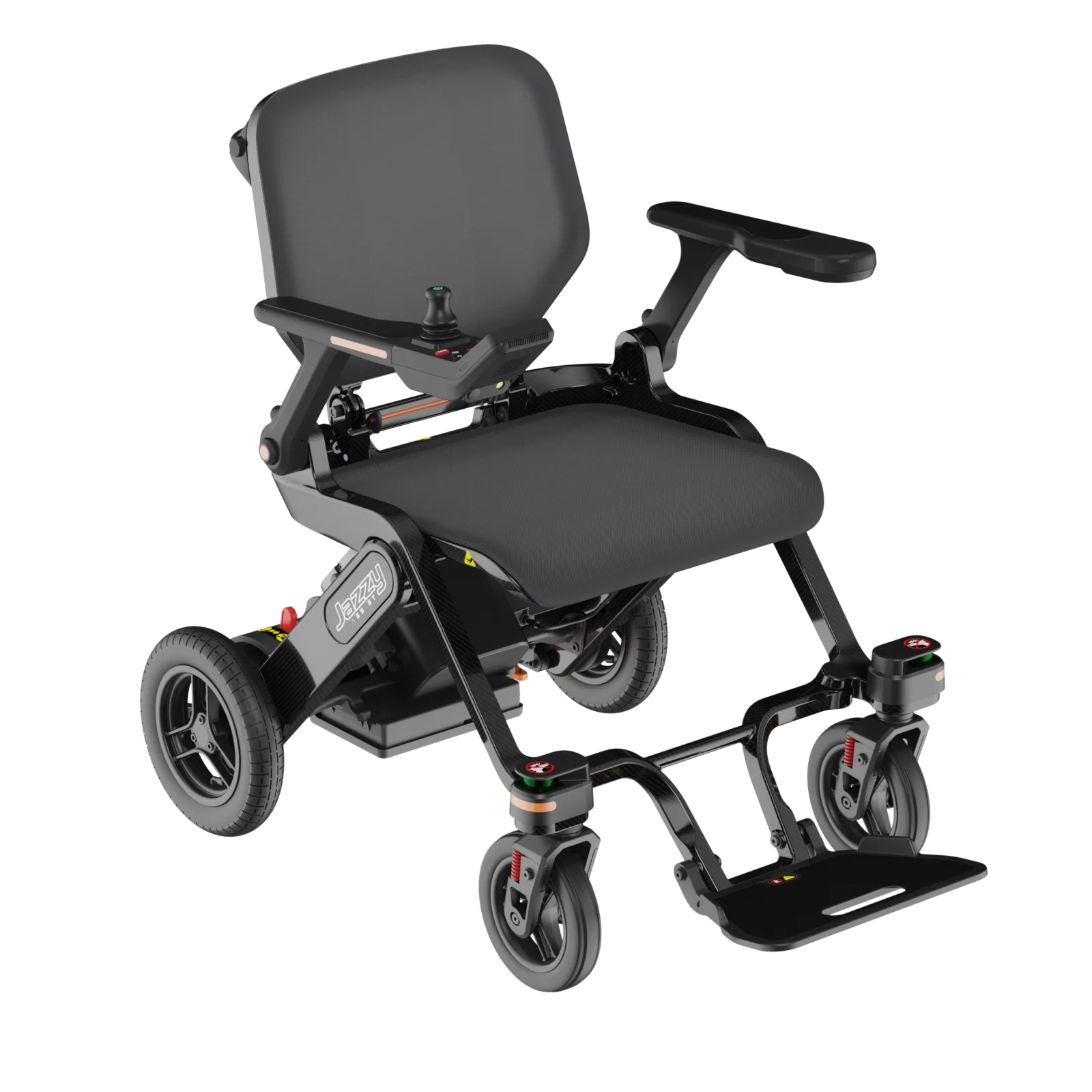
Fit for a child's world means compactness: a tight turning radius (around 17 inches on the smallest power bases), narrow overall width for doorways and classrooms, low seat-to-floor height for getting under desks and tables, and all-wheel suspension for playgrounds and kerbs. Controls must match the child, not the other way round — standard joysticks for those who can use them, but also proportional head arrays, switch boxes and even voice-activated seat functions for children who cannot. Safety checks: crash-test transit approval (ISO 7176-19) if the chair will be used as a seat in transport, and attendant controls or remote stop so an adult can take over or halt the chair from a distance. And because specifications change, treat manufacturer figures as a starting point for a trial, not a promise.
Power for kids: what a modern paediatric powerchair offers
To make this concrete, take Sunrise Medical's ZIPPIE Q300 M Mini — one of the established paediatric power platforms, and a useful illustration of what the category now offers. It is a true mid-wheel-drive chair that turns on the spot, with a 17-inch turning radius, seat widths from 10 to 16 inches and depths from 10 to 19 inches, all adjustable as the child grows. Powered seating includes lift and tilt; the C-Me elevation system lets the child drive at walking pace while raised up to 12 inches — the difference between watching friends and being at their level.
The details show the paediatric thinking: JAY cushions and backs plus Whitmyer headrests for clinical positioning, Switch-It alternative controls including a proportional head array for children who cannot use a joystick, seven accent colours plus custom paint options (because a chair a child likes is a chair a child uses), and even a printable 'driver's license' to make learning to drive fun. Published specifications list up to 17 miles of range, 6 mph top speed and ISO transit approval. This is manufacturer specification, not a hands-on test — but it sets the benchmark for what to demand from any paediatric powerchair: growth, manoeuvrability, elevation, adaptable controls and proper positioning in one package.
Routes to a chair: NHS, charities and loans
In the UK, start with your local NHS wheelchair service — children's needs are squarely within its remit, via GP or therapist referral and paediatric assessment. But families often need more than the statutory service can provide quickly, and this is where the charity sector matters. Whizz-Kidz is the UK's leading charity for young wheelchair users up to age 25, providing made-to-measure lightweight manual and powered wheelchairs, wheelchair skills training and youth programmes; families can self-refer or be referred by a professional, and its services are free.
For the very young, there is a remarkable loan option: the Wizzybug, a powered wheelchair for children from 14 months to around 5 years (up to 20 kg), provided free on loan to UK families by the charity Designability — often a child's first experience of independent movement. Practical advice for parents: get the NHS assessment even if you also approach charities (it establishes the clinical baseline); ask specifically about growth adaptability and school transport compatibility; involve the child's school early; and keep reassessment on the calendar — a chair that fits this year will not fit next year. The goal is not just mobility, but a childhood with the same freedom to roam that every child deserves.