Comparison dimensions and maintenance guidance verified against Motion Composites' tire-selection guide on 2026-10-12; flat-free drive-wheel fitment confirmed in Sunrise Medical's Quickie Q500 M order form. Applies generally to powered wheelchairs; consult your dealer for your chair's exact wheel sizes and options.
What the Three Tire Types Actually Are
Wheelchair tires come in three broad families, and each one is engineered around a different trade-off between performance and upkeep. Pneumatic tires are filled with air, like bicycle tires. They are the lightest option and they absorb shock and vibration better than any alternative, which matters clinically for pain control and spasm management during long days in the chair. Because research has shown they roll with less resistance than solids, they also make the most efficient use of battery power. The price of all that is maintenance: manufacturers recommend checking pressure weekly and topping up roughly once or twice a month, and a sharp object can still cause a flat.
Solid or urethane tires are made of dense rubber or polyurethane, so there is nothing to inflate and nothing to puncture. They are designed to be fully puncture-proof and nearly maintenance-free, and they wear slowly even on abrasive surfaces. The trade-off is ride quality: with little shock or vibration absorption, they feel bumpy outdoors, they have less traction on rough ground, and they are heavier with more rolling resistance than air tires. On smooth indoor floors, though, they perform perfectly well.
Head-to-Head: Solid vs Pneumatic at a Glance
The comparison below puts the practical differences side by side. Keep in mind one power-chair-specific nuance: rolling resistance matters less on a powered chair than on a manual one, because the motors do the pushing. That softens the solid tire's biggest drawback, while vibration comfort and lifting weight matter just as much.
| | Pneumatic (air) | Solid / urethane | Airless (foam) insert | | --- | --- | --- | --- | | Puncture risk | Can puncture; keep a repair plan | Essentially puncture-proof | Puncture-proof | | Ride comfort | Best shock and vibration damping | Rougher ride, little damping | Softer than solid | | Maintenance | Check weekly, inflate 1-2x per month | None | None | | Weight | Lightest | Heavier than air | Heaviest of the three | | Outdoor traction | Good on most terrain, incl. wet surfaces | Less effective outdoors | Moderate | | Rolling resistance | Lowest | Higher | Highest |
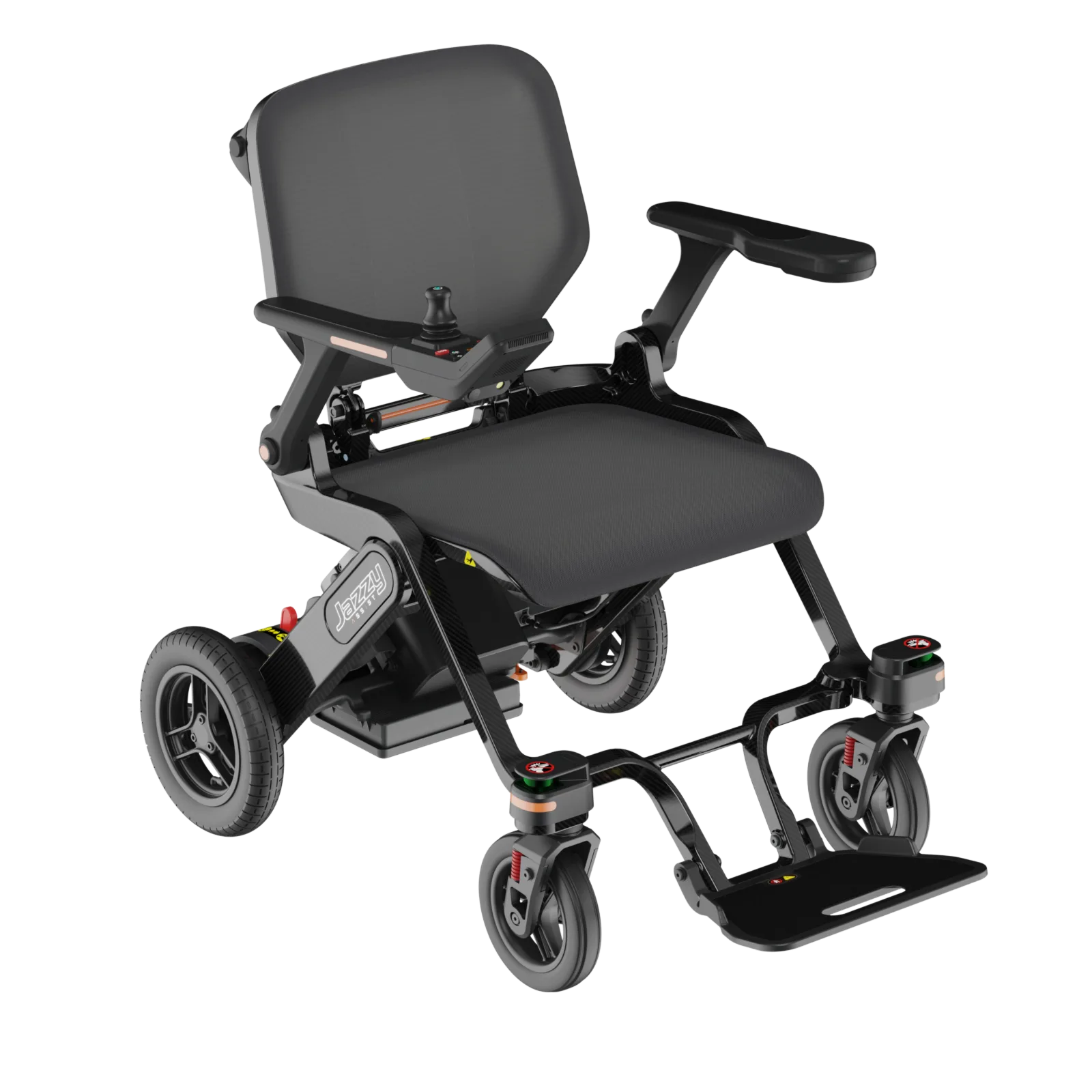
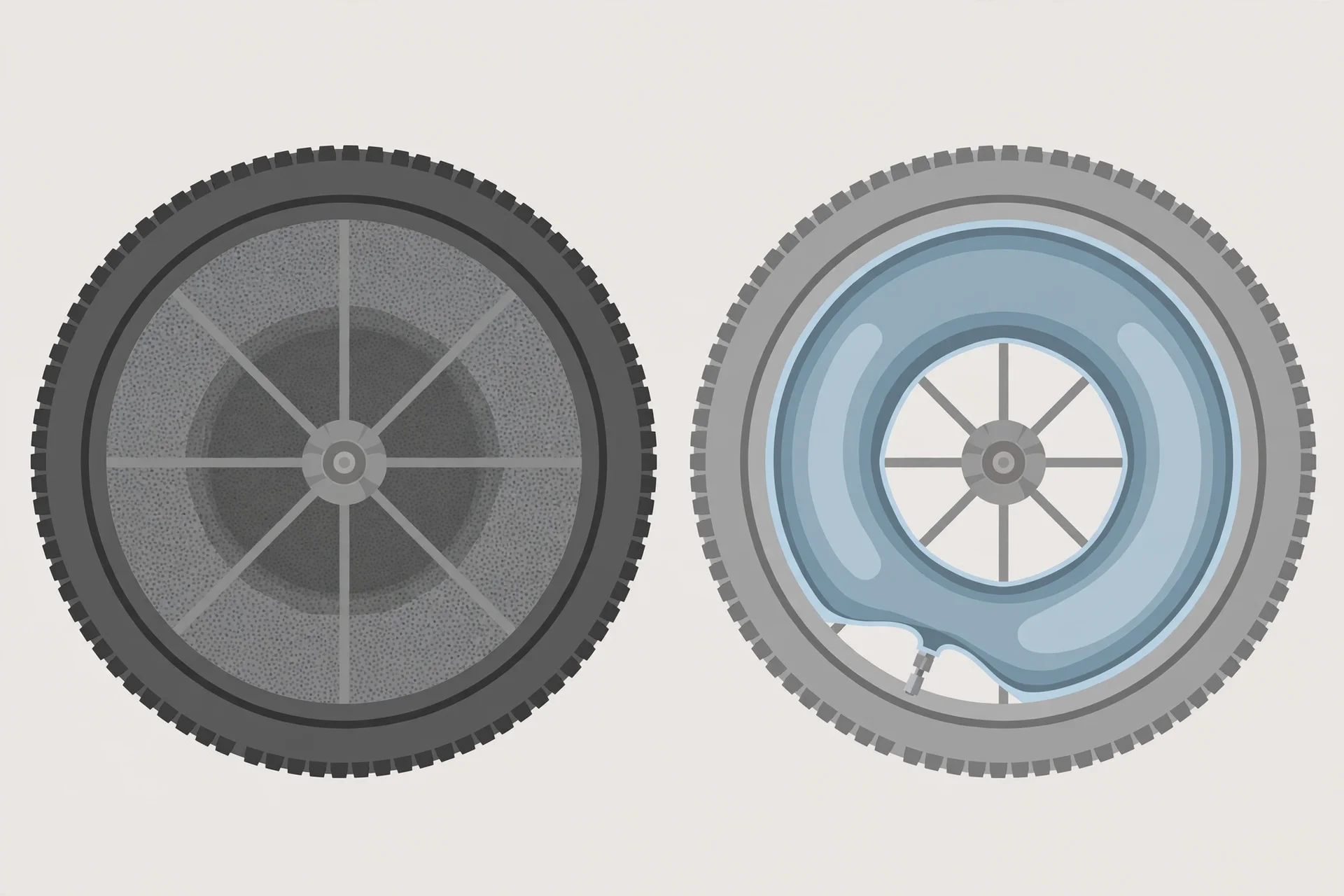
Two things in the table deserve a closer look. First, manufacturers treat puncture resistance as the default for power chairs: the Quickie Q500 M power chair order form, for example, ships with 13-inch drive wheels fitted with dual-density flat-free inserts as standard. Second, the foam-insert column shows there is a genuine middle ground: you get a softer ride than a solid tire with no maintenance, but you pay for it in weight and rolling resistance.
Who Fits Which Tire (and Where Each Falls Short)
Pneumatic tires are the right call if you spend real time outdoors on uneven paths, you want the most comfortable ride over a long day, or every kilogram matters when loading the chair into a car. Choose them when someone in your life can check pressures regularly, or when your dealer offers fast puncture service, because the ride quality they deliver is only as good as the pressure they carry.
Solid tires are the right call when your driving is mostly indoors or on smooth pavement, when nobody is around to keep up with tire pressure, or when a flat tire would strand you far from help. They are the set-and-forget option, and for a user whose routine is predictable and smooth, the rougher ride may simply never come up.
Consider the foam-insert hybrid if you want the best of both compromises: no flats and a softer ride than a solid tire, in exchange for the heaviest wheel of the three. And remember the comparison is not a ranking. The honest question is not which tire wins, but which trade-off fits your life: comfort and efficiency with maintenance, or puncture-proof simplicity with a firmer ride. If your dealer lets you try both, a short outdoor test on your usual route is worth more than any specification sheet.