Turning-radius figures are manufacturer-published specifications as shown on each maker's own page on 2026-10-17; actual results vary with seat size, footrests, and accessories. This guide lists published figures only and does not promise that any chair will fit a particular home.
What the Number Actually Measures
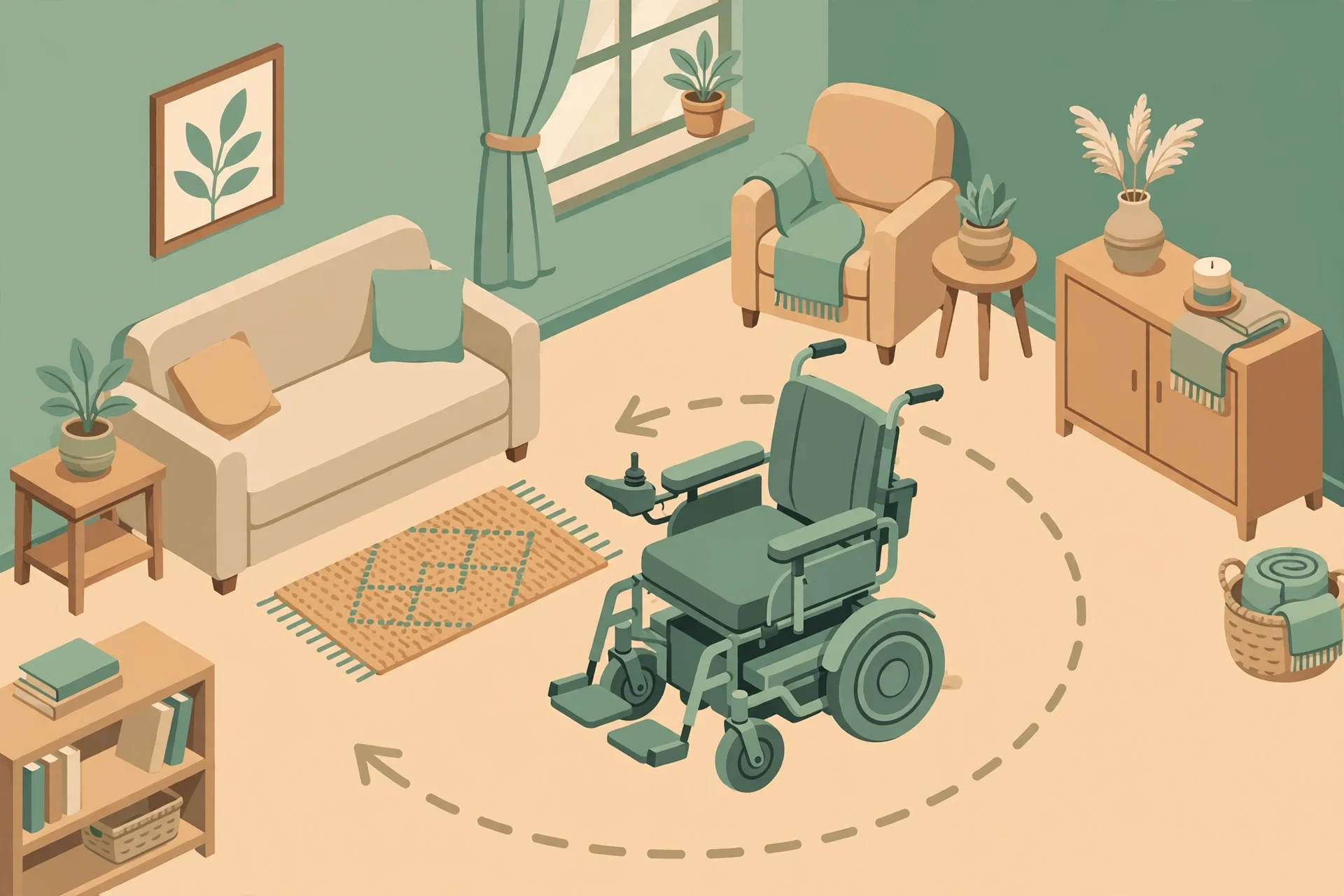
Turning radius describes the smallest circle in which a chair can complete a turn — the smaller the number, the tighter the turn. Manufacturers publish it as part of the chair's specifications, measured under their own test conditions, so figures from different makers are broadly comparable but not laboratory-identical.
Drive layout changes the picture. Mid-wheel-drive chairs pivot near the centre of the chair, which is why makers describe models like the QUICKIE Q500 M as turning on their own axis. Chairs with the drive wheels at the front behave differently again. The drive layout is worth noting alongside the raw number because two chairs with similar radii can feel very different in a narrow hallway.
Treat the published figure as a starting point, not a guarantee. Seat size, footrest position, and added accessories all change the real-world result, and the figure says nothing about width — a chair can turn tightly and still be too wide for your doorway. Always read turning radius together with overall width and length.
Three Published Figures, Side by Side
The table below lists turning radius exactly as published on each manufacturer's own product page, all checked on 17 October 2026. Figures can vary with configuration, so confirm the number for the exact build you are considering.
| Model | Published turning radius | Base width | Drive layout | | --- | --- | --- | --- | | Permobil M4 Nexa | 21.1 in (54 cm) | 21.5 in (54 cm) | Mid-wheel drive | | WHILL Model C2 | 29.9 in (760 mm) | 21.8–25.6 in (554–650 mm) | Front omni-wheels | | QUICKIE Q500 M | 18.5 in | 24 in | Mid-wheel drive |
A few things stand out. The two mid-wheel-drive models publish the tightest figures, which matches how that drive layout works. The WHILL's number is larger, but its design trades some turning tightness for a narrow, light frame that disassembles for travel — WHILL notes the chair comes apart in four steps and is approved for air travel. Also note the WHILL width range: the figure depends on the seat size you choose, so the narrowest build and the widest build are different chairs in practice.
None of this tells you which chair fits your home. Published numbers get you to a shortlist; the tape measure does the rest.
From Numbers to a Shortlist
Start with your home, not the brochure. Measure the narrowest doorway, the tightest hallway, and the bathroom turn in your home, and write the numbers down. Then compare the chair's published width and turning radius against those measurements — radius alone never decides fit.
- Remember the footrests. Turning figures are measured in a standard setup, but swing-away or elevating legrests add real-world length. Ask the dealer for the figure with your configuration, not the catalogue default. - Shortlist two or three chairs, then test-drive them in a tight space — a showroom course, or ideally your own home — before deciding. Only a real drive shows how a chair behaves around your furniture. - When a specification page is vague or two sources disagree, go back to the manufacturer's own specification page or ask the dealer in writing.
This guide lists published figures only and makes no promise about any chair fitting a particular home. The right question is never 'is 21 inches enough?' — it is 'does this chair turn inside my hallway?'