Product unveiling, UK launch timing ('in the coming months'), Innovation Room and test track details as reported by THIIS on 2 October 2026; ICON 45 novelty corroborated by US FDA 510(k) clearance K260849 issued 11 June 2026; Icon 125 base model pre-existence verified via Rehasense official documentation and UK dealer catalogues. No official Rehasense UK launch announcement for these two products could be located at the time of writing; specs, pricing and exact launch dates are therefore not stated.
Why REHACARE 2026 matters for wheelchair buyers
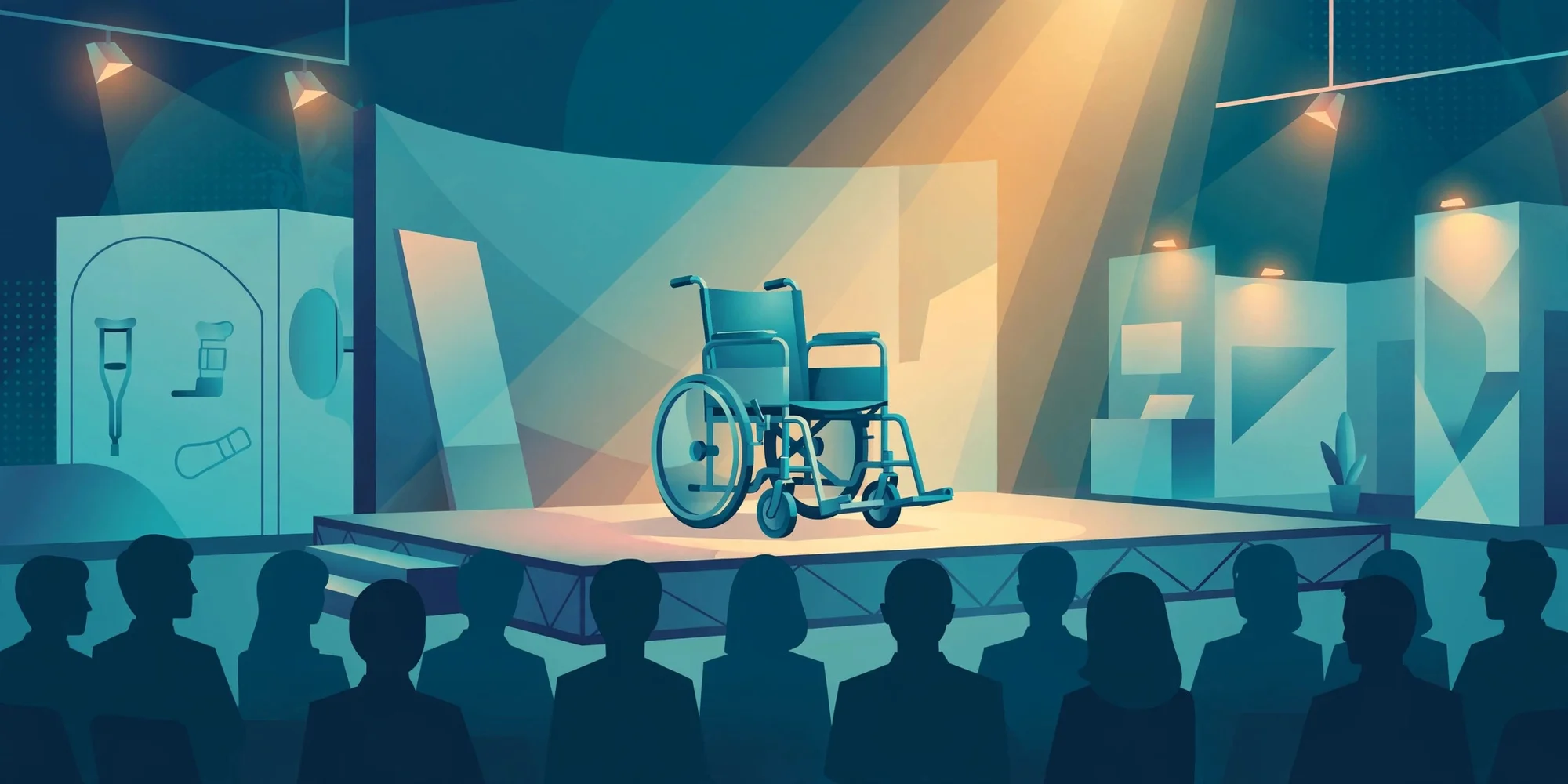
Every September, Düsseldorf hosts REHACARE, the world’s largest trade fair for rehabilitation and care products, and for anyone who follows wheelchair design it functions as a kind of preview of what will appear in dealer showrooms the following year. The 2026 edition, held from 23 to 26 September, was no exception. Manufacturers use the show to test prototypes with the trade, healthcare professionals and end users in one place, and this year Rehasense, the global mobility solutions supplier, brought what it described as its largest stand at the event to date, alongside a dedicated test track where visitors could try out manual wheelchair models and power add-ons side by side. That context is important for understanding the two reveals that are the subject of this article. Trade shows are where manufacturers gauge reaction before committing to production runs and dealer rollouts, so a product unveiled at REHACARE is typically a few months away from being purchasable — and that is exactly what the news coming out of the Rehasense stand indicates. According to a report published on 2 October 2026 by THIIS, the UK trade magazine for the mobility and independent living sector, the Rehasense stand saw the unveiling of two new products: the ICON 45 and the Icon 125 Power Drive, both described as manual wheelchairs, and both due for launch in the UK in the coming months. The same report notes that the stand also featured an Innovation Room, a new feature in which invited dealers were given a preview of products still in development and asked for feedback to feed back to the company’s research and development team. In other words, the two wheelchairs named here are not concepts — they are finished products that have completed development and are now on the path to the UK market, even if their exact arrival date has not been pinned down yet. Alongside the two wheelchairs, Rehasense showcased its wider portfolio of rollators, manual wheelchairs and powered add-ons, including its Power Assisted Wheelchair System (PAWS), Eco Travel and Eco Assist products, and ran a busy test track that, in the company’s own words, was in constant use every day of the show. For UK buyers, the practical takeaway from all of this pageantry is simple: two new Rehasense chairs have been confirmed for the British market, and the clock is now running on when they will actually appear in dealer showrooms.
The ICON 45: the genuinely new chair
Of the two reveals, the ICON 45 is the straightforward one to characterise: it is a new model. The name follows Rehasense’s established ICON family of manual wheelchairs — a range that includes models such as the ICON 35 and ICON 60 — but the 45 variant had not appeared on the market before the REHACARE unveiling. Independent corroboration exists for that novelty claim. On 11 June 2026, the US Food and Drug Administration issued a 510(k) clearance, number K260849, covering the ICON 35, ICON 45, ICON 60 and ICON 30FAF as mechanical wheelchairs, which establishes that the ICON 45 is a real, regulated medical device rather than a show concept. The FDA clearance does not, of course, say anything about the UK market, but it does put the model firmly in the real world: it cleared US regulatory review in mid-2026 and was then shown to the global trade at REHACARE in September of the same year. What Rehasense has not yet disclosed — at least not publicly through any channel we could verify — are the detailed specifications, the pricing, or the exact positioning of the ICON 45 within the ICON family. The THIIS report quotes the company’s UK and Ireland country manager, Jordan Day, as saying that feedback on both the ICON 45 and the Icon 125 Power Drive from trade, healthcare professionals and end users exceeded all expectations, which suggests the chair was far enough along to be sat in and assessed on the test track rather than being a glass-case exhibit. That is about as far as the verified facts go, and it is worth being explicit about what is not known: there is no confirmed UK price, no confirmed launch date beyond ‘in the coming months’, and no published technical data that we have been able to verify from an official Rehasense source. Any website or seller that offers you an ICON 45 with a detailed spec sheet or a firm delivery date right now is, at best, working from incomplete information. The honest position is that the chair is new, it is real, and it is coming — the details will follow when Rehasense UK formally launches it. That launch matters because the ICON family is one of the more established manual wheelchair lines in the UK market, and a new model in it will be of interest both to first-time prescribers and to existing Rehasense users looking to upgrade.
The Icon 125 Power Drive: a new variant, not a new chair
The second reveal needs a careful reading, because it would be easy — and wrong — to describe it as a brand-new wheelchair. The Icon 125 already exists. Dealer brochures and the official Rehasense documentation list the ICON 125 as an established model in the range, with user manuals published in multiple languages and listings in UK dealer catalogues. What was new at REHACARE 2026 was the ‘Power Drive’ variant. That is the distinction the reporting supports: the unveiling was of the Icon 125 Power Drive, presented alongside the ICON 45 as one of two new products, and the positive feedback cited by Rehasense’s country manager referred to the Icon 125 Power Drive specifically. What exactly ‘Power Drive’ means in product terms has not been spelled out in the public reporting we could verify. The name suggests a drive-related upgrade — potentially a powered assist option or an upgraded wheel and drive configuration for the existing Icon 125 platform — but we do not have confirmed technical details from Rehasense, and it would be irresponsible to guess. The cautious and accurate way to describe it, therefore, is this: Rehasense has confirmed a new variant of its existing Icon 125 manual wheelchair, carrying the Power Drive name, unveiled at REHACARE 2026 and due to launch in the UK in the coming months. If you already know the Icon 125 from dealer showrooms or brochures, this is not a replacement for it; it is a new version. If you are new to the range, the base Icon 125 gives you a reasonable picture of the platform — a manual wheelchair aimed at users who need adjustability and postural support — while the specifics of what Power Drive adds will only be clear once Rehasense UK publishes its launch materials. This kind of careful distinction is exactly why product launches deserve patient reporting rather than hasty rewrites: mixing up a new variant with a new product is how misinformation spreads in mobility retail, and in a sector where chairs are prescribed against individual clinical need, getting it right matters more than getting it first. It is also worth understanding how wheelchair variants normally work in this market. Manufacturers like Rehasense typically build a model family around a core platform and then release configured versions — different wheel sizes, seating options, attendant controls or, as here, drive-related upgrades — under sub-model names. Dealers order and prescribe from a configuration catalogue, which is why a variant can be genuinely newsworthy even when the base chair is familiar: it may open up the platform to users whose needs the previous configurations did not meet. The Icon 125 has long been positioned as an adjustable, comfort-oriented manual chair with extensive seating options, so a Power Drive version most plausibly extends that appeal toward users who want to keep a manual frame but reduce the physical effort of propelling it over longer distances or outdoor terrain. Until the launch materials are published, though, that remains informed speculation, clearly labelled as such — and any listing that presents it as confirmed fact should be treated accordingly.
When will they be available in the UK?
This is the question every reader of this article actually wants answered, and the honest answer is: we do not yet know the date. The only timing information Rehasense has made public is that the ICON 45 and the Icon 125 Power Drive are due for launch in the UK ‘in the coming months’, as reported on 2 October 2026. ‘In the coming months’ is a deliberately vague phrase — it means the chairs are past the prototype stage and into the commercialisation pipeline, but it gives no commitment to a month or even a quarter. Trade-show unveilings typically precede dealer availability by anything from eight weeks to half a year, depending on regulatory paperwork, production scheduling and dealer training. So the practical reading is that UK buyers should expect these chairs to appear in dealer showrooms sometime between late 2026 and the first half of 2027, but that is an informed estimate, not a promise. What can buyers do in the meantime? The most useful step is to register interest with a Rehasense dealer rather than waiting for a public launch announcement. Rehasense sells through a dealer network — the same network that was previewing the new products in the show’s Innovation Room — and dealers who attended REHACARE will be the first to know when order books open. If you are considering a new manual wheelchair and the ICON 45 or the Icon 125 Power Drive might suit your needs, asking your local dealer to notify you when launch materials arrive puts you at the front of the queue without committing you to anything. A second consideration applies to anyone whose need is urgent: do not delay a purchase you need now on the strength of an unlaunched product. If your current chair is failing or your clinical need is immediate, the chairs available today — including the existing ICON range and the base Icon 125 — are real, prescribable and covered by existing support arrangements. A new model that might arrive in a few months is not a substitute for a chair you need this week. Finally, treat any unofficial release dates or prices you see circulating online with scepticism until Rehasense UK publishes them. The company’s pattern, visible in its other recent launches such as the PAWS HD powered add-on, is to announce formally through its UK channels; until that happens, ‘in the coming months’ is the only launch date that counts.
What this launch tells us about where manual wheelchairs are heading
Zoom out from the two individual products, and the REHACARE 2026 showing says something interesting about the direction of the manual wheelchair market as a whole. Rehasense did not unveil a radical new category of device. It unveiled one new model in an established family and one new variant of an existing platform — and then surrounded both with an Innovation Room full of products still in development, open only to invited dealers for feedback. That is the behaviour of a manufacturer iterating carefully on proven platforms rather than chasing novelty, and it matches what clinicians and experienced users have been asking for: chairs that are incrementally better at the things that matter day to day — adjustability, reliability, transportability, compatibility with power add-ons — rather than headline-grabbing redesigns. The prominence of powered add-ons at the Rehasense stand reinforces the point. The company was demonstrating its Power Assisted Wheelchair System alongside Eco Travel and Eco Assist products, and had recently launched the PAWS HD, a high-end powered add-on. The boundary between manual and powered mobility is getting blurrier, with manual chairs increasingly designed from the outset to accept power assistance, and the ‘Power Drive’ naming of the new Icon 125 variant fits squarely into that trend — a manual platform edging toward powered capability. For buyers, the implication is that the next few years of manual wheelchair development will be about hybrid flexibility: chairs that work well as pure manual chairs but can be upgraded with power when a user’s needs or strength change. The second signal from the show is about how manufacturers are using trade events. The Innovation Room concept — dealers previewing unreleased products and feeding back to research and development — turns a trade show into a live focus group, and it means the chairs that eventually reach the UK market have already been stress-tested against dealer and clinician opinion. That is good news for buyers, because it suggests fewer products will arrive half-baked. The honest summary of the news is therefore modest but genuinely useful: two new Rehasense products were confirmed at the biggest rehabilitation trade show in the world, they are on their way to the UK, and the details that matter — specs, prices, dates — will follow through official channels. We will update this page when Rehasense UK announces them. Until then, the most reliable sources for these two products are the original THIIS trade report and Rehasense’s own official channels — anything else is, at best, second-hand.