UK telecare sector. Official launch announced 1 Oct 2026; commercial deployment reported Oct 2026. ILOS is a provider platform, not a consumer device.
What ILOS is and how it differs from traditional telecare
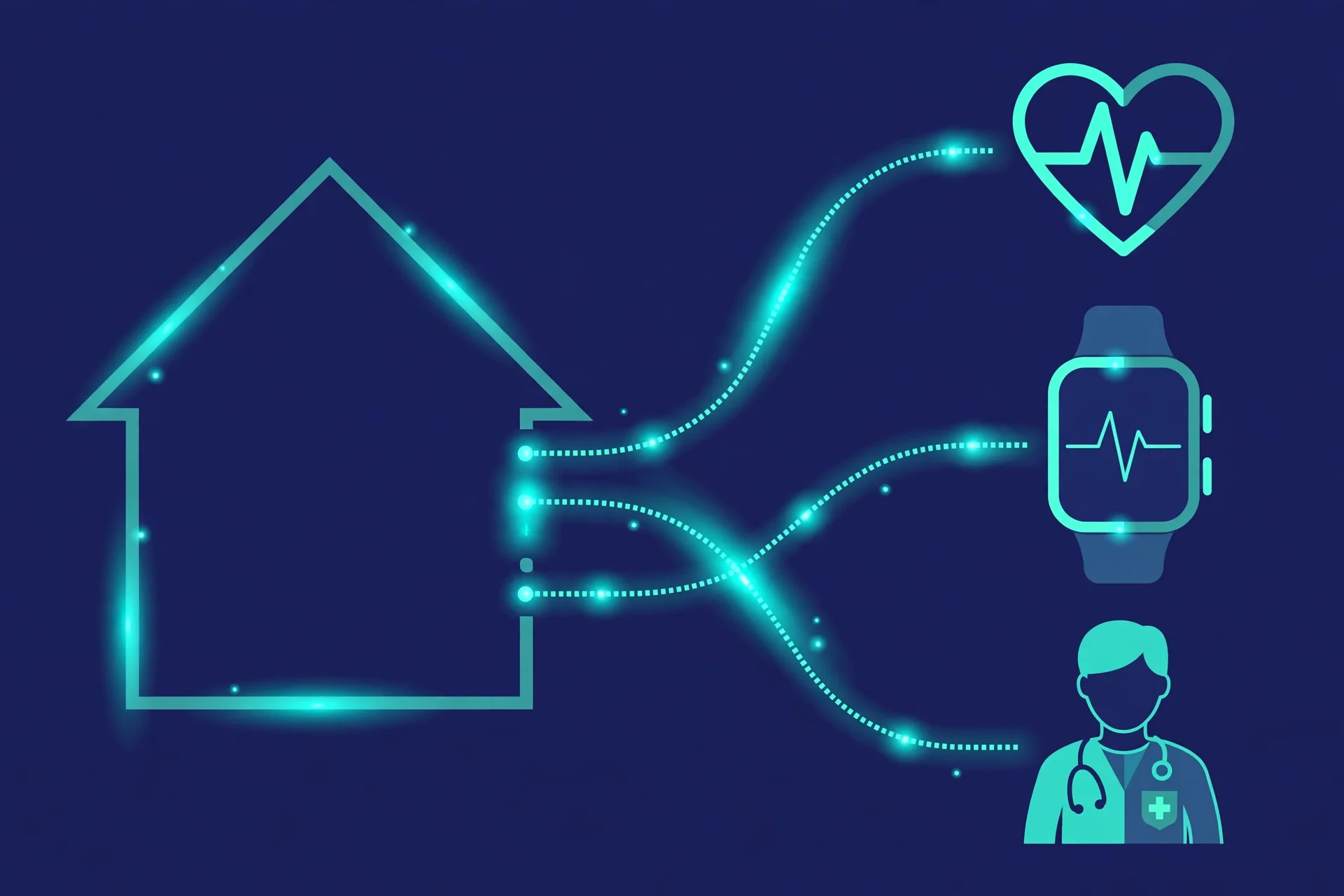
ILOS is Tunstall's attempt to move independent living technology away from closed, device-by-device systems. Instead of each alarm, wearable or sensor reporting into its own silo, ILOS aggregates data from digital sensors, wearables and emergency response devices into one open-architecture platform. It then applies artificial intelligence and real-time data analytics to identify changing needs — the idea being that care teams can intervene before a health crisis rather than simply responding to an alarm after the fact.
Two design choices matter most. First, it is device-agnostic by design: it is built to work with any alarm, wearable or sensor with a digital pulse, with minimal configuration to match a provider's settings. Second, it is built on open APIs that integrate with shared care records and responder networks, and Tunstall says it complies with NHS, housing and social care standards. As Nikki Williams, Tunstall's director of solution and innovation, put it: independent living technology has traditionally been built around individual devices and isolated responses, and ILOS represents a move toward a more connected model where data helps services identify changing needs earlier and work together on more proactive support.
The shift it promises is from reactive alarm handling — the traditional model where an alarm receiving centre (ARC) responds to a button press — to proactive, preventative care management. UK managing director Mark Hindle frames it as the principle that support should wrap around people, not technology: housing, health and neighbourhood teams sharing information and purpose instead of operating in parallel.
What changes for people who rely on telecare
For individuals, ILOS is not something you buy — it is a platform for service providers, deployed in alarm receiving centres. So there is no device to order and no app to install on your side. What could change is the quality of the service behind your existing telecare equipment: fewer isolated alarm responses, more joined-up working between your housing provider, health team and social care contacts, and earlier intervention when sensor data suggests something is changing.
That matters for wheelchair users and others with long-term mobility needs, who are among the core users of telecare — Tunstall's own materials list wheelchair users alongside people with conditions such as MS, Parkinson's and dementia as groups its platforms serve. A more connected system could, for example, link a fall sensor alert with your care record and your local responder network in one workflow instead of three separate ones.
What is not yet clear: the pace at which individual ARCs will adopt ILOS, which existing devices each centre will connect first, and how quickly the promised proactive features translate into visibly different service for end users. If you use council-arranged or private telecare, the practical step is to ask your provider whether it plans to adopt ILOS and what that changes about your monitoring. The platform launched 1 October 2026 and entered commercial deployment the same month — the next year will show whether the connected model delivers on its promise.
Questions to ask your telecare provider
ILOS will reach different areas at different speeds, so the useful move is to ask your own provider where it stands. Questions worth putting to them: does your alarm receiving centre plan to adopt ILOS, and on what timetable? Which of my current devices — personal alarm, fall detector, door or motion sensors, wearable — would connect to it, and would anything need replacing? How would the service change for me in practice: faster response, fewer false alarms, more contact from care teams? Who sees my data under the new platform, and how is consent handled? And if I am happy with my current setup, can I stay as I am?
These questions matter because ILOS is infrastructure, not a gadget. Its value shows up in how quickly a changing pattern — more frequent bathroom visits at night, a fall sensor triggering twice in a week, a wearable showing declining activity — reaches someone who can act on it. A provider that can answer concretely about timelines, device compatibility and data handling is one taking the platform seriously; vague answers suggest it is still on the roadmap. Either way, you lose nothing by asking — and you may learn your current telecare package has options you were never told about.