Accessibility facts in this guide are drawn from two official museum accessibility pages, both opened and read on 2026-10-13: Tate's central Accessibility page (tate.org.uk) and the Smithsonian National Museum of Natural History's Accessibility Information page (naturalhistory.si.edu). Only facts confirmed by these official pages are stated; access policies differ between individual venues, so readers should verify the page for their specific museum before visiting.
Q&A: Is the Museum Step-Free? What to Confirm Before Booking
Q: Can I assume a big public museum is wheelchair accessible? A: No — check rather than assume. Museums range from purpose-built modern galleries to converted historic buildings, and access conditions differ between them. Both Tate and the Smithsonian keep dedicated accessibility pages for their individual venues (Tate has separate pages for Tate Britain, Tate Modern, Tate Liverpool and Tate St Ives; the Smithsonian's museums each publish their own). The page for the exact museum you plan to visit is the single most reliable source, and it is the one place you should open before booking anything.
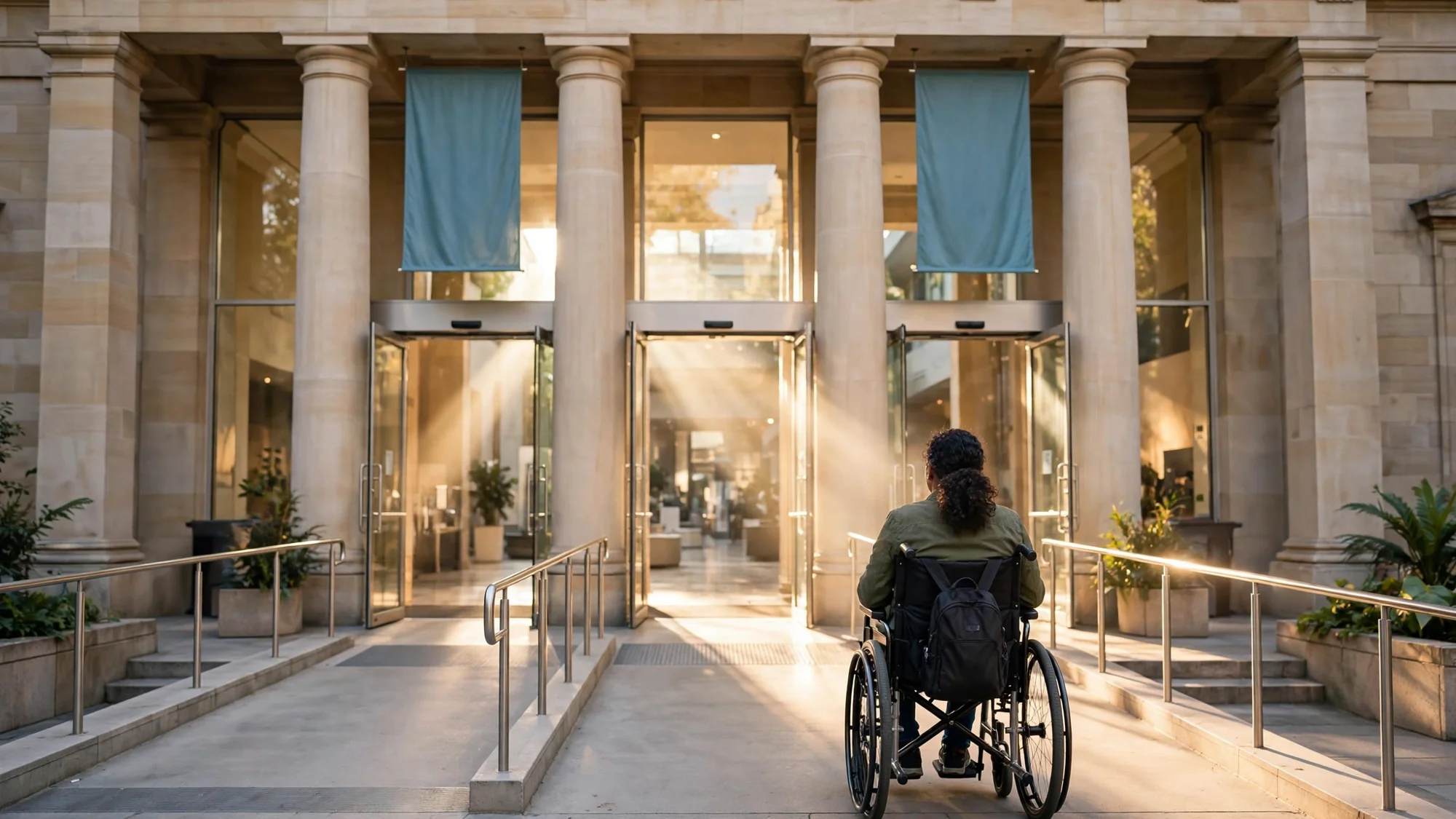
Q: What does 'step-free access' actually cover? A: At minimum it means you can get in and out without using stairs. The Smithsonian's National Museum of Natural History states that all of its museum entrances and exits have stair-free access. Tate's accessibility pages likewise list entrance information for each gallery. Pay attention to which entrance the page recommends: large museums often have several doors, and only some are step-free. Note the recommended entrance name or street address — arriving at the wrong door can mean a long detour around the block.
Q: Do I need to book anything in advance just because I use a wheelchair? A: Usually not because of the wheelchair itself — these museums welcome wheelchair users and admission is generally free — but advance checks pay off. If you hope to borrow a wheelchair at the museum, the Smithsonian warns that its courtesy wheelchairs are free but offered strictly on a first-come, first-served basis, and there are only a very limited number. That means a borrowed chair is never guaranteed, so plan as though you are bringing your own unless the museum confirms otherwise in advance.
Q: What if the museum is in a historic building? A: Historic sites can have uneven floors, narrow doorways or lifts that do not serve every level. This is exactly why the official accessibility page matters: it is where the museum itself documents which routes are step-free and which areas have limitations. If the page does not answer your question, both Tate and the Smithsonian publish contact details for access services — use them before you travel rather than discovering a problem at the door.
Q: Where does the official page fit in my planning routine? A: Treat it as the first tab you open, not the last. Tate's pages let you compare access conditions across its four galleries before choosing which to visit, and the Smithsonian's museum-by-museum pages work the same way across its institutions. The habit to build is simple: the museum's own accessibility page first, third-party reviews and general advice second.
Checklist: Transport, Entry and Wheelchair Loans
Work through this checklist on the museum's official accessibility page before you set out:
☐ Find the official accessibility page for the exact venue — not the general museum group website. Policies differ between venues: Tate's four galleries each have their own access information, and each Smithsonian museum publishes its own page. A promise on one page does not automatically apply to another.
☐ Identify the step-free entrance and how to reach it. Confirm which entrance to use, and check the recommended approach by public transport or car. If you are dropped off, find out where the drop-off point is — one page may tell you to use a specific entrance for easier access.
☐ Sort out parking in advance. Not every museum has its own car park: the Smithsonian states plainly that it does not provide parking, but points visitors to designated accessible spaces around the National Mall. Tate's accessibility pages include accessible car parking information per gallery. If accessible spaces are limited, know your backup plan before you go.
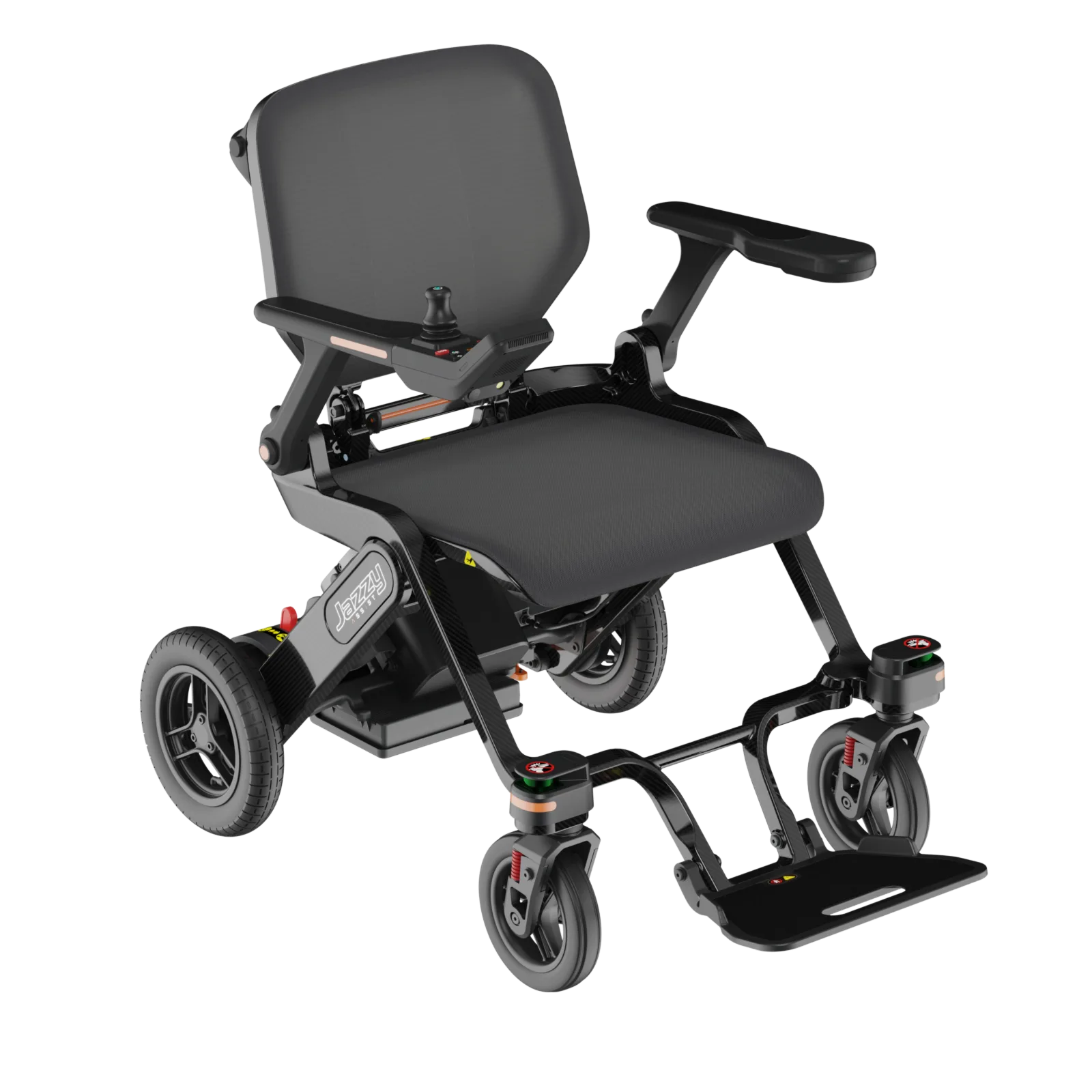
☐ Check the wheelchair loan policy. The Smithsonian's National Museum of Natural History offers manual courtesy wheelchairs free of charge, on a first-come, first-served basis, for use inside the building only — and it encourages visitors to bring a wheelchair because availability is limited. Tate's accessibility pages list wheelchair and mobility scooter provision per gallery. The pattern is consistent: loan chairs exist, but numbers are finite, so treat your own chair as the plan and a loan chair as a bonus.
☐ Check lifts, toilets and rest stops on the same page. Confirm that lifts serve every public floor you want to visit, and note where the accessible toilets are — the Smithsonian lists them by floor and hall, and Tate's pages list facilities including accessible toilets. A museum map with these marked saves a lot of searching on the day.
☐ Look for a visual story or preparation guide. Tate publishes visual stories with photographs showing what to expect from a visit to each of its galleries — what the entrance looks like, where facilities are, what the galleries feel like. Skimming these before the visit removes most of the unknown.
☐ Save the access contact details. Both Tate and the Smithsonian publish a phone number and email for access services on their accessibility pages. Store them in your phone. If something does not work on the day — a lift is out of service, a loan chair is unavailable — you will know exactly who to ask.
Q&A: Inside the Galleries — Lifts, Toilets, Seating and Quiet Corners
Q: Will lifts get me to every floor? A: Check the page, but the news is usually good. The Smithsonian's National Museum of Natural History states that all of its exhibitions are wheelchair accessible and all public floors can be reached by elevator. Tate's accessibility pages likewise document entrances and facilities per gallery. What you want to confirm is not just that a lift exists, but where it is and whether it serves the specific exhibitions you came to see.
Q: Are the toilets wheelchair accessible? A: Yes, as a rule — and museums tend to document this carefully. The Smithsonian states that all of its restrooms are accessible to visitors with mobility disabilities or in wheelchairs, and it lists family and companion care restrooms by location. Tate's accessibility pages include facilities information covering accessible toilets. Note the locations on the map before you start, especially in a large building where the nearest accessible toilet may be a floor away.
Q: Can I take a break when I need to? What about talks and films? A: Museums expect visitors to pace themselves. The Smithsonian notes that all theaters include wheelchair locations and companion seats, and that all food service areas are wheelchair accessible with no steps, turnstiles or other obstructions. Tate's pages mention quiet rooms among their facilities — a useful retreat if the galleries get overwhelming. Plan your route with rest stops in mind; a big museum is a marathon, not a sprint.
Q: Can I bring a service animal? A: Yes. Both Tate and the Smithsonian welcome assistance and service animals in their venues — Tate lists assistance dogs among its accessibility facilities, and the Smithsonian states that service animals specially trained to assist a person with a disability are welcome in all museum exhibits and venues. Pets that are not service animals are a different matter, so check the page if you are unsure which rules apply to your animal.
Q: Is there anything about food and drink I should know? A: Cafes and restaurants inside museums are generally accessible — the Smithsonian confirms its food service areas are reachable without steps or turnstiles — but layouts vary. If you use a larger powerchair, a quick look at the cafe's location on the museum map (or a question to the access team) can save you from a tight squeeze at lunchtime.
Q: Are temporary exhibitions as accessible as the permanent galleries? A: Usually, but not always. Special exhibitions can use tighter layouts, temporary walls or dimmer lighting, which affects manoeuvring room and visibility. If a blockbuster show is the reason for your visit, check whether the exhibition has its own access notes on the museum's website, and ask the access team about the layout before you book a timed slot.
Checklist: Contacts, Companions and the Day Itself
Final checks for the day of the visit:
☐ Reconfirm the venue-specific policy, not the group's. Accessibility promises differ between buildings: Tate maintains separate accessibility information for each of its galleries, and every Smithsonian museum publishes its own page. If you switched plans from one venue to another — say from Tate Modern to Tate Britain — recheck the page for the new venue.
☐ Know who to contact and how. Save the museum's access services phone number and email from its accessibility page. The Smithsonian's National Museum of Natural History, for example, lists (202) 633-3611 and an access email; Tate's gallery pages carry their own contact details. A two-minute call the day before can confirm loan-chair availability, lift status and the best entrance for your route.
☐ Check companion arrangements. The Smithsonian's theaters include companion seats alongside wheelchair locations, and its accessibility pages note companion care restrooms. If you visit with a companion or carer, confirm whether they need a separate ticket for any paid exhibition and where they can wait during any part of the visit you do alone.
☐ Confirm the service animal policy in writing. Both Tate and the Smithsonian state that trained service and assistance animals are welcome throughout their venues. If staff at the door question it, pointing to the museum's own published accessibility page settles the matter fast — keep the page open on your phone.
☐ Time your visit. Museums are quietest on weekday mornings and outside school holidays; crowded galleries mean slower progress and harder manoeuvring. If the museum offers relaxed or quiet sessions, consider those — Tate runs access-related programmes for disabled visitors with features like additional seating and printed resources.
☐ Pack for the building. Bring what you will need for several hours: water, medication, a phone charger, and a light layer (galleries can be cool). Know where the information desk is — it is usually the place to ask for a loan wheelchair, directions to the nearest accessible toilet, or help if a lift is out of service.
One last note: access information changes. Exhibitions rotate, buildings are renovated, and loan-chair stocks vary. Everything in this guide reflects what Tate and the Smithsonian published on their official accessibility pages; before you travel, open the page for your specific museum and confirm the details still hold. Ten minutes of checking beats an hour of improvising at the entrance.
☐ Keep expectations flexible on the day. A lift can be out of service, a loan chair can be unavailable, and a gallery can be busier than expected. Museums with good access services will improvise with you — suggest an alternative route, find seating, or reschedule a talk. Knowing the access team's number (see above) turns a problem into a two-minute phone call.