Access arrangements differ by building, including listed buildings; confirm seating, toilet and hearing-loop details with the venue.
In brief
- Ask about seating position, not just entry: centre seating beats a lone space at the back
- Parish Accessibility Fund: £800,000 total, grants up to £5,000; All Hallows spent £3,100 on parking and centre seating
- Check toilet location, hearing loop and a named access contact before your first visit
The entrance is only the first test
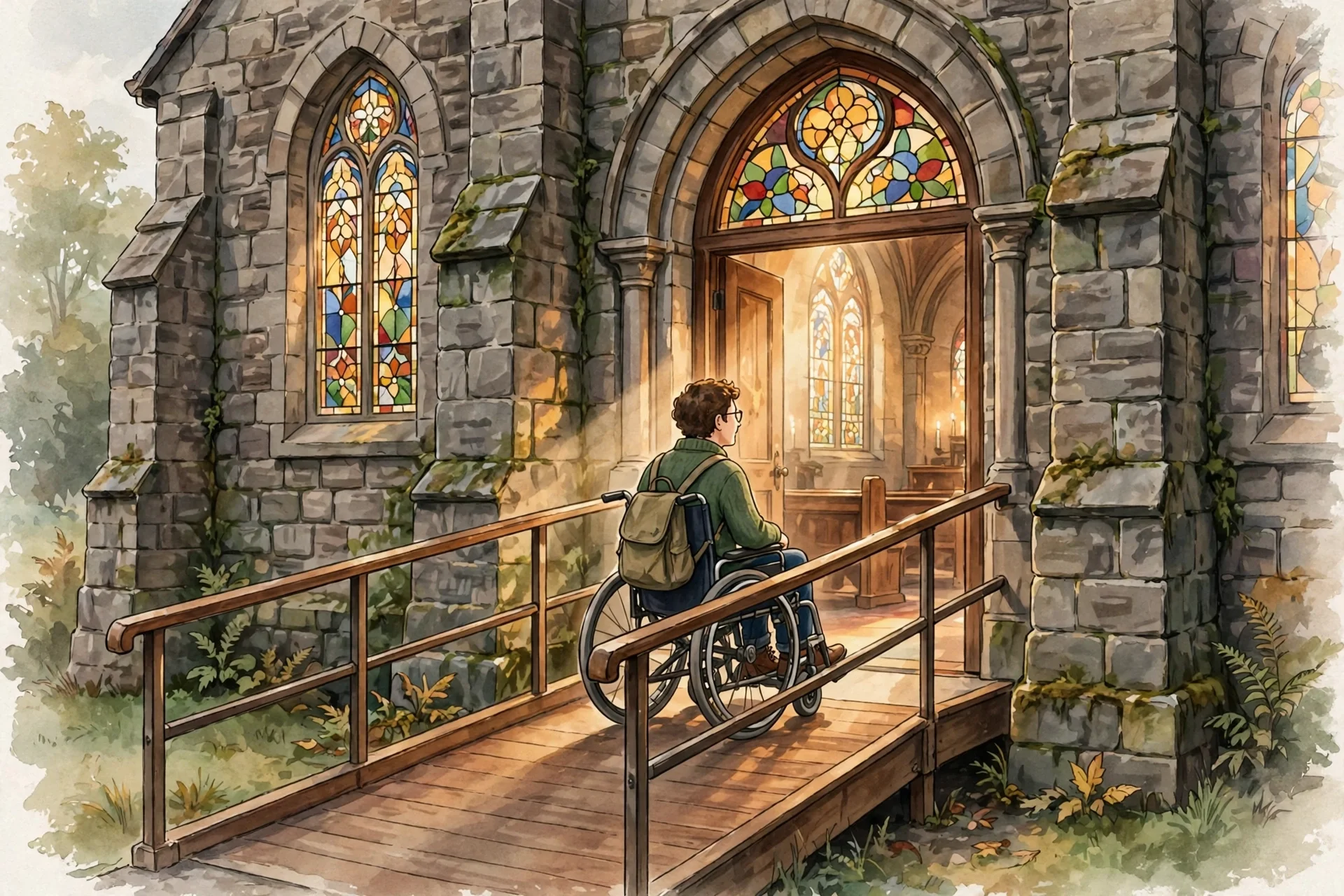
The Diocese of Bath and Wells guidance puts it plainly: church buildings should be open and accessible to all while preserving their heritage, and adjustments can include step-free access, accessible toilets, hearing loops or other assistive technology, and clear signage and lighting. For listed buildings, changes still need to follow the faculty process, with the diocesan advisory committee able to help balance access improvements with heritage protection. For a visitor, that history explains why two churches in the same town can differ so much: one may have a ramped entrance and a level floor throughout, another may have a step at the door and a toilet in a separate building. Ask specifically: is there step-free access from the entrance to the seating area, to the place where communion or blessings are distributed, and to the toilet? A church that can answer all three is a different visit from one that can only answer the first.
Where you sit matters as much as whether you get in
The London diocese case studies show what good looks like in small, concrete changes. At All Hallows in Bispham, a £3,100 grant improved the disabled parking bay and created a space for wheelchair users at the centre of the church; previously a wheelchair user had to sit at the back on his own because there was nowhere else suitable, and he now says he feels part of the service and part of the church family. At St George's in Tufnell Park, funding paid for sturdy chairs, a portable ramp, sensory equipment, fiddle toys and clearer signage. At the Church of the Ascension in Ribbleton, services are led in British Sign Language alongside spoken English, with a hearing loop and projected liturgy, and the building is fully step-free with accessible parking and ramped entrances. The lesson for a first visit is to ask where wheelchair spaces actually are: at the centre, at the sides, or only at the back, and whether a companion can sit beside you. Also ask whether the service is livestreamed, as St Paul's in Brentford does, so that a week when you cannot attend in person is still a week you can join.
Toilets, hearing and the welcome at the door
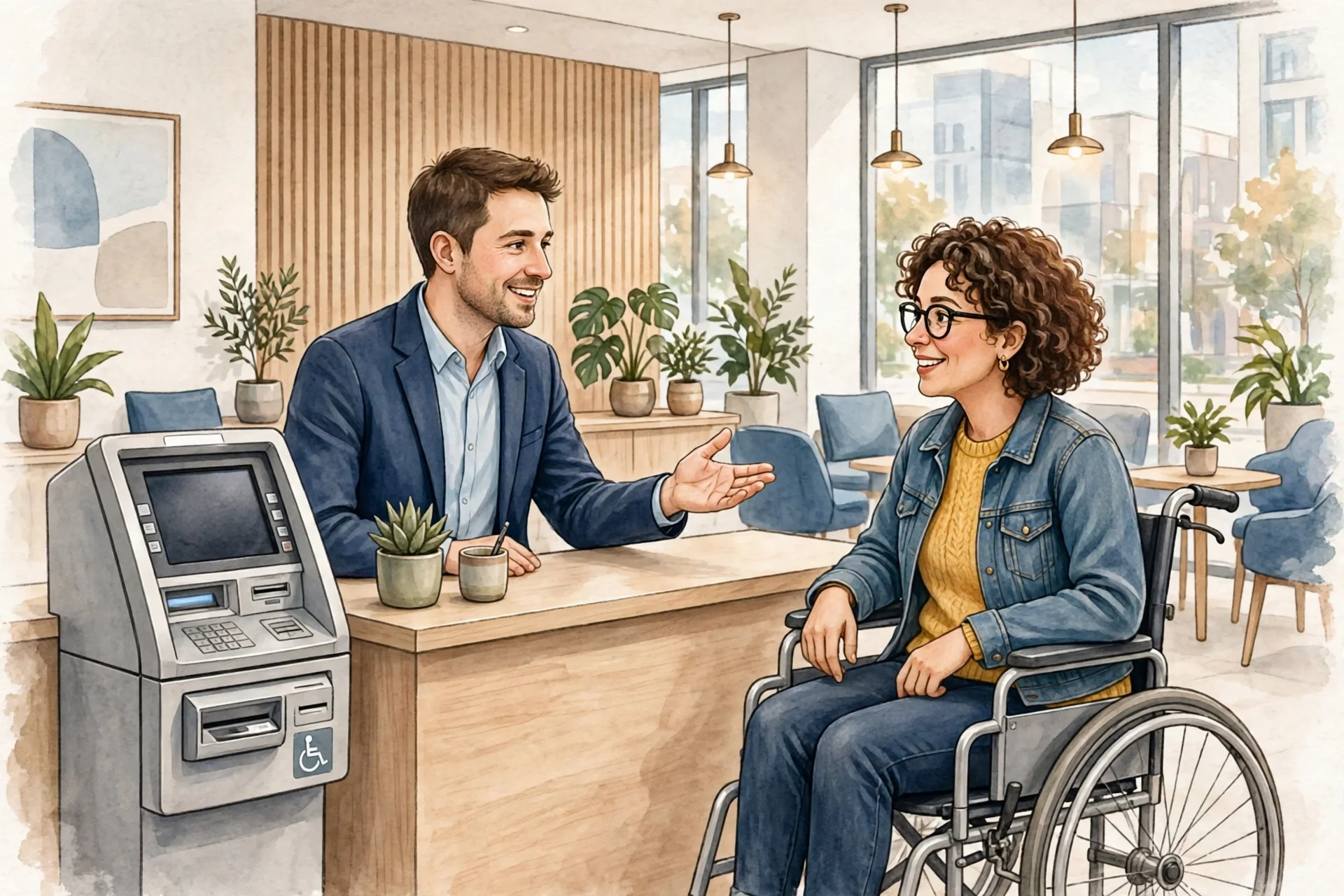
Three smaller checks complete the picture. First, the toilet: is there an accessible toilet in the same building, reached step-free, and is it unlocked and usable during services, or only during office hours? Second, hearing and sight: is there a hearing loop, large-print orders of service, or projected words, and does anyone on the welcome team know how to switch the loop on? Third, the welcome itself: is there a named contact for access questions, and can you be shown the seating, the toilet and the exit route before the service starts rather than during it? The Parish Accessibility Fund, with £800,000 available in small grants of up to £5,000, exists because parishes themselves recognise that these are practical, fixable barriers, not abstract ones. A place of worship that has recently used such a grant is likely to have thought about exactly these details. Ask, visit once, and judge by the seating, the toilet and the welcome, not by the doorway alone.