Based on UCAS disabled-student open-day guidance and a Kent and Medway Progression Federation blog, checked 1 November 2026.
Before the day: tell them what you need
UCAS says that if you have complex support needs it may take time to arrange adjustments, so the earlier you speak to the university, the sooner they can start making arrangements. Its open-day guidance says you can meet the disability adviser or student support team on the day to discuss how they can support your individual needs, and that their contact information is on the university or college website. A Kent and Medway progression blog written for disabled students gives the same advice in practical form: share accessibility requirements in advance, which may include accessible formats of information, sign language interpreters or a quiet room, and ask about a tour with a student guide trained to support disabled students or extra time to explore the campus. The blog also advises speaking to the disability or wellbeing team, who can offer tours, information about facilities, and answers to your questions. Do this for every university you visit, not just your first choice, so you can compare like with like.
On the day: test the campus, not the brochure
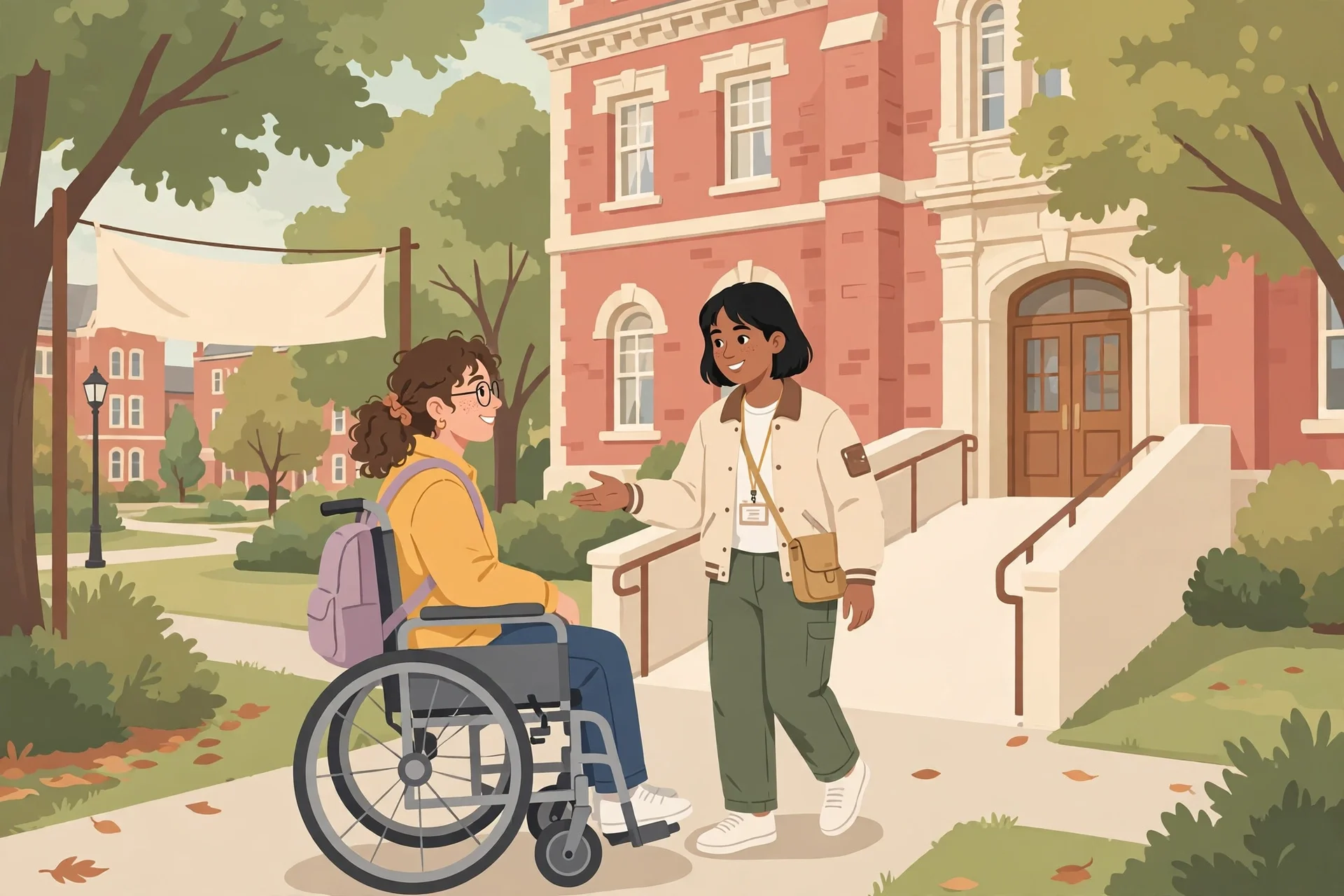
UCAS student Juan, a psychotherapy student who is registered blind and uses a guide dog, describes arriving at an open day with his sister, showing a Blue Badge to a parking attendant who removed a cone from a disabled bay and waved them in, and finding every question answered positively. At a different university, he says, staff sucked their teeth and looked uncomfortable when he asked the same questions, which he calls a warning flag. His tips for open days are worth copying: do not be afraid to ask awkward questions, go with somebody who knows you for a second opinion, seek out disability services, student services and accommodation services and say hello, talk to student ambassadors about the things staff will not know, and go with your gut feeling. For a wheelchair user, the awkward questions are concrete: step-free routes between lecture rooms, accessible toilets on each floor you will use, lift reliability and what happens when a lift breaks, accessible accommodation, and where the quiet rooms are.
If you cannot attend, and what to ask afterwards
UCAS notes that if you cannot make an open day, many universities offer virtual tours, so you do not have to miss out, and that you can chat to current students afterwards through UniBuddy. A virtual tour cannot test a ramp or a lift, so if you use one, follow it with an email to the disability team asking the same awkward questions in writing, and ask whether a disabled student ambassador can speak to you. After each visit, write down what you found within a day: which buildings were genuinely step-free, which answers were confident and specific, and which were vague. Universities are committed to making campuses accessible and welcoming, as the Kent and Medway blog puts it, but the open day is your chance to check that commitment against the ground you will actually wheel across for three or four years.