Facts checked against the linked sources on 2026-11-02. Prices, dates and session details can change; confirm with the provider before booking or ordering.
Who can get the free vaccine
The eligible groups for the 2026-27 season include people aged 65 or over, including anyone who turns 65 by 31 March 2027, adults aged 18 to 64 with certain long-term health conditions, pregnant women, people in long-stay residential care, people who receive Carer's Allowance or are the main carer for an older or disabled person, people who live with someone with a weakened immune system, people experiencing homelessness or staying in a hostel or night shelter, and frontline health and social care workers through their employer. Children aged 2 or 3 and school-aged children are also covered through separate routes. If you are unsure whether your condition counts as a clinical risk, ask your GP practice rather than assuming you are excluded: the list of qualifying conditions is specific, and your practice can check it against your record.
When and where to get it
Most eligible adults could be vaccinated from 1 October 2026, while pregnant women and children could be vaccinated from 1 September 2026. You can get the vaccine at your GP surgery, at a pharmacy offering the service, through your midwifery service if you are pregnant, or at a hospital appointment. Booking routes include booking online or through the NHS App at a pharmacy, contacting your GP practice, or calling 119 free of charge if you need help booking. If you have difficulties communicating or hearing, or you are a British Sign Language user, you can use textphone 18001 or the NHS 119 BSL interpreter service.
If you are housebound
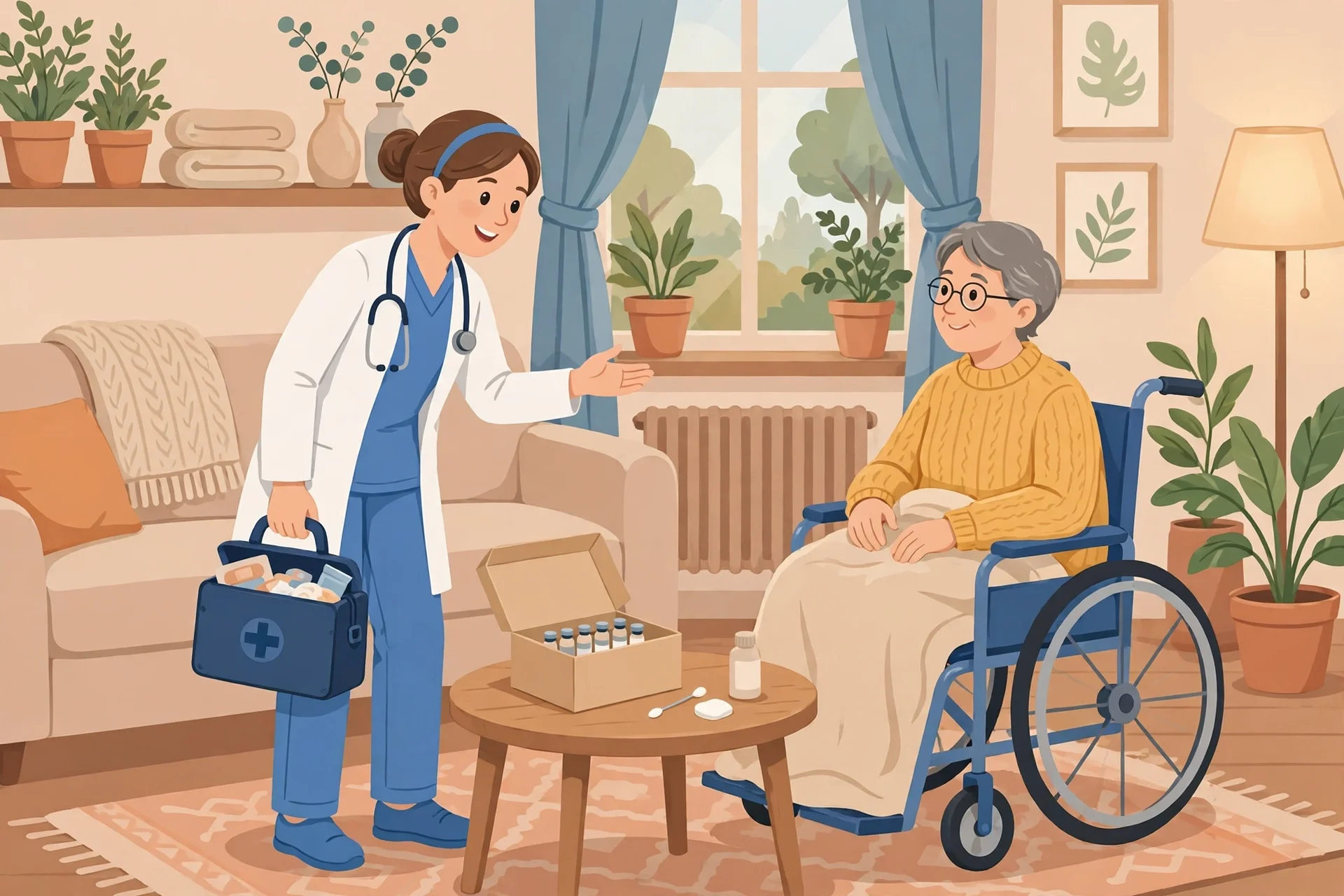
This is the part that matters most for wheelchair users who cannot leave home. If your GP practice is vaccinating its own patients, it will arrange your home visit; if it is not, it will have shared its list of eligible housebound patients with its provider, either a community pharmacy or a local GP federation, and that provider will contact you directly. If you are temporarily housebound, the same route applies: practices update their lists and notify providers when patients are added. If you are concerned that you have been missed, contact your GP practice and say so: the published guidance is explicit that patients who are worried should get in touch, rather than waiting for a call that may never come.
Making the appointment work for you
A pharmacy or clinic appointment is not automatically accessible just because it is bookable, so check the practical details before you travel: step-free access to the vaccination room, somewhere to sit while you wait, and whether a companion can come in with you. If your usual practice cannot meet your access needs, ask whether a different site in the practice group or federation can. And if you are a carer, remember that you may qualify in your own right as the main carer for an older or disabled person, even if you have no clinical risk condition yourself: carers are one of the groups most likely to miss their vaccine while looking after someone else.