UK only. Grant details from Motability Foundation checked Oct 2026; converter details from manufacturer pages.
What a WAV actually is
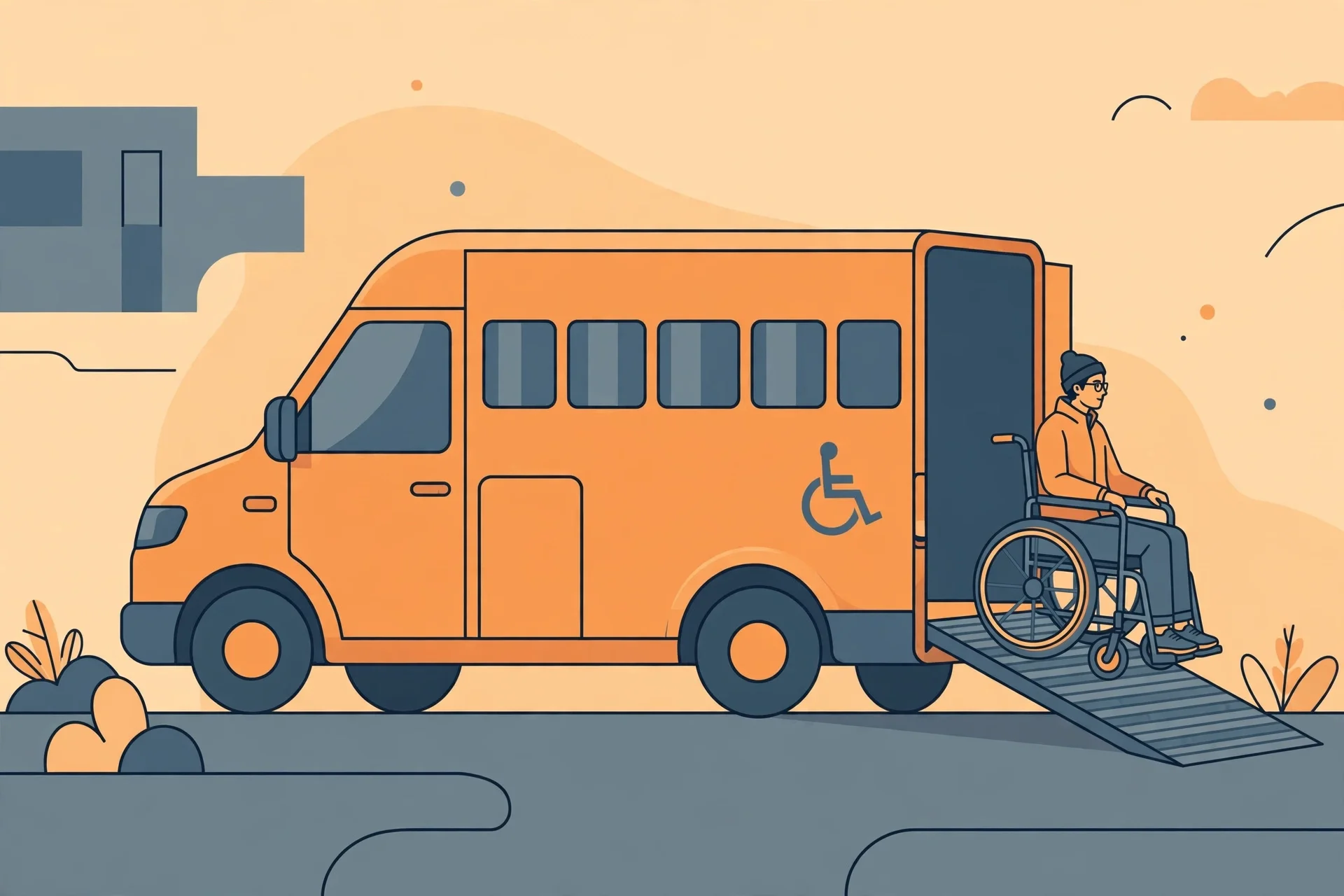
Manufacturers do not make wheelchair accessible vehicles directly. They build a standard vehicle, and a dedicated conversion company adapts it. As the Motability Foundation puts it, a WAV has either a lowered floor with ramped access or a flat floor with a tail lift, allowing a wheelchair user to travel into the vehicle and remain seated as a passenger in their wheelchair. The wheelchair is secured with a four-point tie-down system in the floor, and the person travelling in it wears a personal seat belt.
Established converters design and engineer the whole adaptation in-house. Brotherwood, the UK's longest-running WAV specialist (converting since 1985, ISO 9001 accredited), describes the goal as letting wheelchair users travel closely with other passengers rather than isolated at the back — with a comfortable ride, good visibility and full type approval for safety. Allied Mobility, which builds over 150 WAVs a week from base vehicles by Peugeot, Ford, Vauxhall, Volkswagen, Citroën and Renault, lists the typical engineering package: an easy-use lightweight ramp, a lowered floor for headroom and a gentler ramp gradient, an electric-assist winch to guide the chair in and out, and Q'Straint wheelchair restraints. Every conversion should be type-approved — if a converter cannot show approval, walk away.
The layouts and choices that change daily life
Where the wheelchair user sits is the decision that shapes everything else. The main layouts: mid-row (behind the front seats), third row (toward the rear), or the up-front passenger position beside the driver. Rear-entry layouts, where the user wheels in through the back, are the most common and usually preserve the most seating. Up-front layouts put the wheelchair user next to the driver with a clear view of the road — widely considered the most sociable and comfortable option — but typically cost more and reduce total passenger seats, since space is needed for the chair to travel through the vehicle. Side-entry variants keep more seats but need parking space alongside the vehicle for the ramp.
Then the access method: a lowered floor with a ramp gives a gentle gradient and keeps the vehicle's profile discreet, while a flat floor with a tail lift suits heavier chairs or users who cannot manage any gradient. Automated features — automatic tie-downs, powered ramps, automatic tailgates — are available on some conversions and are worth discussing if the people loading the chair have limited strength. Your choice should follow your chair (its weight, width and turning needs), your passengers (how many travel most days), and your parking (driveway space for rear versus side entry). This is why every reputable converter offers a free home demonstration: the only way to know a WAV works for you is to try your actual chair in the actual vehicle.
Buying, leasing and grants: the money side
New WAVs are typically leased over five years and nearly-new ones over three, and if the vehicle still suits you at the end of the lease you may be advised to keep it longer. If you are on the Motability Scheme, the Motability Foundation offers grants that can cover the Advance Payment for a suitable WAV plus essential adaptations — but not premium specifications, dealer options unless essential for access, fuel or running costs, or a vehicle you have already ordered. Grants are means-tested on household income and savings, you can hold only one grant at a time, and you must apply and be approved before placing any vehicle order.
Two related grants are worth knowing: the Independent Driving Solutions grant if you need to drive from your wheelchair, and the Bespoke Passenger Solutions grant if you are hoisted at home and need personal care administered inside the vehicle. Note the Foundation's honest steer — if you can transfer safely into a car seat, it will usually investigate a standard car with adaptations first, since that is cheaper and simpler than a WAV.
Buying used is a genuine alternative: used WAVs are often in better condition and lower mileage than equivalent standard cars for the money, and dealers stock multiple conversions to compare. Whichever route you take, the checklist is the same: book the free home demonstration and bring your actual wheelchair; check the tie-down and restraint system fits your chair; confirm servicing and warranty arrangements; and verify type approval. A WAV is a five-year relationship — an hour with the vehicle now saves years of compromise.