Deployment scope, dates and operating model from WHILL's 3 September 2026 announcement; passenger volumes and eligibility details from CNA's 4 August 2026 reporting. Checked 29 September 2026.
In brief
- WHILL's full rollout at Changi brings up to 18 autonomous wheelchairs to T2/T3 transit areas, its largest airport deployment.
- Chairs are dispatched to arrival gates and carry eligible transfer passengers via the Special Service Lounge.
- Best for transfer passengers with 90+ minute layovers who can walk short distances; it complements, not replaces, staffed assistance.
From trial to full rollout: what changed
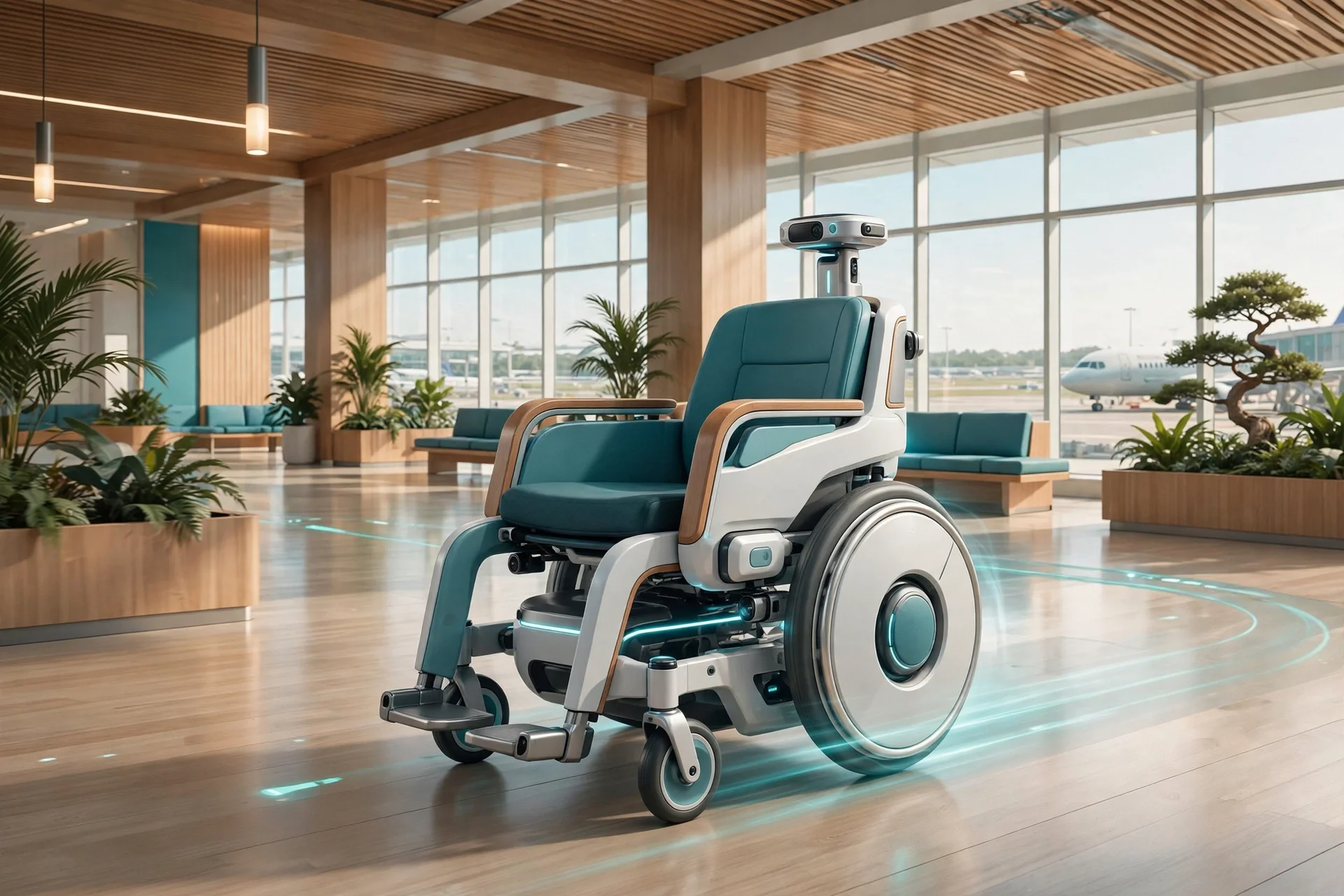
WHILL announced on 3 September 2026 that its Autonomous Service at Singapore Changi Airport had moved from trial to full deployment. A fleet of 10 units operated from March 2025 through 2026; the first phase of the live rollout brings up to 18 autonomous wheelchairs to the transit areas of Terminals 2 and 3. The company calls it its largest airport implementation to date, building on more than one million autonomous rides delivered across 26 airports and facilities worldwide. Before the expansion, WHILL says it ran rigorous safety testing covering speed controls, obstacle detection and navigation performance.
How the service actually works for transfer passengers
The workflow is built around connecting flights, which makes sense: Changi and its ground handler SATS report about 2,300 wheelchair assistance requests a day, and four in five come from transfer passengers. Airport operations staff remotely dispatch WHILL units to specific arrival gates based on incoming flight schedules. A unit greets disembarking passengers at the gate and autonomously transports them to the Special Service Lounge for passengers with reduced mobility. For connecting passengers, a unit is redeployed from the lounge to carry them onward to their next boarding gate. The service is designed to extend, not replace, frontline staff: no continuous one-to-one escort is required, and passengers can request staff support on demand, freeing ground teams to focus on travellers who need hands-on care.
Who can use it — and the limits to know
Eligibility is narrower than a general wheelchair service. The chairs suit passengers who need mobility help over longer distances but can still walk short distances on their own, and the rollout is aimed at transfer passengers with connecting times of more than 90 minutes. The autonomous wheelchairs currently serve transit passengers on airlines handled by SATS, and the service cannot be specifically requested when booking wheelchair assistance with your ticket — SATS staff identify suitable passengers in advance from airline-provided profiles and itineraries. If you need lifting, personal care or help with a personal power wheelchair, you still need standard staffed assistance, so keep your airline assistance booking as the primary plan and treat the autonomous option as a complement.