UK-focused. Applies to British Airways-operated flights departing from or arriving in the UK. Time limits and arrival times are taken from BA’s published disability assistance guidance and may change; verify on the official page before travel. The BA disability assistance page timed out during verification on 2026-10-14; policy details were cross-checked against BA’s official “How to request assistance” guidance.
Booking Assistance: Channels and Deadlines
British Airways asks passengers who need disability or mobility assistance to notify the airline as early as possible and at least 48 hours before departure, so there is time to arrange the right support. The main self-service channel is Manage My Booking on the airline’s website: after entering your booking reference and surname, choose “Request assistance” from the menu and select the type of help you need. If you are making a new booking and travelling with a disability, BA’s Accessibility Team can give advice before you book, with UK-based customers directed to that team and customers elsewhere pointed to their local support team. On the request form you describe your mobility needs in your own words — whether you can walk short distances, whether you can climb steps, and whether you are travelling with your own wheelchair or mobility aid. BA’s published assistance categories cover deaf or hard-of-hearing passengers, blind or low-vision passengers, passengers with non-visible disabilities, and passengers with mobility issues, so pick the option that matches and add notes rather than squeezing your situation into the wrong box. BA notes that its former Frequent Traveller Medical Card scheme is no longer accepted, and that arrangements are now made through the Manage My Booking flow instead. Once submitted, confirm that the assistance appears on your booking confirmation and keep a screenshot or printout, because it is the record you will point to at the airport. Time-sensitive figures in this article come from BA’s published guidance and the airline can change them, so re-check the official disability assistance page before you travel rather than relying on memory.
At the Airport: Check-In, Handover and Boarding
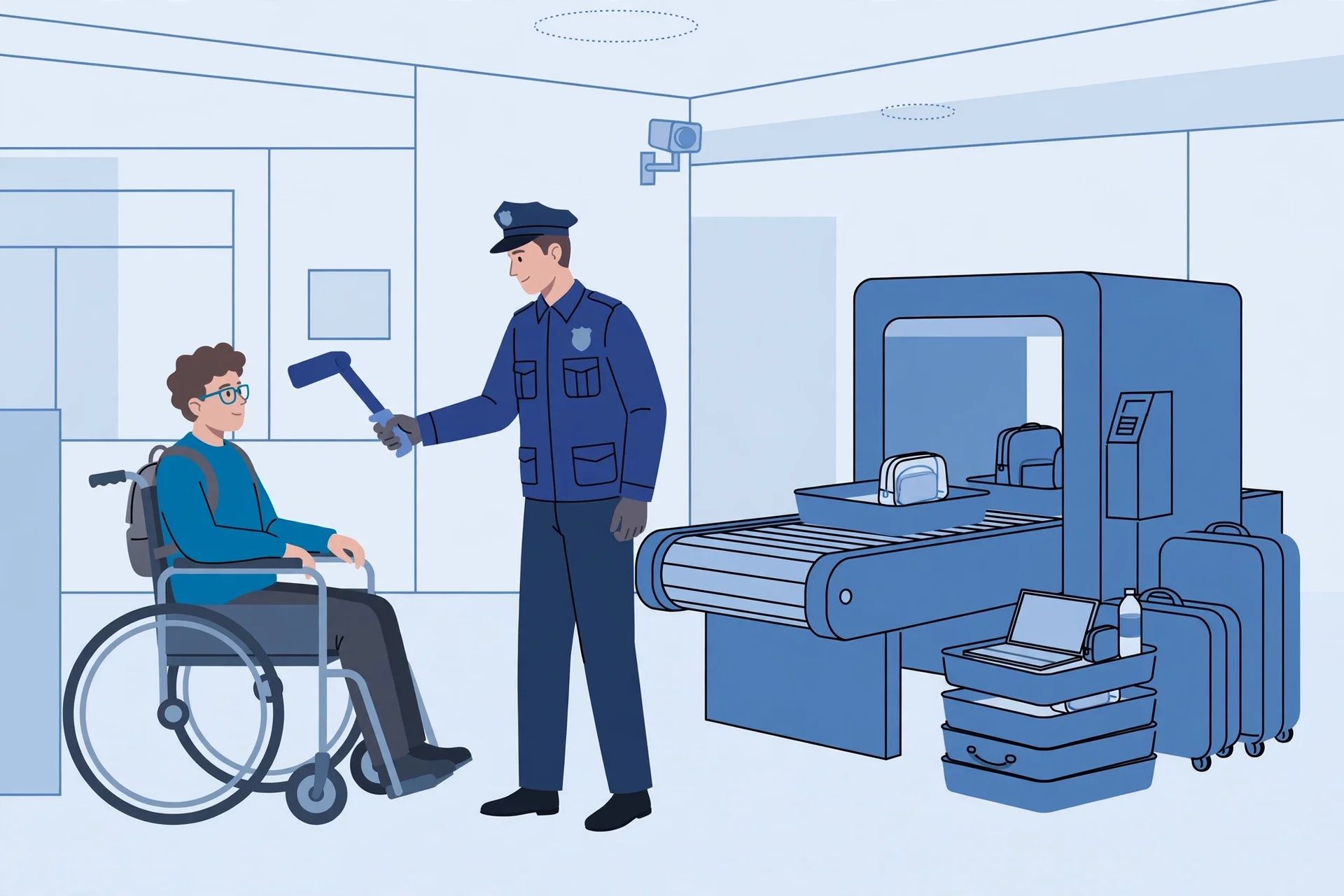
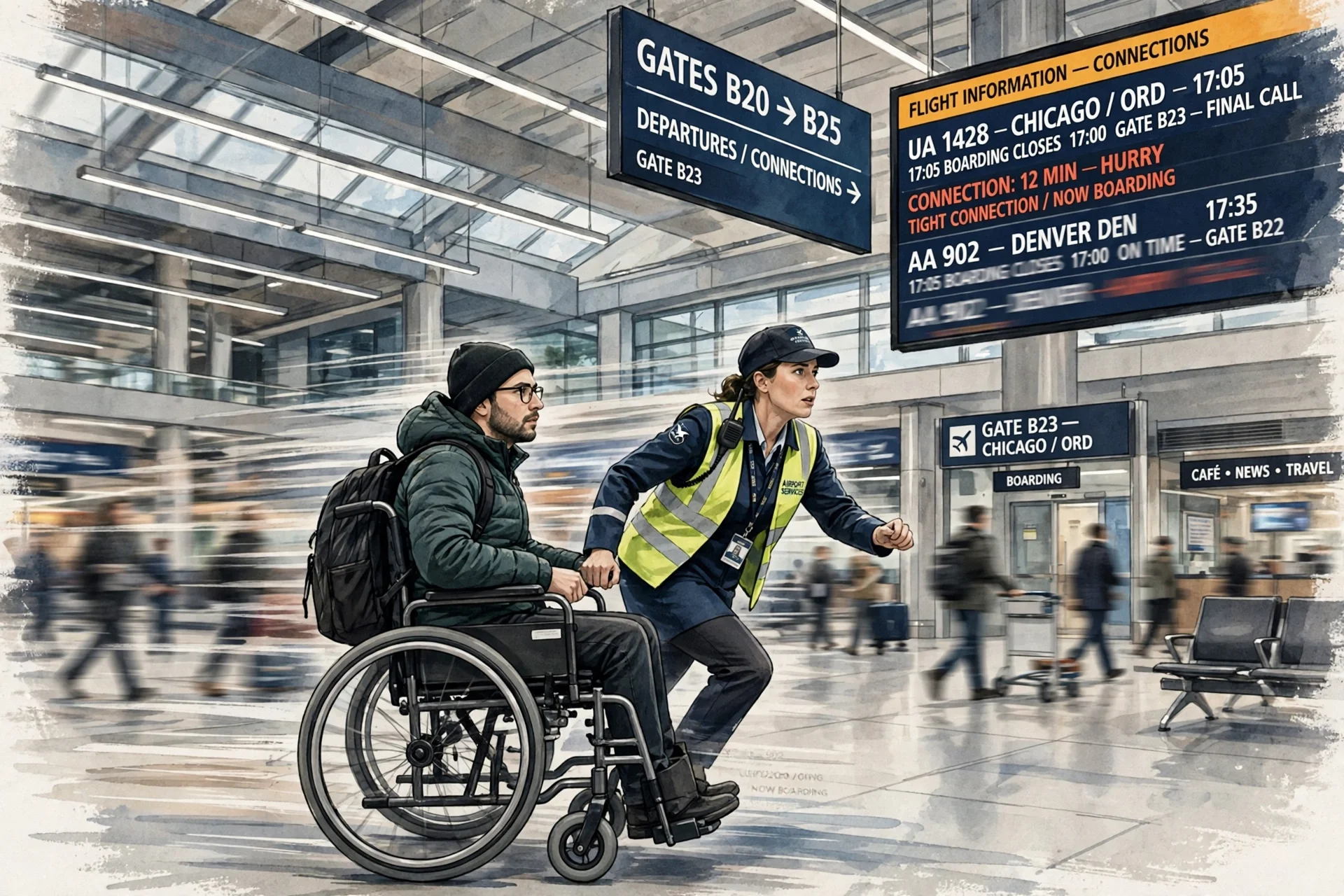
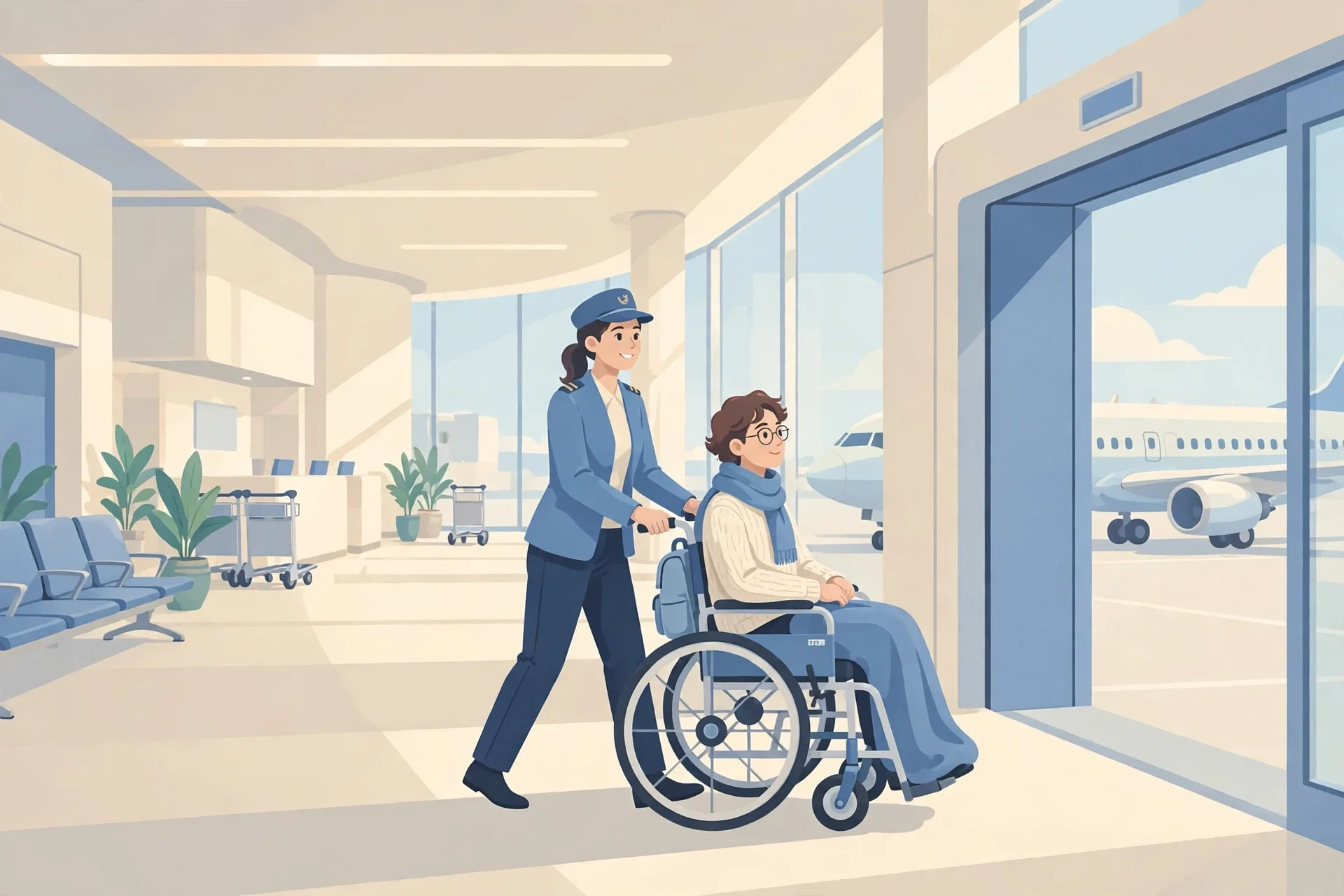
On the day of travel BA advises arriving at least three hours before a long-haul departure and two hours before a short-haul one, which gives the assistance team time to learn your specific needs and allocate staff. Head to the BA check-in area or the special assistance desk — many terminals signpost it separately — and confirm the request that is already on your booking; staff will then agree with you where the handover happens, for example whether you transfer to an airport wheelchair at check-in or keep your own chair until the gate. You can usually stay in your own wheelchair through security and as far as the aircraft door, at which point you transfer to an aisle chair for boarding. Airport wheelchairs are provided by the airport’s assistance provider under the UK’s passenger rights framework, while BA’s own team handles the parts of the journey the airline controls, so tell staff about both legs if you are connecting and ask that assistance is noted end to end. If you need help with hand luggage, with the route to the departure gate, or with a buggy or electric cart between terminals, say so at check-in rather than at the gate, because staff rotas are planned from the requests logged in advance. Cabin crew can help you settle into your seat and move to and from the onboard wheelchair, but they cannot provide personal care or lift passengers, so if you need continuous support during the flight, plan to travel with a companion. If the booked assistance is late or missing, speak to the BA assistance desk first, then escalate in writing to the airline; the UK Civil Aviation Authority’s passenger pages explain the rights framework that underpins disability assistance at UK airports, which is useful background if a complaint needs to go further.
Travelling with Your Own Wheelchair: Battery Declarations and Problem Cases
If you want your own manual or powered wheelchair carried in the hold, BA asks for detailed technical information in advance so the device can be stowed safely: the wheelchair or mobility aid type, its dimensions, its unladen weight, the number of batteries fitted, the battery type (spillable, non-spillable wet cell, dry cell or lithium), and instructions for switching the device off to prevent it from activating by itself. The airline says it will always try to protect wheelchairs, for example by placing them in containers, but it also warns that in some cases it may not be able to carry a device that exceeds acceptable dimensions or uses a battery type it cannot accept, so declare honestly and ask for written confirmation that your device is accepted. Attach a tag with your name and phone number to the chair before handing it over, and photograph its condition — damage claims go much more smoothly with dated pictures and the baggage irregularity reference filed before you leave the arrivals hall. Lithium-powered chairs attract the most scrutiny, so check BA’s current battery limits on the official site before you travel rather than assuming last year’s rules still apply. If your chair is damaged, delayed or lost, report it immediately, keep every receipt for replacement hire or repairs, and pursue the claim in writing with the airline; the UK CAA’s passenger guidance is the backstop reference for how complaints about assistance and baggage should be handled. And if anything about the day’s arrangements feels wrong — a battery rule you do not understand, a refusal to carry your chair — ask for the decision in writing at the time, because a written record is what turns a bad experience into an actionable complaint later.