Screening steps follow TSA (US) guidance; assistance framework follows the UK CAA. Procedures differ by country and airport — confirm with your departure airport before flying.
The screening steps, in order
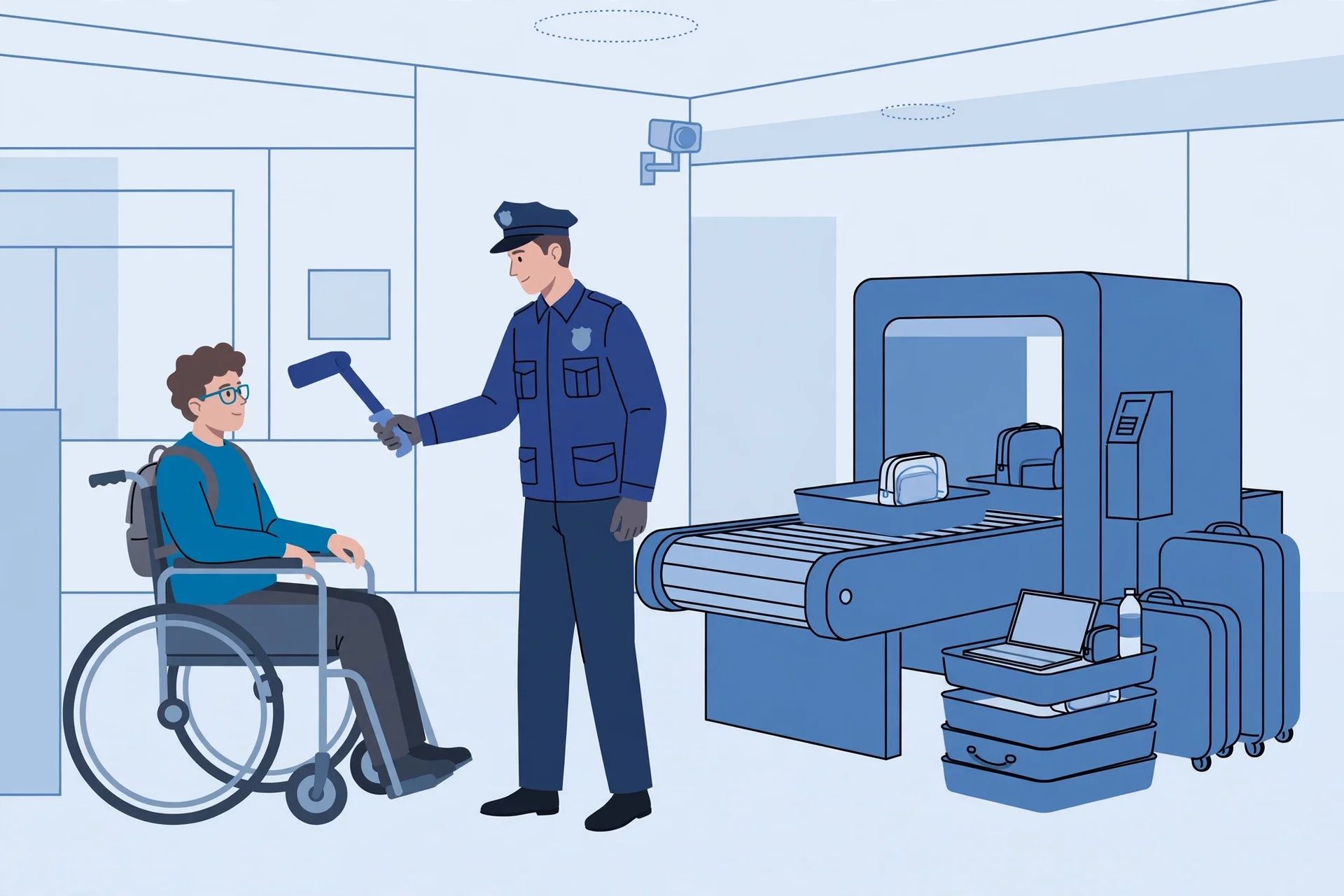
The US Transportation Security Administration (TSA) publishes its disability screening process step by step, and it starts with a conversation: tell the TSA officer whether you can stand or walk on your own. If you cannot stand steadily, you may remain seated in your wheelchair for the entire screening. What follows, in order: 1) Your wheelchair or scooter will be inspected — the officer may lift the seat cushion and run an explosive trace-detection test over the chair; any removable items go through the X-ray machine separately. 2) If you use the TSA PreCheck lane but cannot stand, you can be screened while seated with a hand swab test instead of the body scanner. 3) Medical devices attached to your body, such as an insulin pump, do not have to be removed or sent through X-ray — tell the officer and they will use an alternative screening method. The consistent principle: speak up about what you can and cannot do, and the process adapts to you rather than the other way round.
Arranging help and keeping your own chair
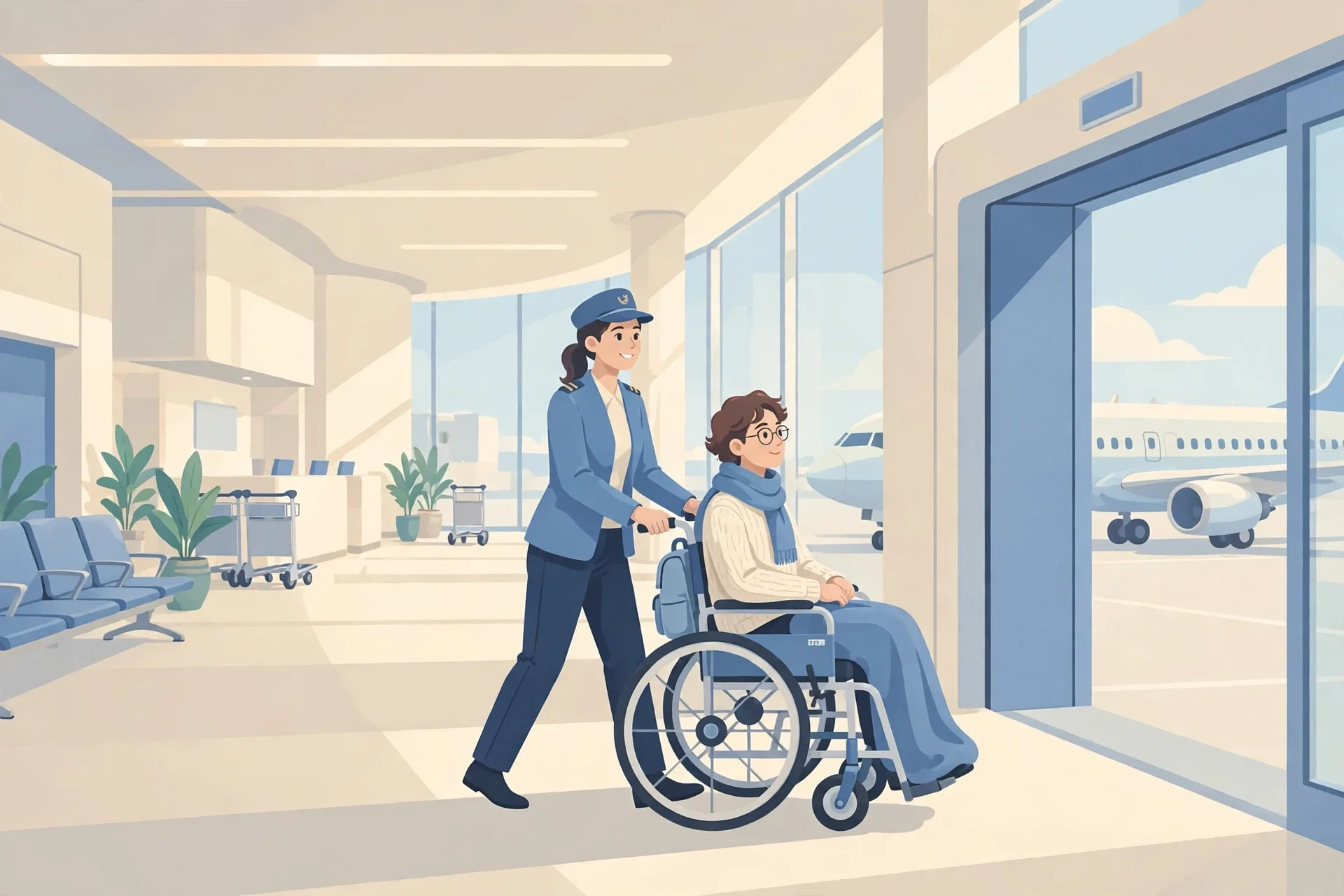
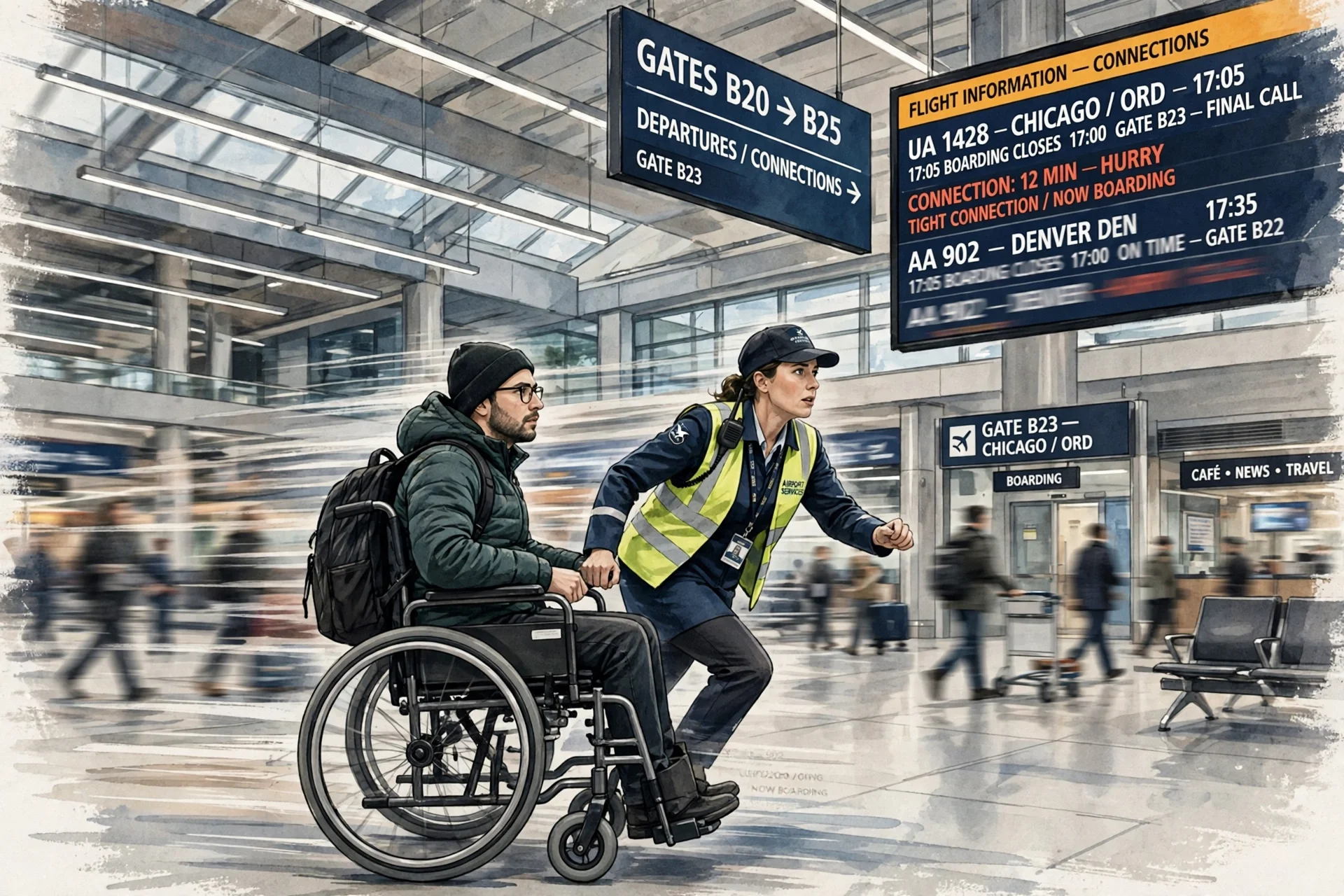
In the UK, the Civil Aviation Authority (CAA) sets the assistance framework: request help at least 48 hours before departure through your airline or travel agent, and it is free. The assistance covers the full journey through the airport, including security screening — you will be accompanied throughout. You can normally stay in your own wheelchair right up to the aircraft door, where it is then checked into the hold; on arrival, airports provide clearly signed assistance points, some with call buttons, where staff meet you. Practical tips: make the 48-hour request even if you usually manage alone, because security queues and terminal changes are where help matters most; keep any medical documentation for devices in your hand luggage; and if your chair has removable parts (cushions, side guards), carry them through yourself where possible to keep them with you.
Medical devices, removable parts and hand luggage
Medical devices need special mention because they intersect with screening rules. If you travel with a device attached to your body, such as an insulin pump, TSA guidance says you can ask for it not to be removed or X-rayed, with officers using an alternative screening method instead — the key step is telling the officer before screening begins. For the wheelchair itself, anything removable goes through the X-ray machine separately while the chair is inspected, so detach cushions, bags and side guards yourself and send them through; it is faster and keeps your belongings in sight. On the UK side, the CAA framework lets you keep your own wheelchair until the aircraft door, which means the chair you are screened with is the chair you board with — one less handover to worry about. Keep spare parts, tools and any portable ramp in your hand luggage where possible so they stay with you through the checkpoint.