Airline and airport assistance policies as published on their official pages; connection-time advice reflects commonly published guidance, not a regulatory minimum.
Why connections are the weak link
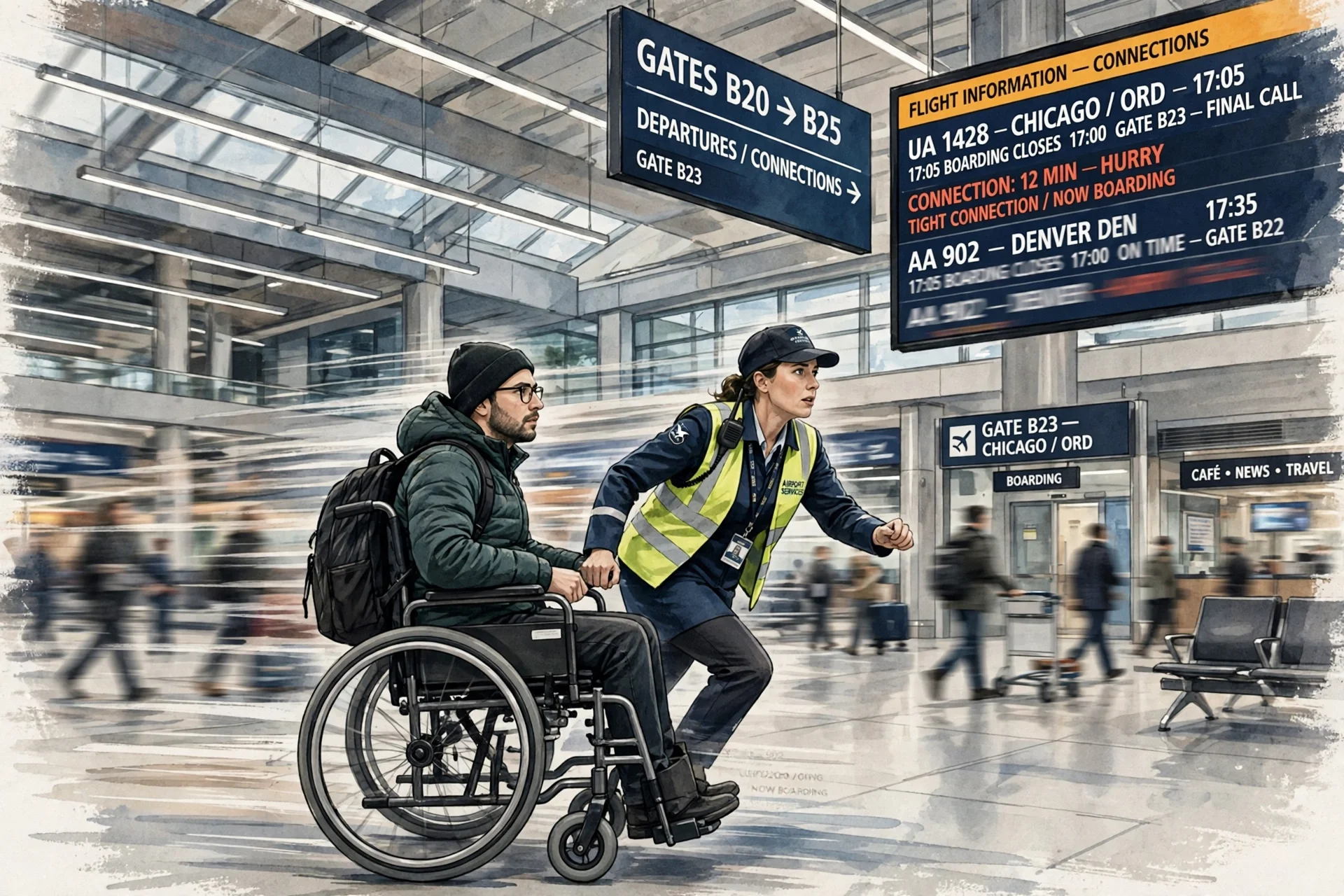
A connection adds a handoff: you must be met at the arrival gate, moved through what may be a different terminal or concourse, and delivered to the next gate before boarding closes. If assistance was only requested for the outbound airport, the connecting airport may have nobody scheduled to meet you. Large hubs make this worse — terminal changes, train rides between concourses and long taxi times all eat the buffer. The minimum connection time printed on your ticket assumes an able-bodied passenger walking briskly; for assisted travel, treat it as a floor, not a plan.
Booking a connection that works
When you book, request wheelchair assistance for every leg explicitly, including the connection — do not assume the first airport's service continues automatically. Tell the airline whether you can be left unattended during handoffs, whether you need an aisle chair, and whether your personal wheelchair is going in the hold. Build in a generous window: for international connections at large airports, two to three hours is the commonly recommended buffer, and longer is safer when a terminal change is involved. If you book through an agent, confirm the assistance request appears in the booking record for each flight. Keep your onward boarding pass and gate information where you can reach them quickly after landing.
What the airline and airport promise
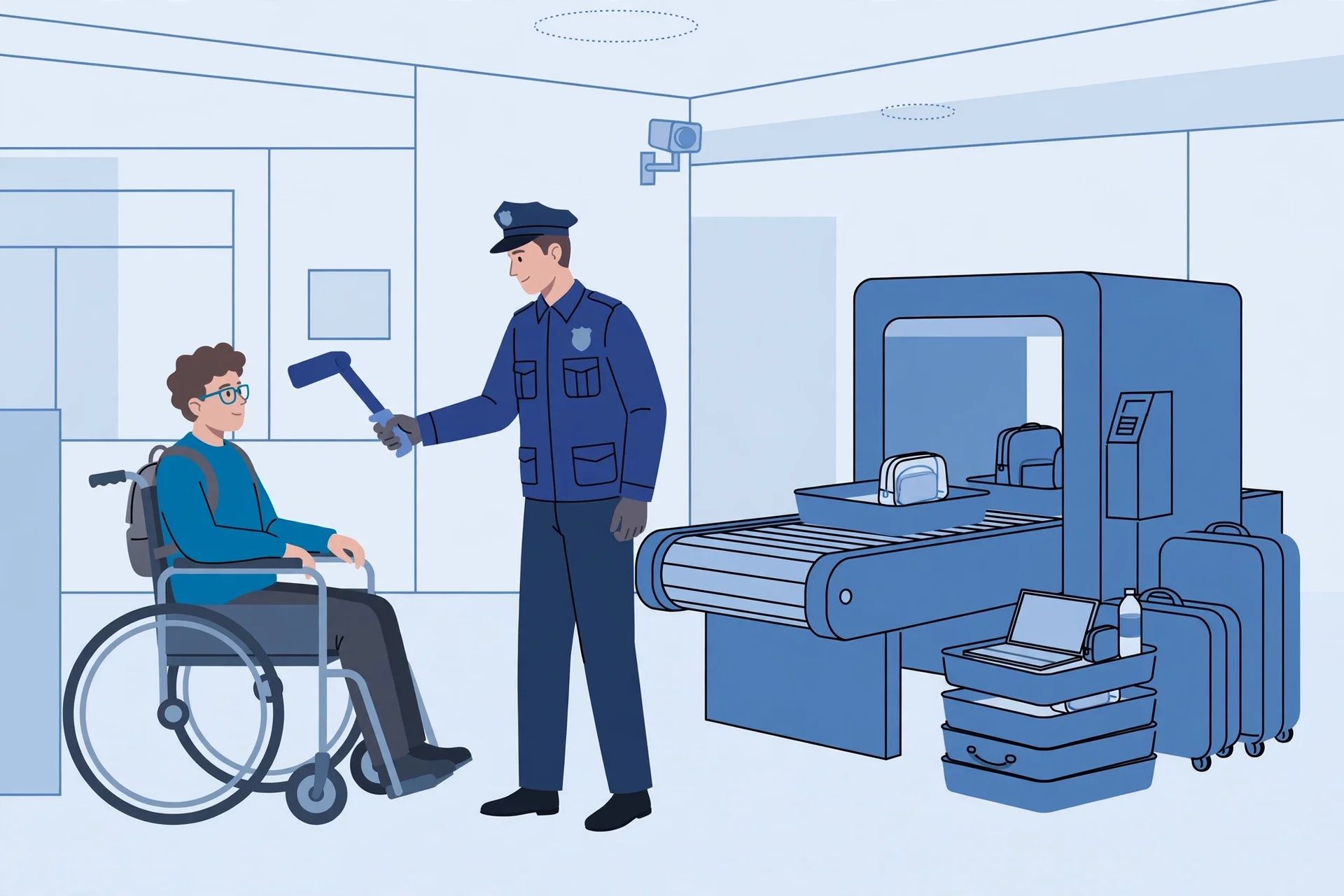
Airlines typically ask for assistance requests at least 48 hours before the scheduled departure — Turkish Airlines, for example, states this clearly and warns that later requests are accommodated only as availability allows. Airports publish their own guidance: Changi recommends booking wheelchair service through your airline up to 48 hours ahead and notes that waiting times can occur at peak demand. Turkish Airlines advises passengers with disabilities to arrive at least 2 hours before domestic flights and 3 hours before international ones so that baggage, assistance and security can all be completed in time. These are the baseline expectations; your specific airline's special assistance page is the authoritative version.
If the connection starts going wrong
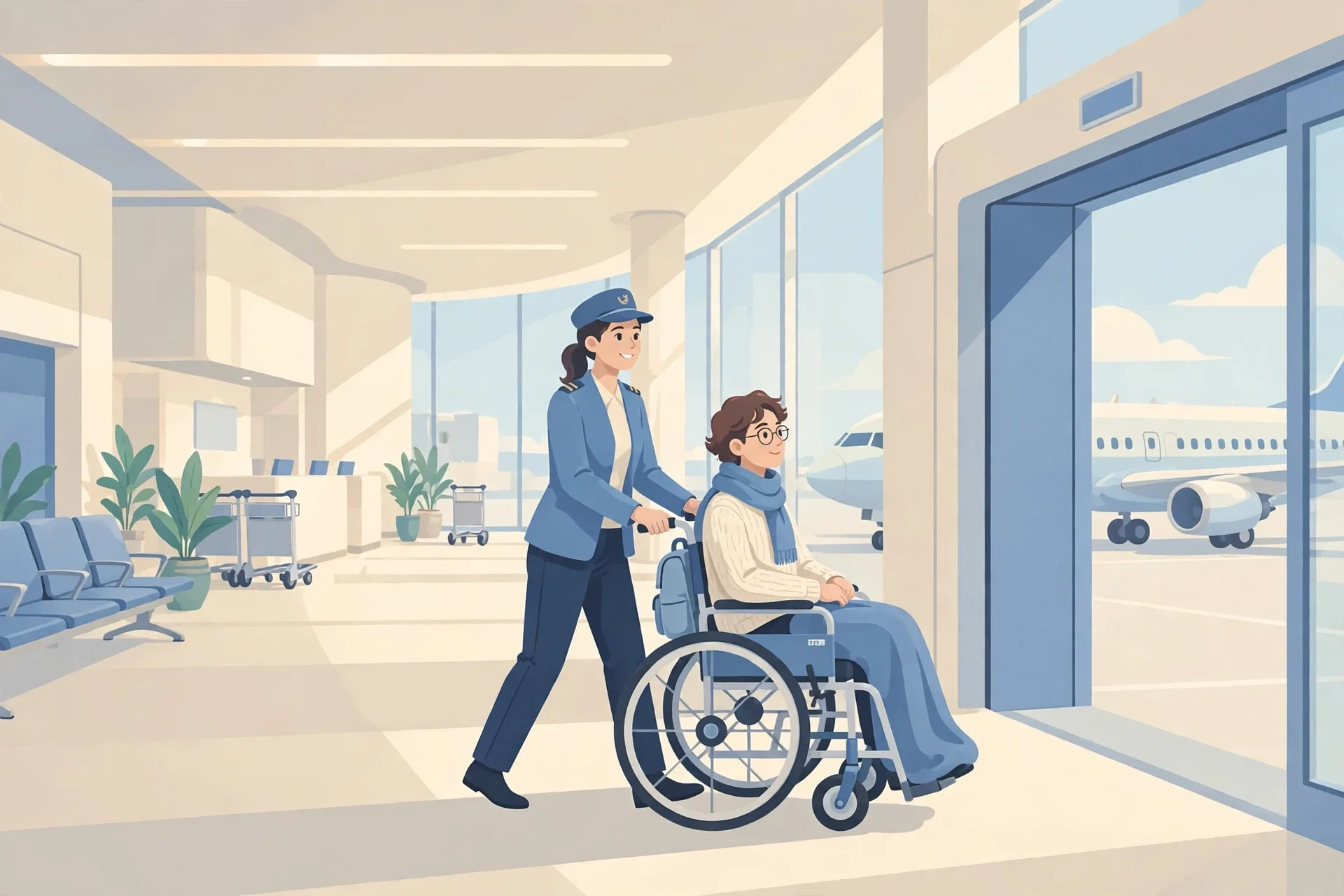
Stay on the aircraft until crew confirm how you will be assisted off — leaving with the crowd can strand you. If no assistant is waiting at the arrival gate, ask cabin crew or the nearest gate agent immediately rather than waiting quietly; ask for a supervisor or the airline's Complaint Resolution Official if front-line staff cannot help. Tell whoever assists you the departure time and gate of your onward flight so they can prioritise. If you miss the connection because assistance did not arrive, keep the details — times, airport, airline, flight numbers — and complain to the airline first, then to the relevant aviation authority if needed. Specifics make complaints much harder to ignore.