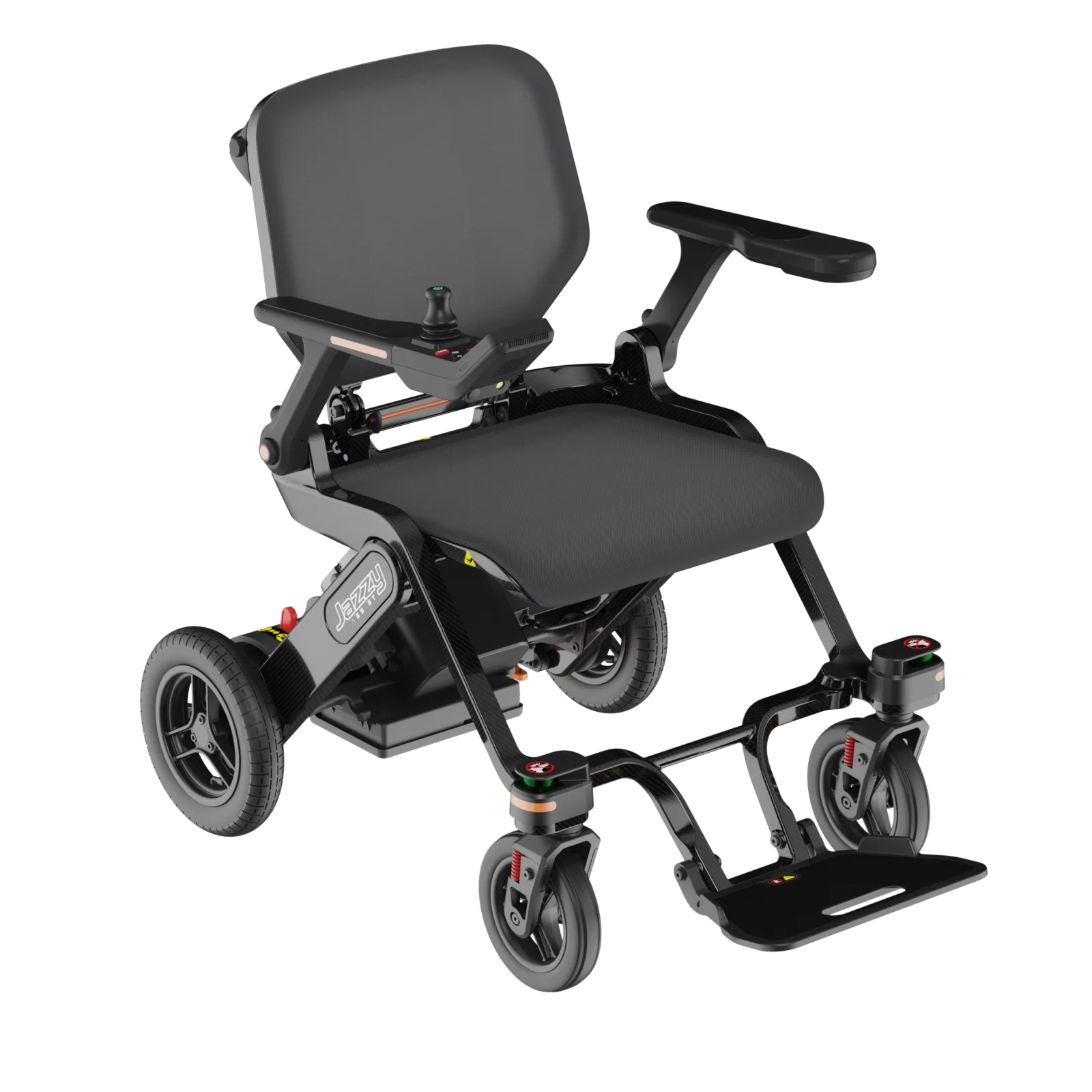
Prices are US-dollar reference ranges from Mobility Deck's 2026 guide; local markets and dealer refurb prices vary, and private sellers offer no warranty anywhere.
What Should a Used Power Wheelchair Cost?
Before you look at a single listing, anchor yourself in realistic prices — otherwise every bargain looks like a deal and every fair price looks like a rip-off. Mobility Deck's 2026 used-wheelchair guide gives US-dollar reference ranges that are a useful starting point wherever you shop:
| Type | New (approx.) | Used (approx.) | |---|---|---| | Lightweight manual wheelchair | $1,200 – $2,500 | $400 – $1,200 | | Power wheelchair | $4,000 – $15,000+ | $1,500 – $6,000 |
Across the board, second-hand prices run roughly 40–65% below new. That discount is the whole point of buying used — and it is also what you are gambling with if the chair turns out to need new batteries or a motor repair.
Several factors push a used chair up or down within those ranges. Age is the obvious one, but battery age matters more than chair age: a two-year-old chair on its original battery pack may be nearer to a $500–$1,000 battery replacement than the seller admits, so factor that into your offer. Brand and model matter because parts availability follows the manufacturer — chairs from established makers (Permobil, Pride, Sunrise Medical, Ottobock and similar) have dealer networks and spare parts long after the model is discontinued, while obscure brands can leave you hunting for a compatible joystick module or charger.
Condition and history matter more than cosmetics. A chair that lived indoors, was charged daily, and was serviced by a dealer is worth meaningfully more than the same model that lived in a damp garage. Ask for service records and the original paperwork; RespectCareGivers flags this as one of the key pre-purchase checks. And remember the total cost of ownership: the purchase price is only the start. Budget for a battery replacement within the first year or two (especially if the battery age is unknown), plus tyres, a seating cushion refresh, and possibly a service visit. A $2,000 chair that needs $800 of work in month one is not cheaper than a $2,600 chair that needs nothing — run the full arithmetic before you commit.
One more cost angle before you start shopping: in some regions, insurance or public funding (such as Medicare in the US) may cover part or all of a new chair, which narrows the used discount's advantage. Check what funding you qualify for before assuming used is automatically the cheapest path. And always clarify what is bundled — chargers, spare keys, cushions, and rain covers are commonly included by private sellers, but replacing any of them separately is surprisingly costly.
Where to Buy, Ranked From Safest to Riskiest
Not all sellers are equal, and where you buy shapes everything about your recourse if something goes wrong. In order of reliability:
**1. Certified refurbished dealers.** These specialists inspect, service, and recondition used chairs and typically offer a 30–90 day warranty. You pay more than on a private listing, but you buy a tested machine, a paper trail, and someone to call if the joystick misbehaves in week three. For a first-time buyer, this is the safest route by a clear margin.
**2. Local medical equipment / mobility shops.** Many dealers take trade-ins and sell used chairs alongside new ones. You get hands-on inspection, professional advice on fit, and a local service relationship — the shop that sold it can usually service it. Prices sit between refurb specialists and private sellers.
**3. Facebook Marketplace and Craigslist.** This is where the cheapest chairs live — and where you have zero warranty and zero comeback. The guide's advice is direct: always inspect in person, test everything on the checklist in the next section, and never send money before you have seen and driven the chair. Meet in a public place in daylight if you can, and bring someone with you.
**4. Charity and thrift shops.** Occasional bargains, and the price may help a good cause, but stock is unpredictable, staff usually cannot answer technical questions, and there is typically no return option. Fine for a manual chair; riskier for power chairs where a hidden battery fault can cost more than the chair.
**5. eBay and other online marketplaces.** Possible when nothing local is available, but shipping a 100+ kg power wheelchair is expensive and damage in transit is a real risk — a hard knock can crack a frame or damage electronics in ways that are hard to prove after delivery. If you go this route, buy only from sellers with strong feedback on mobility equipment, clarify who pays return shipping, and assume you will need a local technician's inspection on arrival.
A final channel worth mentioning: disability charities, local support groups, and occupational therapists sometimes know of chairs being passed on privately — often well-maintained chairs from known owners. These word-of-mouth listings can combine private-sale prices with dealer-level history, so ask around before you default to a stranger's listing.
Whichever channel you use, research the exact model name online before the viewing. Discontinued models can have excellent long-term parts support or none at all, and five minutes of checking parts availability separates a genuine bargain from an orphaned chair that no technician can service.
The Hands-On Inspection Checklist
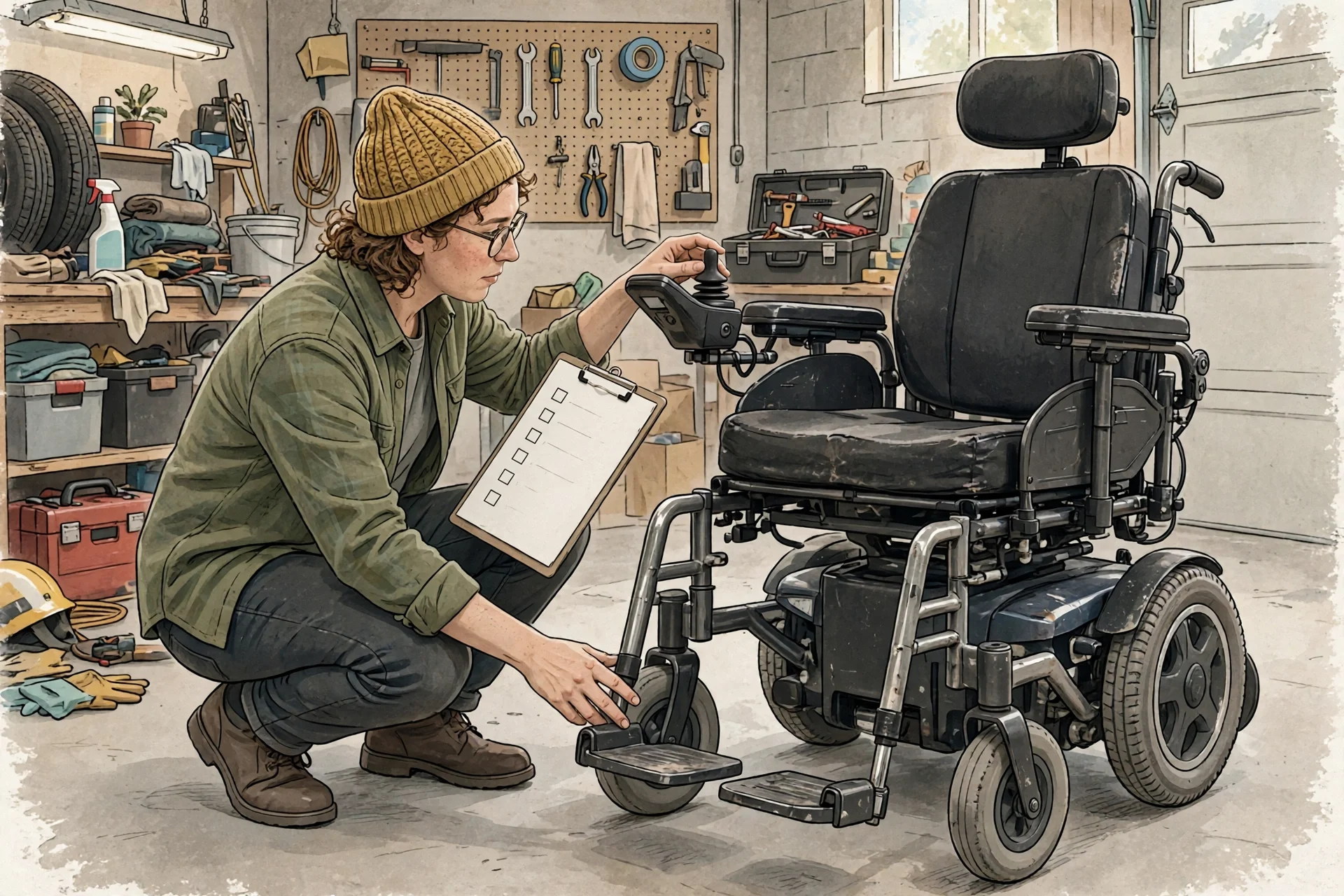
Whatever the channel, inspect the chair yourself before money changes hands — a certified refurbisher has done this for you, but with a private seller the inspection is entirely on you. Work through the list in order, and do not let a friendly seller rush you past any step.
**Frame.** Check the whole frame for cracks, bends, and rust, paying special attention to weld points and folding joints. A cracked frame is the single most serious fault on any wheelchair — it is a walk-away issue, not a negotiation point. Surface rust on bolts can be acceptable; rust on structural tubing is not.
**Wheels, tyres and bearings.** Look at tyre wear and sidewall damage; squeeze pneumatic tyres to check they hold air. Spin each wheel and listen for grinding or clicking from the bearings — worn bearings are cheap parts but signal poor maintenance. Check that casters swivel freely and are not clogged.
**Brakes.** This is a safety test, not a formality. Lock the brakes and try to push the chair on a gentle slope — the chair must not move. Test any parking brake levers and, on power chairs, confirm the electronic brake engages when you release the joystick.
**Seating and adjustments.** Sit in the chair. The cushion should not be collapsed or lumpy — a worn cushion affects posture and skin health, and replacements cost real money. Check that armrests and footrests adjust and lock in position rather than slipping.
**Power-specific checks.** Ask the battery age and how it was stored and charged. If the seller does not know and the pack is over five years old, budget for replacement. Confirm the charger is the original unit matched to the chair, and inspect cables and connectors for corrosion or damage. Look inside the motor/battery compartment for oil stains or burnt smells. Test the joystick in every direction — response should be smooth and proportional, not jumpy or dead in one quadrant.
**Test drive.** Drive the chair for at least ten minutes, including a slope, a turn in each direction, and a stop-start. Listen for unusual motor noise, feel for pulling to one side, and watch the battery gauge under load. A gauge that drops sharply on the first slope is telling you the batteries are weak.
**Paperwork.** Ask for the original manual, the charger, service records, and proof of ownership. RespectCareGivers stresses confirming what is included — missing chargers and keys are common and surprisingly costly to replace.
Red Flags: When to Walk Away
Some faults are negotiation points. These are not — if you see any of them, thank the seller and leave:
- **A cracked or bent frame.** Structural damage cannot be inspected away and can fail without warning. No discount makes it acceptable. - **Brakes that will not hold.** A chair that creeps on a slope with the brakes locked is unsafe at any price. - **Battery age unknown and clearly old.** If the pack is over five years old and the seller cannot document its history, you are buying a battery replacement, not a working chair — price it accordingly or walk away. - **Seller refuses an in-person inspection.** Any excuse — distance, timing, "someone else is coming today" — combined with pressure to decide fast is a classic scam pattern. RespectCareGivers and every experienced buyer agree: no inspection, no deal. - **Upfront payment for shipping only.** Sellers who demand wire transfers or gift cards before you have seen the chair are running a scam, full stop. Legitimate sellers accept inspection and normal payment methods. - **A price that is absurdly low.** A nearly-new $10,000 power chair listed for $800 is either stolen, broken, or bait for an advance-fee scam. The 40–65% discount rule from the first section is your reality check — anything far beyond it is a warning, not a bargain.
Separate from these walk-away faults are negotiable faults you can use to lower the price: worn tyres, a tired cushion, a scuffed shroud, or a battery of uncertain age (budget the replacement into your offer rather than hoping for the best). Bring a printed copy of the price table from the first section to the viewing — sellers are noticeably more flexible when the anchor numbers are on paper rather than only in your head.
One last step that many buyers skip: check the fit before you buy. A bargain chair in the wrong size is no bargain. As a rough guide, seat width should leave a little space on each side of your thighs, seat depth should leave about two fingers' width behind your knees, and seat height should put your thighs roughly level with your feet on the footrests (about two inches of ground clearance). And before settling on specifications, talk to your doctor or an occupational therapist — they can confirm what level of support, seating, and control type actually suits your needs, which is something no checklist can decide for you.