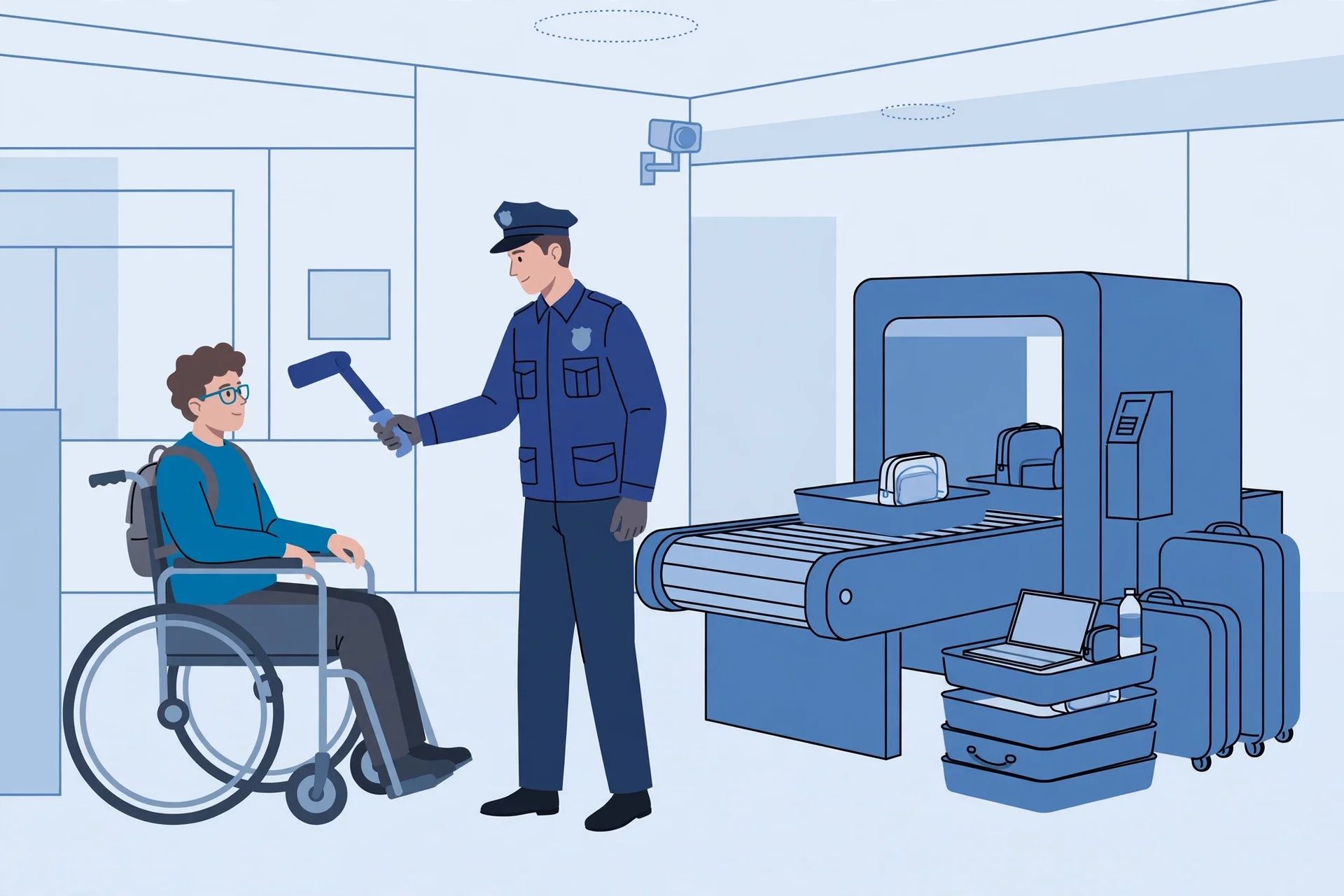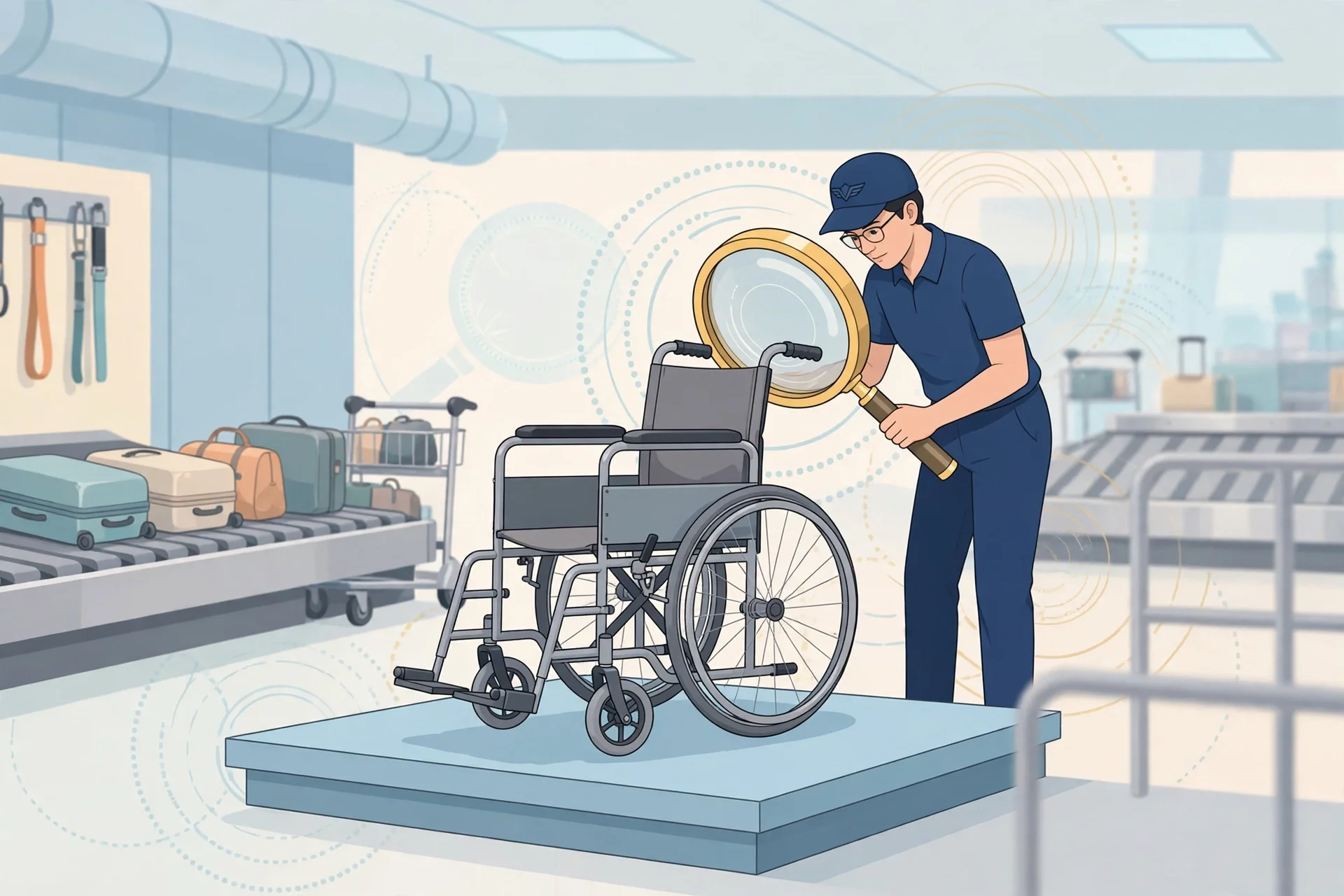
US-specific rules under DOT's December 2024 final rule (effective January 16, 2025). EU/UK and non-US flights are covered by separate regimes described in the article.
The rule that changed the odds, and why it was needed
For years, passengers whose wheelchairs came off the carousel broken faced the same exhausting fight: first prove the airline did it, then fight over compensation that was capped at ordinary baggage limits – limits designed for suitcases, not for custom seating systems worth tens of thousands. The Department of Transportation's final rule on protections for airline passengers with disabilities, announced in December 2024 and effective January 16, 2025, flipped that burden in the passenger's favour. The rule requires airlines to return all checked wheelchairs and other assistive devices in the condition in which they were received, and whenever a checked wheelchair in the airline's custody is not returned in the same condition, there is a rebuttable presumption that the airline mishandled it in violation of the Air Carrier Access Act. In plain terms, the airline is now presumed at fault unless it can show otherwise – the passenger no longer has to prove the negative. The rule also states that the standard baggage liability limits do not apply to wheelchairs and other assistive devices: compensation is based on the original purchase price of the device, not the per-passenger cap that applies to ordinary baggage on international flights. The scale of the problem explains the intervention. DOT's own data showed that for every 100 wheelchairs or scooters transported on US domestic flights, at least one is damaged, delayed or lost – and one public survey found that one in ten people with a disability do not fly at all, out of fear of bodily harm, damage to their wheelchair, or aircraft inaccessibility. The rule covers airlines operating in the United States and arrived with phased implementation deadlines: the core protections took effect January 16, 2025, while the mandatory annual hands-on training for staff who physically assist passengers and handle wheelchairs must be completed by June 17, 2026. The enforcement backdrop is real – in October 2024 DOT issued a record $50 million penalty against American Airlines for disability-related violations – which means the rule has teeth beyond its text. It is worth understanding what changed philosophically, because it affects how you argue your case. Before the rule, the system treated a damaged wheelchair like a damaged suitcase with feelings – the passenger carried the burden of proof and the compensation was capped as if the device were luggage. The final rule treats the wheelchair as what it is: essential medical equipment without which the passenger cannot function, and it places the burden where the control sits – with the airline that had custody of the device. When you write your claim letter, frame it in those terms: you are not asking for a favour, you are invoking a federal rule that presumes the airline's responsibility.
What the airline owes you, item by item
When your wheelchair is damaged or delayed by a US airline, the rule spells out a concrete menu of obligations, and knowing the menu is what turns a vague complaint into a specific demand. Prompt repair or replacement: the airline must give you a reasonable timeframe to inspect the device for damage and file a claim, then offer you two options – the airline handles the prompt repair or replacement and pays the associated costs, or you arrange the repair or replacement through your preferred vendor, with the airline transporting the device to that vendor and paying the vendor directly. That second option matters enormously for custom chairs: you are not forced to accept the airline's cheapest repair shop for a seating system fitted to your body. Loaner wheelchair: while you wait for the return, repair or replacement, the airline must provide and pay for a loaner wheelchair or scooter, and it must consult you so the loaner meets your functional and safety needs as far as possible. If the airline's loaner does not meet your needs, you may find and secure a better alternative yourself, and the airline must reimburse its cost – keep the receipts. Accessible ground transport: the airline must reimburse the costs of transportation to or from the airport that you incurred as a direct result of your wheelchair being delayed – the accessible taxi you had to book because your chair did not arrive. Fare difference reimbursement: if your wheelchair could not fit on the flight you wanted to take, the airline must reimburse the difference between the fare on the flight you took and the fare on the flight you would have taken, limited to same-day, same-airline, same-origin-and-destination cases. Rebooking: if your wheelchair was not loaded on your scheduled flight, the airline must offer free rebooking on the next available flight of the same or a partner carrier. Return timeline for delayed devices: within 24 hours of your arrival for domestic and short international flights, or 30 hours for long international flights, delivered to your home or hotel if you choose – and you get to choose between airport pickup and delivery to a reasonable location you name. The airline must also notify you in writing of your rights, including how to contact its Complaint Resolution Official, when your wheelchair is mishandled. Memorise this list before you need it; in the stress of a damaged chair at midnight in an unfamiliar airport, a checklist beats memory.
Your step-by-step claims playbook, from gate to payout
What you do at the airport and in the days after determines how fast you are made whole, so treat the process as a sequence and do not skip steps. Step one, before you fly: photograph your wheelchair from several angles at the gate, note the make, model and serial number, and keep a receipt or proof of purchase accessible on your phone. This is your evidence that the chair was undamaged when handed over, and it is the evidence that makes the rebuttable presumption nearly unrebuttable. Step two, on arrival: inspect the chair before you leave the airport. The rule gives you a reasonable timeframe to inspect and file a claim, but damage found at the carousel makes the causal link obvious in a way that damage found at the hotel never quite does. Unfold it, sit in it if you can, check the frame, wheels, joystick and seating. Step three, report immediately to the airline's baggage or customer service desk and ask, in writing, for the Complaint Resolution Official and the airline's claim process; airlines must now give you this information in writing when a wheelchair is mishandled, so if the desk agent looks blank, ask for the written notice the rule requires them to provide. Step four, get the airline to commit to a loaner in writing, including what the loaner is and when it arrives, and if the loaner is unsuitable for your needs – wrong size, no pressure relief, unsafe – tell them you will source an alternative and expect reimbursement, then do so and keep every receipt. Step five, choose your repair route: your preferred vendor or the airline's process. If you choose your own vendor, the airline pays the vendor directly – get the vendor's written quote and forward it to the airline's claims address, and do not let the airline steer you to its own shop if you have a seating clinic or supplier who knows your chair. Step six, keep every receipt: accessible taxi fares, hotel costs if you were stranded, equipment rental, phone charges for the hours on hold. Throughout, communicate in writing or confirm phone calls by email so there is a paper trail, and file a complaint with DOT's air travel consumer system as well – DOT tracks mishandled-wheelchair statistics from airline reports, and individual complaints create pressure beyond your individual claim. Claims that follow this sequence, with photographs and paper, are the ones that get paid.
Delays have their own timetable and remedies
Damage is not the only trigger for the rule's protections; a wheelchair that simply does not arrive with you sets a different clock running. The rule requires the airline to transport your delayed wheelchair or scooter to your final destination within 24 hours of your arrival for domestic flights and international flights of 12 hours or less, and within 30 hours for longer international flights, by whatever means are available to do it safely. You get the choice of collecting it at the destination airport or having it delivered to a reasonable location you name, such as your home or hotel – do not let the airline insist on airport pickup if delivery suits you better. While the clock runs, the loaner and transport-reimbursement obligations apply exactly as they do for damage: the airline provides and pays for a suitable loaner, and reimburses the accessible transport you had to arrange because your chair was missing. Airlines must also notify you before the aircraft door closes whether your wheelchair or scooter was loaded onto your flight, including telling you if it could not be loaded because of its size or weight – a notification requirement designed to catch the problem before departure rather than at the baggage carousel, when your options are worst. If the airline learns your chair cannot fit on your scheduled flight, it must offer to rebook you free of charge on the next available flight of the same or a partner carrier, before you are left stranded at the carousel with no chair and no plan. And while you wait for a delayed device, the airline must provide safe and adequate seating accommodations at the airport, established after consultation with disability rights organisations – not a plastic chair in a corridor for six hours. The practical takeaway: a delayed wheelchair is not a shrug-and-wait situation under this rule. It is a timetabled obligation with a loaner, transport money and delivery attached, and you should claim every part of it. One scenario deserves special attention: the wheelchair that arrives but is damaged and the passenger who must still travel onward. If you have a connecting flight, do not let the airline's staff rush you past the inspection – a damaged chair discovered after the connection is harder to attribute, and the airline for the second segment will point at the first. Insist on the inspection at the first point of arrival, get the damage report filed there, and make the loaner arrangement before you board the next flight. The rule's notification duties apply at every stage, so hold each carrier to them separately.
The limits: what this rule does not cover, and the fine print
This guide describes US federal rules, and their reach has boundaries you should know before you rely on them. If your flight is entirely outside the United States – a domestic flight in another country, or a flight between two non-US airports on a non-US carrier – different regimes apply. Within Europe, EU Regulation 1107/2006 covers assistance rights for passengers with reduced mobility; for damage to the device itself on international carriage, the Montreal Convention's liability framework applies, with its own limits and a two-year claim window. The DOT rule's rebuttable presumption and loaner obligations do not automatically travel with you there. Even on US flights, note the fine print: on international itineraries the Montreal Convention still frames the international portions, although DOT's rule removes the old Part 254 baggage cap for wheelchairs on DOT-covered transportation. The rule also cannot guarantee speed – it requires prompt repair, but a complex custom wheelchair with moulded seating may take weeks to fix or replace, which is exactly why the loaner obligation and your right to choose your own vendor matter more than the repair promise. Implementation is phased, so if you fly in the window before the June 2026 training deadline, the staff handling your chair may not yet have completed the new hands-on training the rule mandates – another reason your own documentation matters. Finally, the rule is only as good as its enforcement; DOT's record penalty against American Airlines shows the department will act, and passengers strengthen the system by filing formal DOT complaints in addition to claiming from the airline. Before any flight, wherever in the world you are flying, the cheapest insurance remains the same: the pre-flight photograph, the serial number on your phone, and a written record of your chair's condition when you handed it over. A related boundary: the rule does not create a private right to a specific brand-new replacement overnight. 'Prompt' repair or replacement is judged against what is reasonable for the device in question – a stock manual chair can be replaced in days, while a custom-moulded powerchair may legitimately take weeks, during which the loaner obligation is doing the heavy lifting. If you believe the airline is dragging its feet beyond what is reasonable, say so in writing with dates, escalate to the Complaint Resolution Official, and file the DOT complaint – documented delay is itself evidence. And keep perspective on the international pieces of a US itinerary: the DOT rule governs the US carrier's handling, but a foreign airport's ground handler damaging your chair on the far end may fall under the Montreal Convention instead, with its own two-year filing window – file there too, and do not let either party point at the other indefinitely.