GOV.UK Disabled Facilities Grants checked 4 November 2026 via browser open: eligible changes, England £30,000 / Wales £36,000 / Northern Ireland £25,000 maxima, Scotland not available, income and savings over £6,000, under-18 exception, owner/tenant/landlord applicants, 5-year residence, necessary and appropriate and reasonable tests, 12-month completion, 6-month decision, no work before approval, instalment or full payment, benefits unaffected, re-application, appeal route, Foundations help. Hartlepool Borough Council DFG journey checked same day via browser open: first contact, OT assessment, means-test documents, technical survey, approval letter contents, works monitoring, completion sign-off and payment to contractor.
What a Disabled Facilities Grant covers
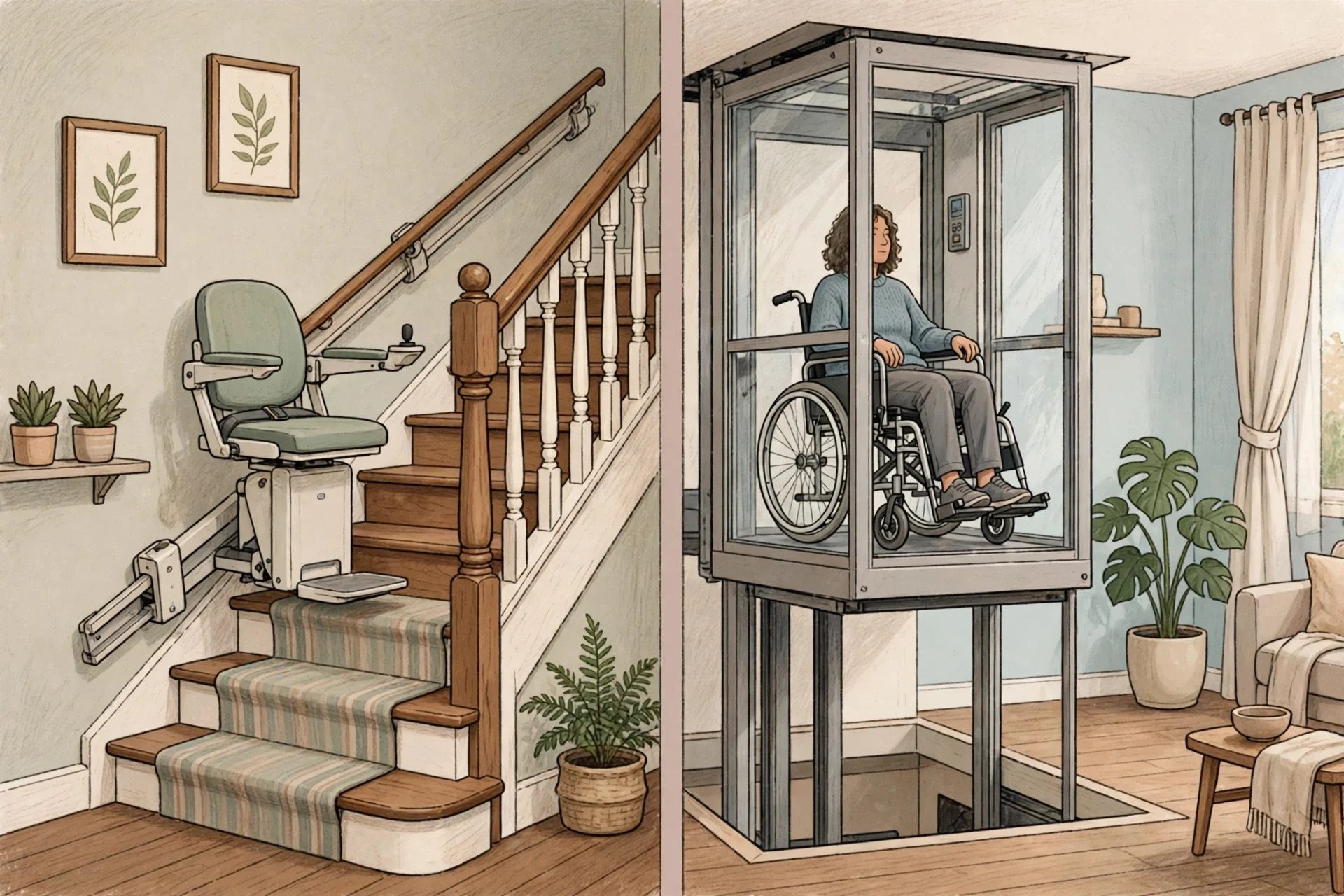
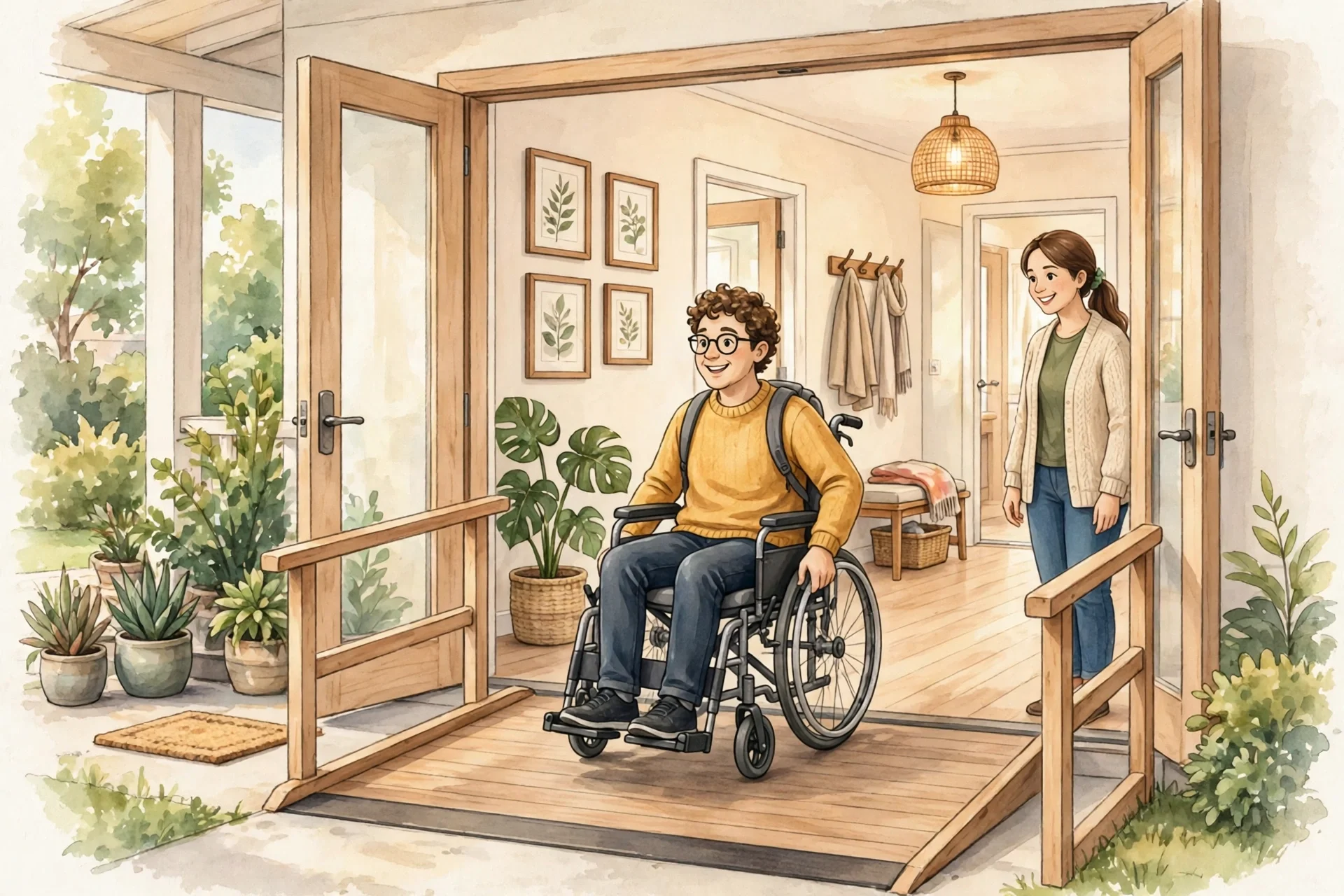
The grant funds changes that remove a specific barrier at home. The examples GOV.UK lists include widening doors and installing ramps or grab rails, improving access to rooms and facilities with a stairlift or a level-access shower, improving access to your garden, building an extension such as a downstairs bedroom, providing a heating system suitable for your needs, and adapting heating or lighting controls so they are easier to use. For a wheelchair user, that typically means the route into the home, the route between rooms, and the bathroom and bedroom: a doorway that is too narrow, steps at the front door, or a bath that can no longer be used safely are exactly the kind of problems the grant is designed for. What it does not fund is a general renovation. The work has to address a disability-related need in that home, and the council checks that it is reasonable and can be done, given the age and condition of the property.
How much you can get, and the means test
Maximum grant compared: England, up to £30,000; Wales, up to £36,000; Northern Ireland, up to £25,000; Scotland, Disabled Facilities Grants are not available, with separate support for equipment and adaptations. Some councils may give more than the headline maximum, so the national figure is a ceiling to plan around, not a promise about your own award. How much you actually receive usually depends on your household income and on household savings over £6,000, and depending on your income you may need to pay towards the cost of the work. There is one important exception: for a disabled child under 18, the parents' income is not taken into account. The grant will not affect any benefits you get, and you can apply for another grant for the same property if your needs change, for example if your condition changes.
Who can apply, and the conditions that bind you
You do not have to own your home. The person who submits the application must be the owner, a tenant or a landlord, and you or someone else living in the house must be disabled and intend to live in the property during the grant period, usually five years, although this can be shorter, for example if the person is terminally ill. The council needs to be satisfied on two tests: the work is necessary and appropriate to meet the disabled person's needs, and it is reasonable and can be done in that property. Two timing rules matter. Your council must give you a decision within six months of your application, and the work should be completed within twelve months of the grant being approved. You may also need to apply separately for planning permission or building regulations approval, and the council may ask you to employ a qualified architect or surveyor, whose fees can be covered by the grant.
How to apply, step by step
Apply through your local council, which is the route GOV.UK points to. The council may send an occupational therapist or trained assessor to see you and assess what changes you need at home; that assessment is the foundation of the application, because it establishes which adaptations are necessary and appropriate rather than simply preferred. One council's published journey, Hartlepool Borough Council's, shows the shape of the process: first contact with the council, an occupational therapy assessment at home, application preparation including a means test with proof of ownership or tenancy and financial information, a technical survey with drawings and contractor estimates, a formal approval letter setting out the approved works, the grant amount and any contribution required, then the works themselves and a final inspection and sign-off. Timescales and the exact paperwork vary by council and by case, so treat another council's timetable as an example, not as your council's promise. Payment is made either in instalments as the work progresses or in full when the work is finished, and the council may pay the contractor directly or give you the money to pass on. The single most expensive mistake is starting early: GOV.UK warns that you might not get any grant if you start work on your property before the council approves your application, so get the approval letter first, even if a contractor is ready to start. If you are unhappy with a decision, you can appeal to your council and then complain to the Local Government Ombudsman, and the government-funded organisation Foundations can help you to apply.