Drive-from-wheelchair and internal transfer descriptions from Allied Mobility's WAVs for wheelchair drivers page; 350 adaptations, 5-year lease, up to 5 people and 0300 456 4566 from Motability's scheme wizard pages. All checked 3 November 2026.
Three ways to drive as a wheelchair user
Motability's own guidance frames the choice in three parts. A car with adaptations suits drivers who can transfer and want a conventional car fitted with hand controls, a left-foot accelerator, a swivel seat or a hoist, with over 350 adaptations available and many at no extra cost when fitted at the start of the lease. An internal transfer vehicle is a large adapted vehicle in which you drive your wheelchair up to the driver's seat, transfer into it, then secure your wheelchair before driving. A drive-from-wheelchair vehicle removes the transfer altogether: the wheelchair position is the driving position, with a clear route from the rear entry to the wheel. Allied Mobility, one of the UK's WAV suppliers, describes the same split and adds a fourth type, the up-front wheelchair passenger, for wheelchair users who travel in the front as a passenger rather than driving.
Drive-from-wheelchair: stay in your chair
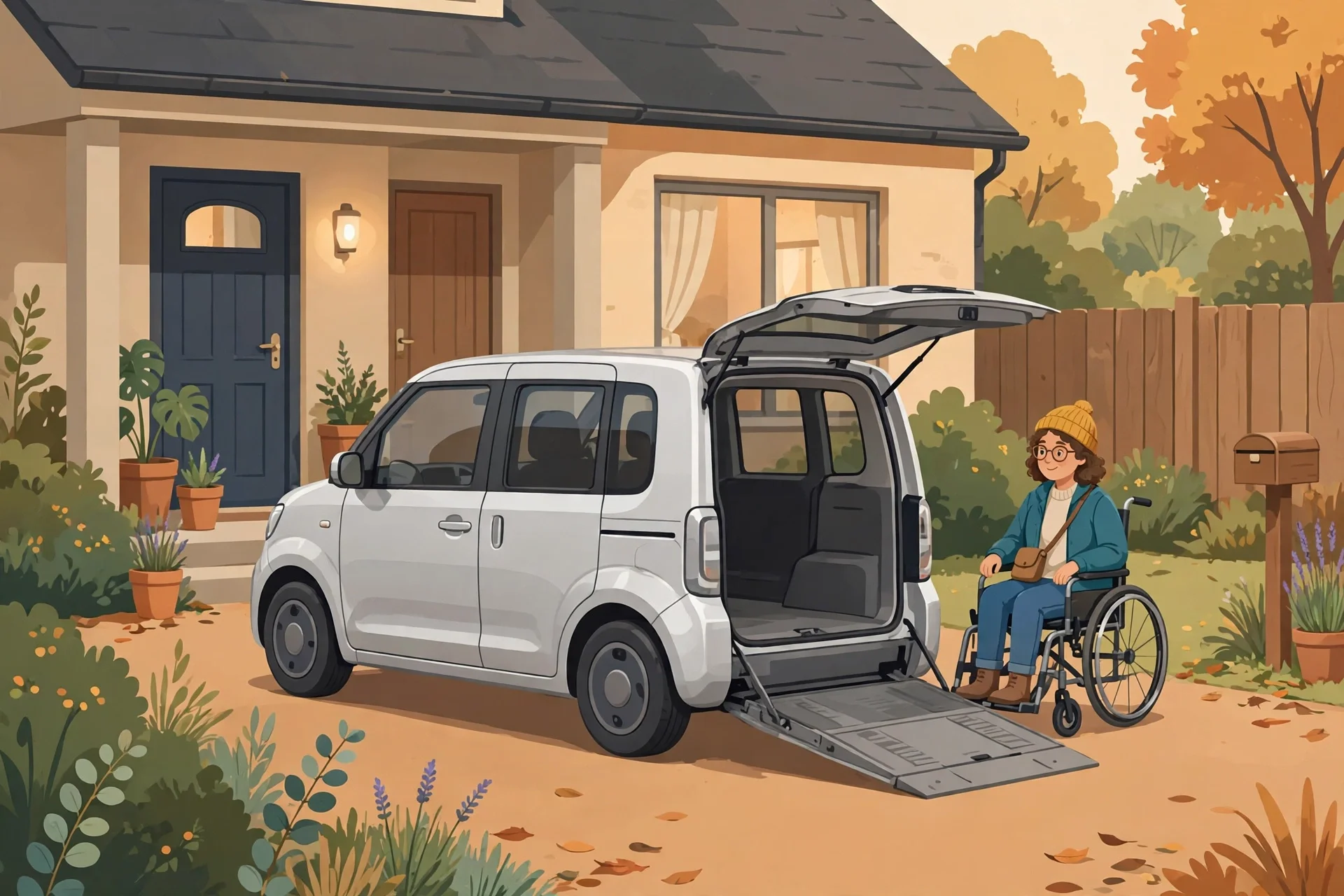
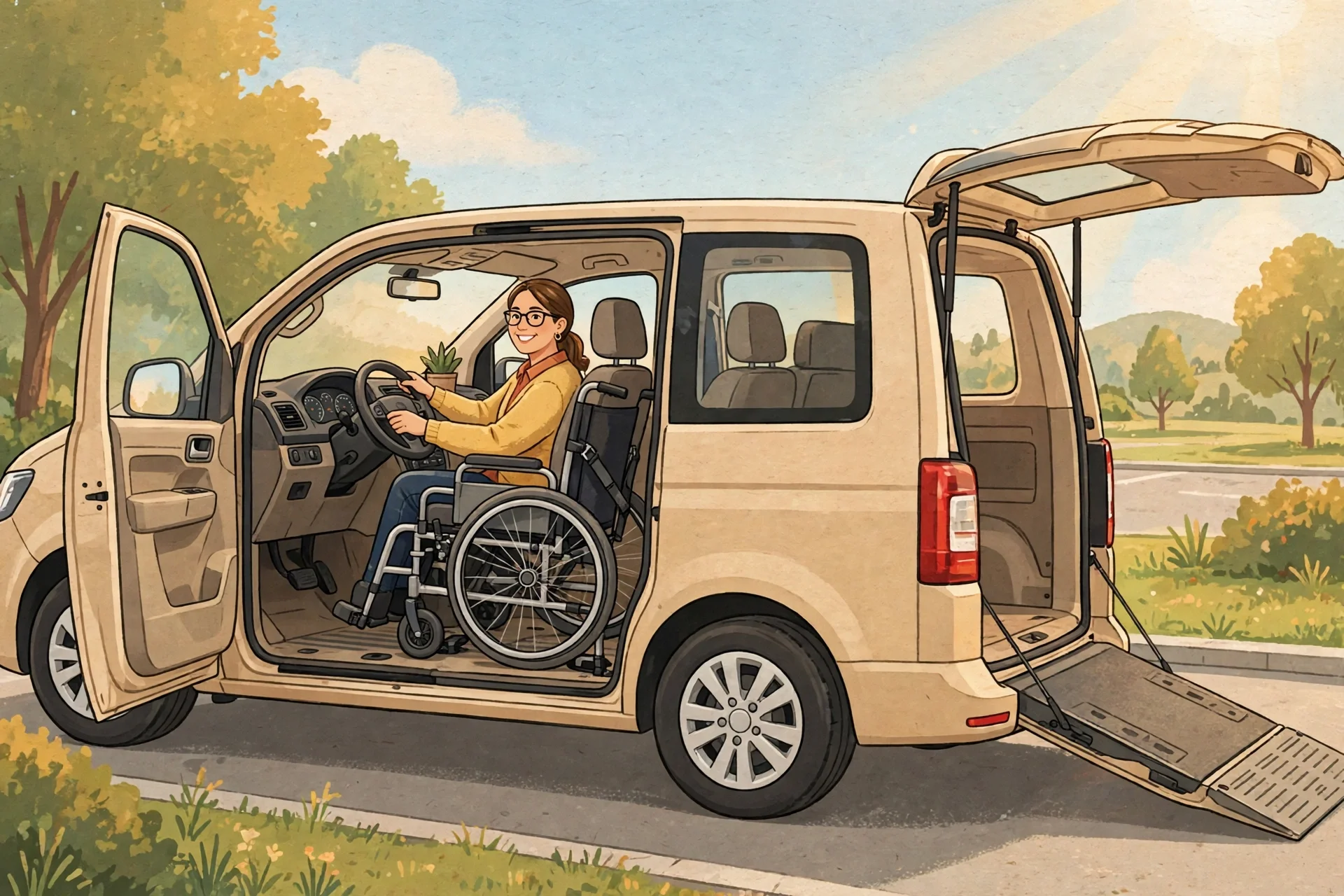
Drive-from-wheelchair conversions give a clear route from the point of entry, usually the rear of the vehicle, to the driving position, so they have fewer rear seats than a passenger WAV of the same size. Allied Mobility's versions offer remote-operated lowering suspension and an unfolding access ramp, so entry and exit can be fully independent, without help from another person. The advantage is obvious: no transfer, no hoist, no need to stow a chair you cannot lift. The costs are space and choice: fewer seats for family, a larger vehicle that can be harder to park, and a longer build time, since the conversion is extensive. Motability notes that internal transfer and drive-from-wheelchair vehicles cost more than other WAVs, and that a grant may be available depending on circumstances.
Internal transfer: chair to driver's seat
An internal transfer vehicle, such as Allied Mobility's Ford Dream, is designed with ample space to transfer from a wheelchair, powerchair or mobility scooter to a six-way adjustable driver or passenger seat. Transferring inside the vehicle has two practical benefits: you are not exposed to traffic or bad weather while transferring, and the driver's seat itself can be adjusted like a conventional car seat. Motability says internal transfer vehicles can drive up to five people, and they run on a five-year WAV lease. The catch is the transfer itself: you must be able to move from chair to seat, and to secure your wheelchair before driving, which is not possible for everyone and can become harder over time. If your transfer is already difficult, a drive-from-wheelchair vehicle is usually the safer long-term choice, even at the cost of seats.
Assessment, costs and next steps
Do not choose from a brochure. Allied Mobility arranges a detailed assessment before settling between internal transfer and drive-from-wheelchair, and that assessment is the step that matches the vehicle to your chair, your transfer ability and your driving controls. Suppliers offer free home demonstrations across the UK, and Motability's scheme enquiry line is 0300 456 4566 for eligibility, lease extensions and grants. Compare on these points: can you transfer safely today and in three years, how many passengers do you need, where will you park a larger vehicle, and what driving adaptations do you need beyond the conversion. | Drive-from-wheelchair | Internal transfer | Transfer needed | No | Yes, inside the vehicle | Passenger capacity | Fewer rear seats | Up to 5 people | Entry | Rear, often with powered ramp | Rear, then transfer to driver seat | Best for | Users who cannot transfer | Users who transfer comfortably | Order only after a demonstration in the actual vehicle, with your own wheelchair, and check the lead time: converted WAVs take longer to build than a standard car, so start the process well before your current lease ends.