Choose a first outing with a clear purpose
A first trip can be something small that you want to do: collect a book, meet a friend or reach a favourite bench. A purpose makes the trial more useful than driving around until you feel confident. Choose a route with an easy return and a place to pause.
Make the first trip manageable
- Purpose
- One destination you genuinely want to reach.
- Pause point
- Somewhere usable to stop without blocking the route.
- Return option
- A clear way home if you finish earlier than planned.
- Companion agreement
- The kind of help you want, and when to offer it.
Practise the moments between driving
Leaving home, positioning beside a table and stopping to speak to someone can feel different from moving along an open path. Rehearse those transitions in a suitable environment with the support recommended at your handover. Keep the chair’s controls and setup consistent while you learn the sequence.
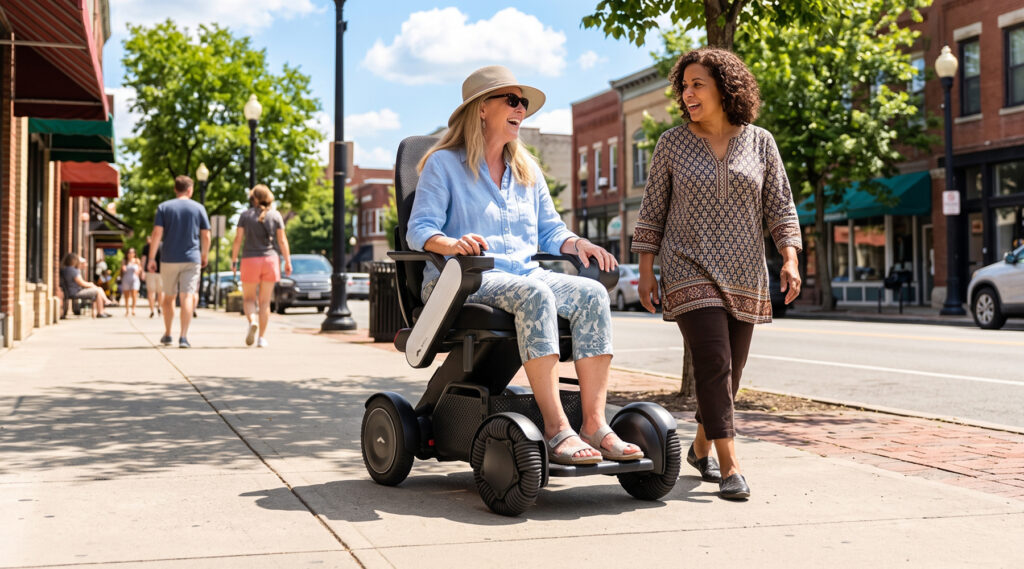
If a companion joins you, agree how they can help. Ask them to describe an obstacle or open a door when needed, rather than taking over every decision. A short agreed phrase for stopping or requesting help can make the outing feel less awkward.
Review one success and one adjustment
After the trip, identify something that became easier and one situation to practise next. Perhaps the destination worked well but the doorway approach needs more space. This is more informative than labelling the whole trip a success or failure.
Discomfort, control difficulties or an unsuitable fit deserve a conversation with the relevant professional or supplier. They are not a confidence problem to push through. Let the next outing grow from what worked, with the equipment and support adjusted where needed.