Technique steps follow a manual-handling work instruction (reviewed March 2025); boot-bag advice from UK disability consumer charity RiDC. Do not attempt to lift alone if it is too difficult - alternatives listed in section 3.
Step One: Make the Chair as Light as Possible
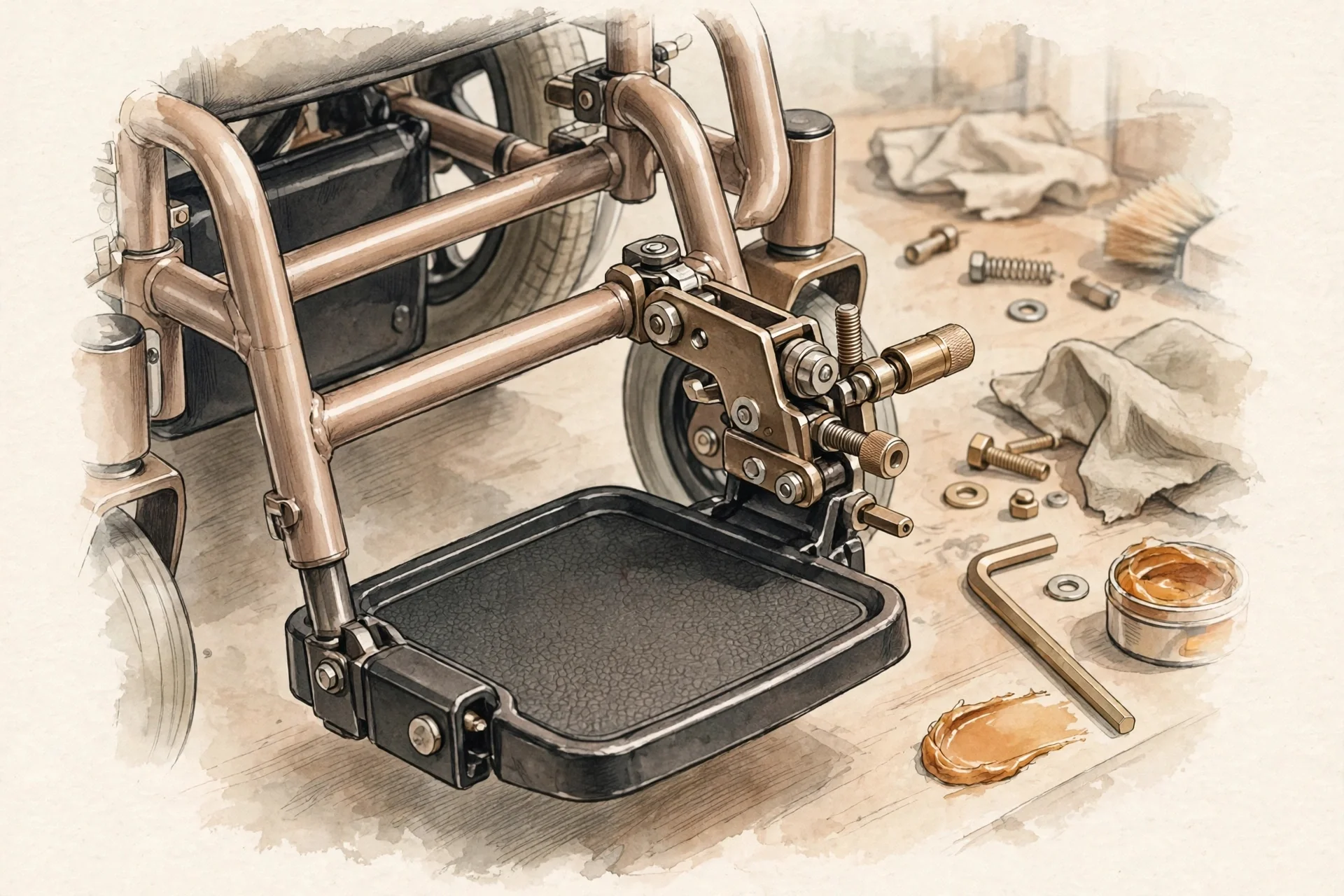
Every kilogram you remove before lifting is a kilogram your back does not have to carry. A folding manual wheelchair is designed to be stripped down quickly, so start by taking off everything detachable. Remove the leg rests or footrests, lift off the seat cushion, and take off the armrests if your model allows it — noting that on some models these items cannot be removed, so check your chair's manual first. If your chair has quick-release rear wheels, consider whether removing one wheel helps: it lowers the lifting weight and can make the folded frame narrower, but only do this if you are confident re-fitting the wheel correctly afterwards. A mobility-equipment manual-handling instruction reviewed in March 2025 lists this weight reduction as the essential first step before any lift, alongside clearing the alternatives — a ramp to roll the chair into the boot, or a towbar carrier or electric hoist — for days when lifting is not sensible.
Next, prepare the car. Move the rear seats forward if possible, take out anything loose in the boot so the chair has maximum clear space, and lay a towel or blanket across the boot lip. The blanket does two jobs: it protects the car's paint and trim from scratches as the frame slides over the edge, and it gives the chair's frame something to glide against rather than catch on. Park on flat, level ground with the handbrake on, and wear shoes with good grip — never attempt this on a slope or in the rain if you can avoid it. Fold the chair by pulling the seat fabric up from the centre, and put the brakes on once the folded chair is positioned. If you use a powered folding chair, the same principle applies even more strongly: remove the battery pack first if it detaches, since the battery is often the single heaviest component and some designs will not fold flat with it in place.
The Lift-and-Slide Technique
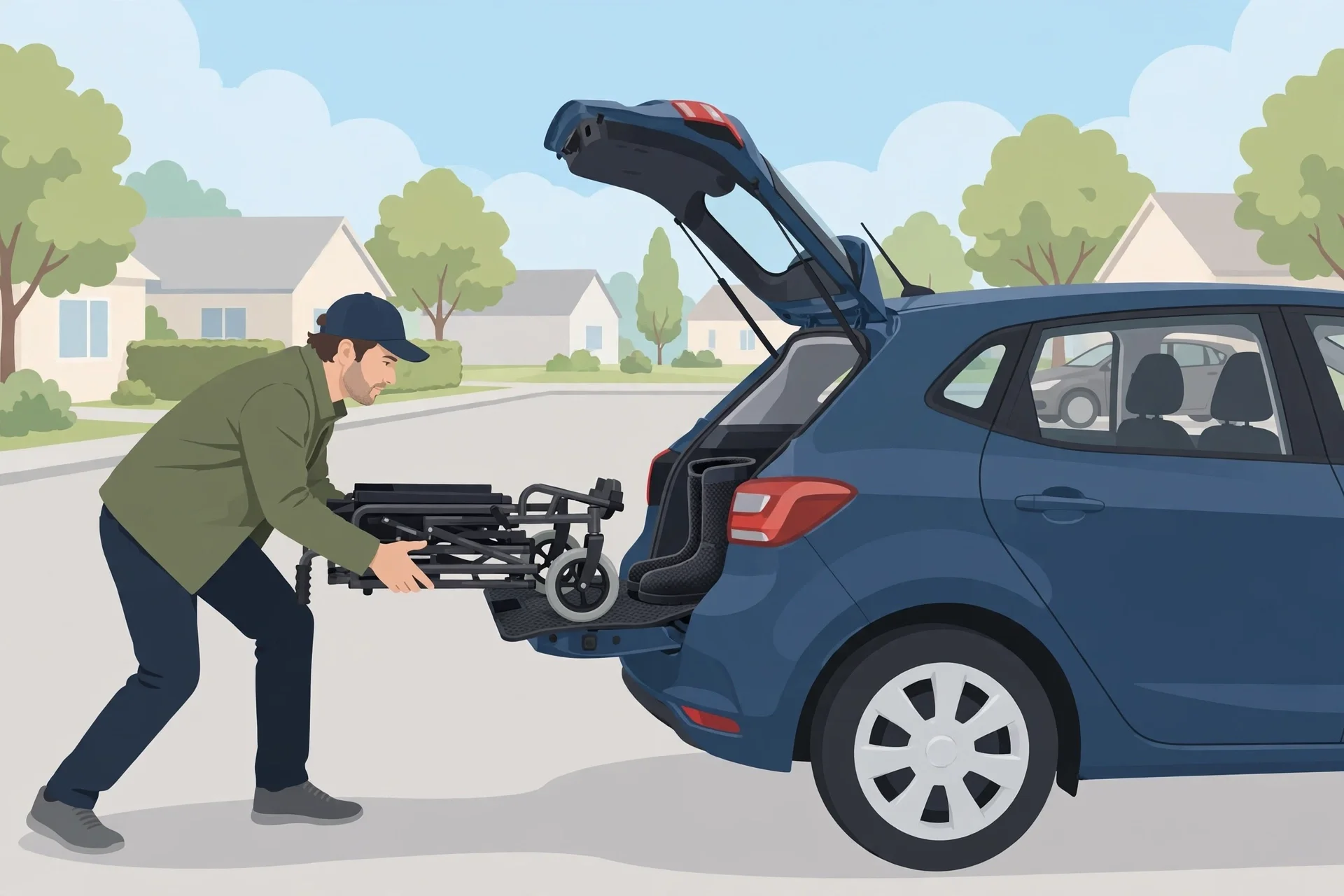
The core idea is to let the car carry most of the weight: instead of lifting the whole chair off the ground, you rest one end on the boot lip and slide the rest in. A manual-handling work instruction for moving a wheelchair into a car boot (reviewed March 2025) lays out this sequence, and it is worth practising the motions with a helper the first few times before trying it solo.
First, position the folded chair at the rear of the car so the push handles protrude over the boot lip, then put the wheelchair brakes on — the instruction flags this as a critical step, because a chair that rolls as you lift will pull you off balance. Bend your knees, keep your back straight, and take a firm grip on the main frame of the wheelchair, keeping it close to your body; do not grip the armrests or any removable part, which can detach mid-lift. Lift the chair slightly so the push handles hook over the edge of the boot, then raise it to boot height until the rear wheels are roughly level with the boot floor. From there, tilt the chair so the frame is horizontal — you should now be holding the front of the frame and a rear wheel — and gradually slide the whole chair forward into the boot, letting the boot floor take the weight as you go. Place the removed leg rests, cushion, and armrests into the boot beside the chair.
A wheelchair boot bag makes this easier, according to the UK charity RiDC (Research Institute for Disabled Consumers). You bag the folded chair and zip it up, then lift and tip it to slide it into the boot on the bag's slippery surface. Because the bag lets you slide rather than carry the full weight, it can reduce back strain, and the durable fabric also protects your car against damage. RiDC notes that a bag such as the Biston L.I.T.E. handling and travel bag can accommodate most folded manual wheelchairs. Whatever method you use, move smoothly and never twist your torso while carrying the load — if the chair feels too heavy at any point, stop and lower it gently rather than forcing it.
Securing the Chair and Knowing When to Ask for Help
Getting the chair into the boot is only half the job. An unsecured chair can slide forward under braking and damage the car interior — or worse. Once the chair is in, position it so it rests against the boot walls or rear seat backs, and use a strap, bungee, or the seat belt to hold the frame in place. Wedge the removed cushion and leg rests around the frame to fill gaps and stop rattling. On the return journey, reverse the process in order: unload the loose parts first, then slide the frame back out, keeping your knees bent and the chair close to your body.
Be honest with yourself about limits. The manual-handling instruction is explicit: lifting a wheelchair incorrectly can injure your back, and you should not attempt to lift it on your own if it is too difficult. Heavier powered folding chairs, high boot lips on large SUVs, or any history of back problems all push the risk up. In those cases the instruction points to practical alternatives: a ramp that lets you roll the folded chair into the boot, a towbar-mounted wheelchair carrier, or an electric hoist fitted to the car. Choosing a wagon or hatchback-style vehicle also helps, since the folded chair can be slid straight in with minimal lifting. There is no shame in asking for help — a two-person lift with one person guiding each end of the frame is far safer than a strained solo attempt. Treat solo loading as a technique that suits a lightweight folding chair and a healthy back; for anything heavier, bring a helper or fit an aid, and ask an occupational therapist or mobility dealer to assess your setup if you load a chair daily.