Skip to content
HomeGuidesdays out
Guides / DAYS OUT

Lake District Miles Without Stiles: Wheelchair-Friendly Routes and How to Choose

The Lake District has more than 50 Miles without Stiles routes: graded, stile-free walks along lakeshores, riversides, tarns and through woods that are designed for wheelchair users, mobility scooter users, families with pushchairs, and anyone who wants an easier walk with no scrambling, climbing or steep hills. Five new routes have just joined the network after a £167,300 grant from Defra's Access for All scheme. This guide explains the new routes, how the grading works, and which walks to start with.

Lake District Miles Without Stiles: Wheelchair-Friendly Routes and How to Choose

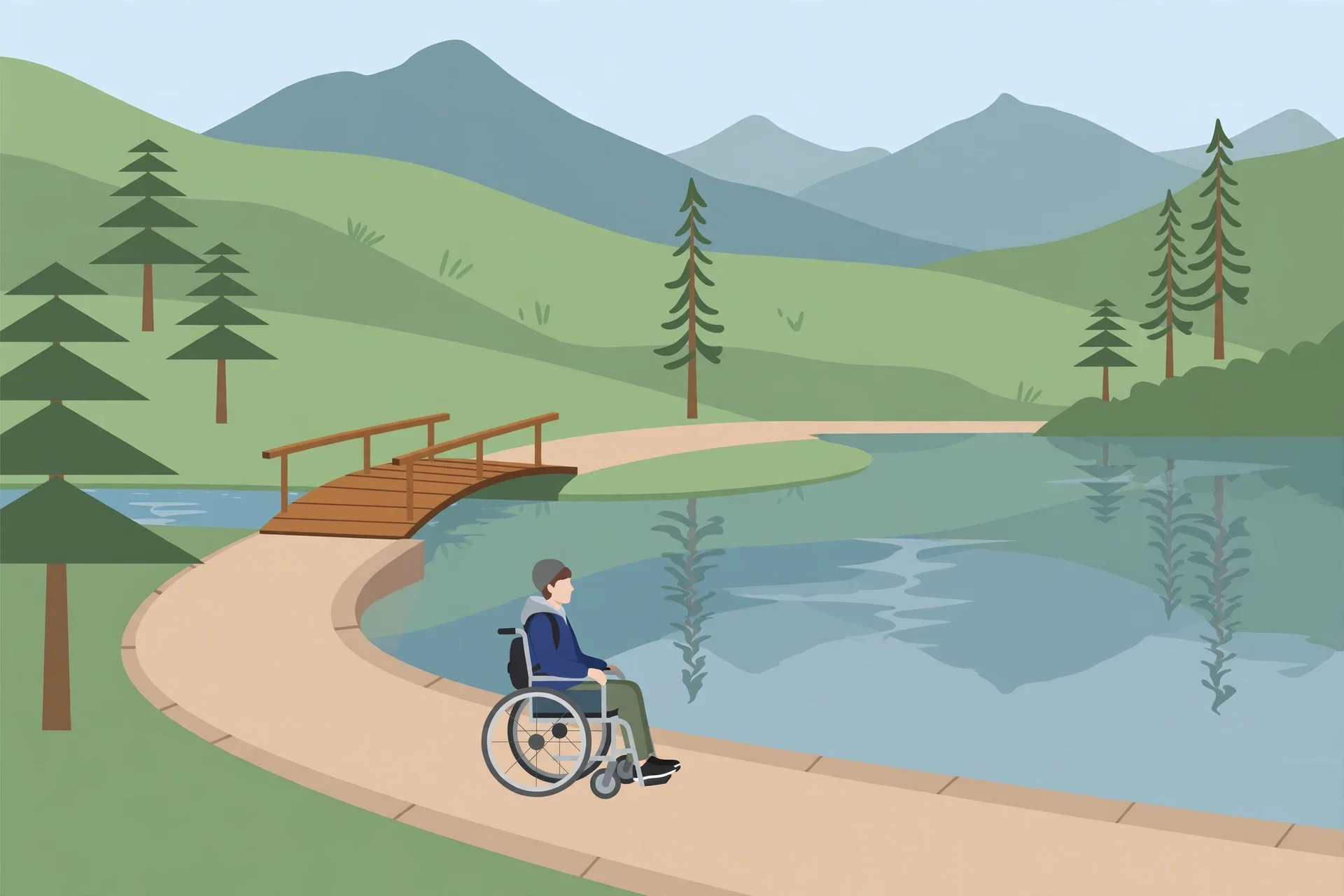
Illustration of a wheelchair user on a smooth lakeside path with calm water, green fells and a wooden footbridge.

Facts checked against the linked sources on 2026-11-02. Prices, dates and session details can change; confirm with the provider before booking or ordering.

The five new routes

The Lake District National Park Authority has added five routes to the network, working with partners including the National Trust, Cumberland and Westmorland and Furness Councils, Forestry England and the Grasmere Society. The new routes are the Jubilee Walk in Grasmere, the Ridding Wood and Millwood Trail in Grizedale Forest, Revelin Moss in Whinlatter Forest, and Howrah's Path, which runs from Keswick to Portinscale. Two existing routes have also been extended: one at Loweswater and the Swirls Trail route at Thirlmere, supported by United Utilities. To earn the status, the partners improved surfacing, installed bridges, removed stiles and upgraded gates, so these are not just rebadged paths: the ground itself was changed to meet the standard.

How the grades work, and routes to start with

Routes are graded by surface quality and gradient, so the grade is the first thing to check, not the distance. The network's own descriptions use grades such as route for all, route for many, and route for some, and the difference matters: a route for some may include steeper sections that suit a powered chair or an assisted manual chair better than a solo manual chair. Good starting points from the published route list include Pooley Bridge, a linear route of 0.9 kilometres each way along the Ullswater shore; Brothers Water, a gently undulating 3.75-kilometre round trip on a wooded shoreline; and Buttermere lakeshore, which offers 1.5-kilometre and 7.5-kilometre options depending on ability. Tarn Hows, Orrest Head above Windermere, Friar's Crag on Derwentwater, and the Loweswater level walk are also named among the network's most popular accessible outings.

Hire, viewpoints and planning before you go

If you do not have your own all-terrain equipment, the park's hire points offer mobility scooters, all-terrain wheelchairs and Tramper vehicles, and Shopmobility services operate in Kendal and Penrith; booking in advance is recommended, especially in busy seasons. The same network is the best route to the Lake District's famous viewpoints without a climb: Orrest Head, Derwentwater, Tarn Hows and Friar's Crag are all reachable through accessible routes. Two practical warnings apply to every route. First, path conditions can change: rain and bad weather can damage or erode surfaces, and a route can occasionally be closed or diverted for essential repairs, so check the individual route page before you travel. Second, facilities such as toilets and bus timetables change too, so confirm those alongside the route, not after you arrive.

Sources & further reading

Five new accessible Lake District walking routes unveiledAccessible things to do in the Lake District | VisitEngland

Our editorial approach

CONTINUE EXPLORING

A little more useful reading.

Wheelchair-Accessible Pantomimes: Booking the Seats That Actually WorkGUIDES

Wheelchair-Accessible Pantomimes: Booking the Seats That Actually Work

Pantomime season runs from late November into January, and the best wheelchair spaces go early - in one small theatre, fire regulations allow a maximum of two wheelchair users per performance. Booking the right seat is therefore a different task from booking any seat: you need to know how many wheelchair spaces exist, whether they must be booked by phone, and whether a relaxed performance would suit your party better. This guide uses two theatres' published arrangements to show what to check before you pay.

Read the guide
Remembrance Sunday in a Wheelchair: The Cenotaph and Local ServicesGUIDES

Remembrance Sunday in a Wheelchair: The Cenotaph and Local Services

On Sunday 8 November 2026 the National Service of Remembrance takes place at the Cenotaph on Whitehall, London, starting at 11am. You do not need a ticket: the public watches from the pavements, and a dedicated enclosure on Parliament Street is set aside for wheelchair users and others who find the general viewing areas difficult, on a first-come, first-served basis with one carer or guest each. This guide covers the London arrangements and what local services do differently, so you can choose the option that works for you.

Read the guide
Sailing as a Wheelchair User: How RYA Sailability Centres Get You AfloatGUIDES

Sailing as a Wheelchair User: How RYA Sailability Centres Get You Afloat

Sailing looks like the least wheelchair-friendly sport imaginable, until you see how Sailability centres do it: stable dinghies that cannot capsize, jetty hoists rated for a wheelchair user, and volunteers who sail alongside beginners. Sailability is the Royal Yachting Association's nationwide scheme for disabled sailors, run by local clubs, and most sessions are free or cost a few pounds. This guide explains how a first session works, what the boats and hoists can handle, and when to plan for next season.

Read the guide