Theatre arrangements vary by venue and production; wheelchair space numbers and evidence requirements are per-venue - confirm with the box office before booking.
Why wheelchair spaces sell out first
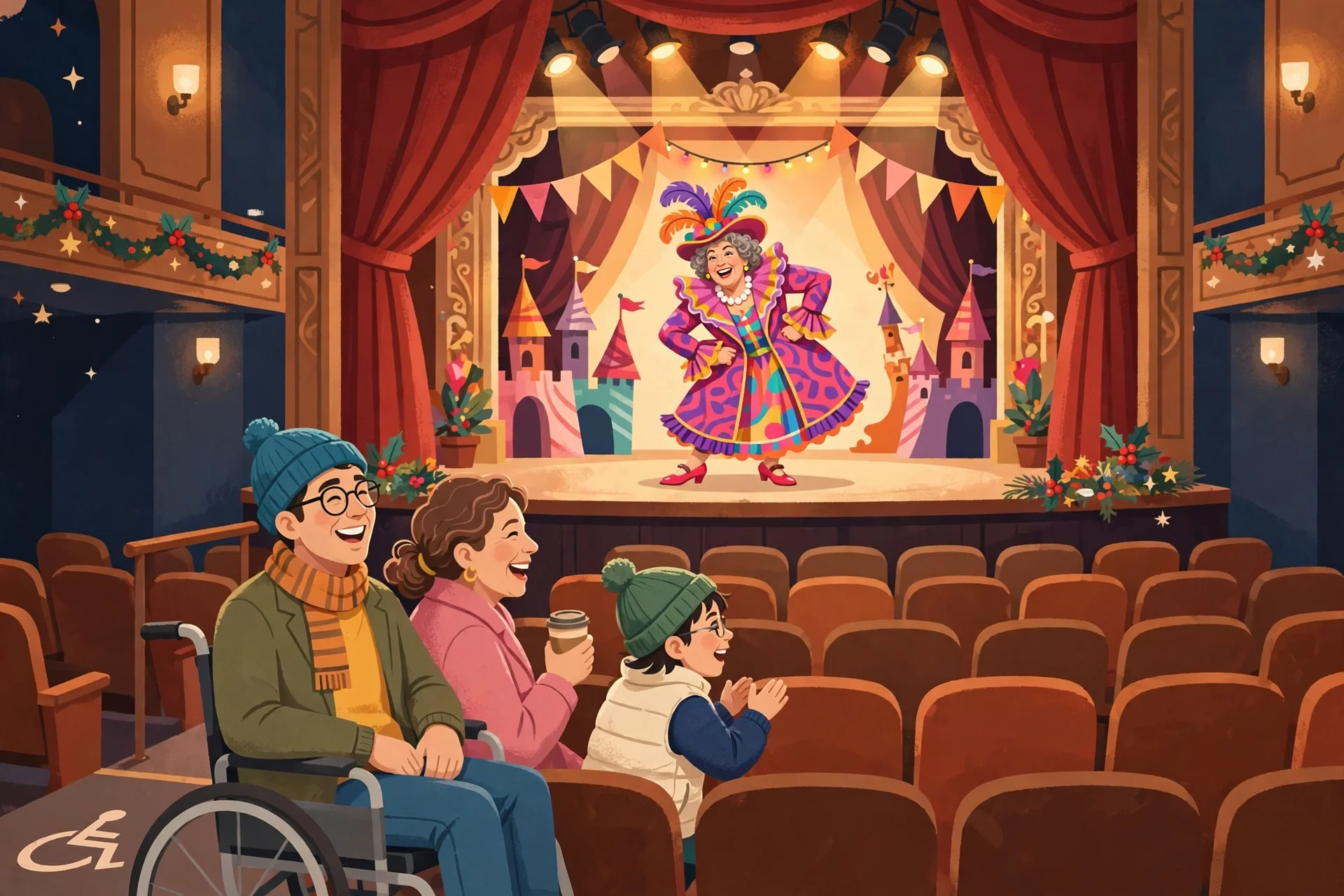
Wheelchair spaces are limited by the building, not by demand. At The Corn Hall in Diss, Norfolk, whose Aladdin pantomime runs this festive season, the published accessibility note states that due to fire safety regulations a maximum of two wheelchair users can be accommodated per performance, so early booking is strongly recommended. Access seating, companion tickets and access concessions there are available to customers holding a valid Nimbus Access Card, which must be registered with the theatre's box office account, and advance booking is essential for wheelchair spaces. The ticket prices show why planning also matters financially: adults £20.50, under-16s £18.50, a family ticket £74.00 and restricted view £17.95, with an estimated running time of 2 hours 30 minutes including the interval. Two spaces per show across a whole season disappear quickly, especially for weekend and school-holiday performances.
Relaxed performances: a calmer way to enjoy the same show
A relaxed performance is the same show with small, deliberate changes, and it can be the better choice for anyone who needs to move around or finds sudden noise difficult. Theatre Royal Wakefield describes its relaxed performances as an informal theatre environment with quieter sound levels and some lights left on in the auditorium, designed for people with an autistic spectrum condition, a learning disability or sensory or communication disorders, though everyone is welcome. The house lights stay on at a low level throughout, music and sound effects are turned down, sudden changes in noise and sound are reduced, and the Walker Studio is available as a quiet break-out space you can go in and out of as much as you need. The building itself has ramped access to the Matcham auditorium via the box office on Westgate, leading straight into the stalls seating area, several wheelchair spaces requestable by phone or at the box office, and disabled parking at Unity House car park across the road.
A booking checklist for any panto
Before paying, ask five questions. First, how many wheelchair spaces exist per performance, and are they bookable online or only by phone? Second, does the theatre require an Access Card or other evidence, and must it be registered before booking? Third, is there a companion ticket, and does the companion sit beside the wheelchair space? Fourth, what is the interval and total running time, and is there an accessible toilet near the seating rather than at the far end of the building? Fifth, is there a relaxed, captioned, signed or audio-described performance that would suit your party better, and on which date? Theatres publish these details unevenly, so a two-minute phone call to the box office - Wakefield's is 01924 211 311 and The Corn Hall's is 01379 652241 - often answers more than the booking page. Book the access need first and the date second: a sold-out wheelchair space cannot be fixed by buying a standard seat.