Based on manufacturer user-manual guidance, checked 19 October 2026. Covers manual wheelchairs; power wheelchair maintenance is covered in a separate guide.
Before every ride: the 60-second check
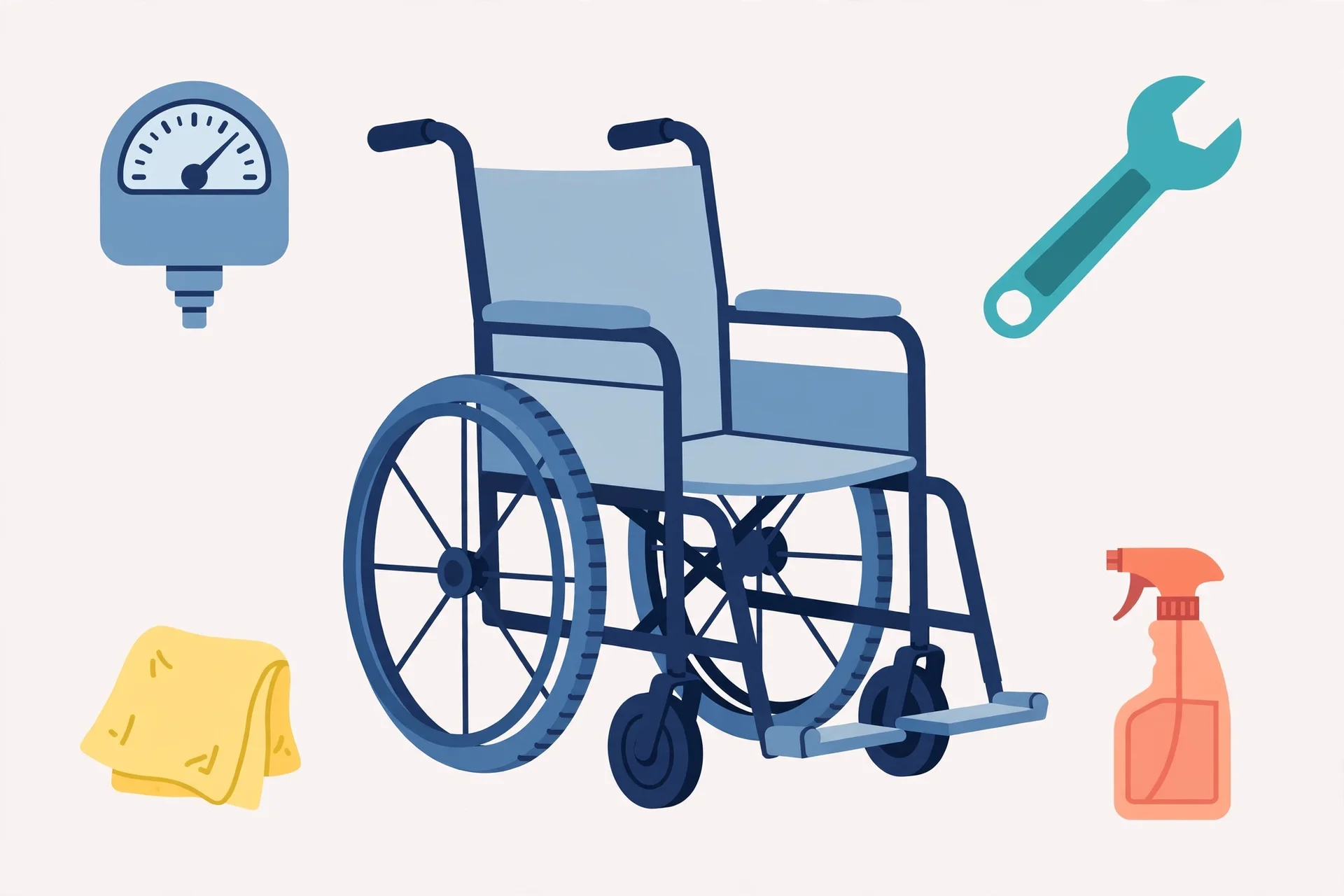
Make these four checks a habit before you roll:
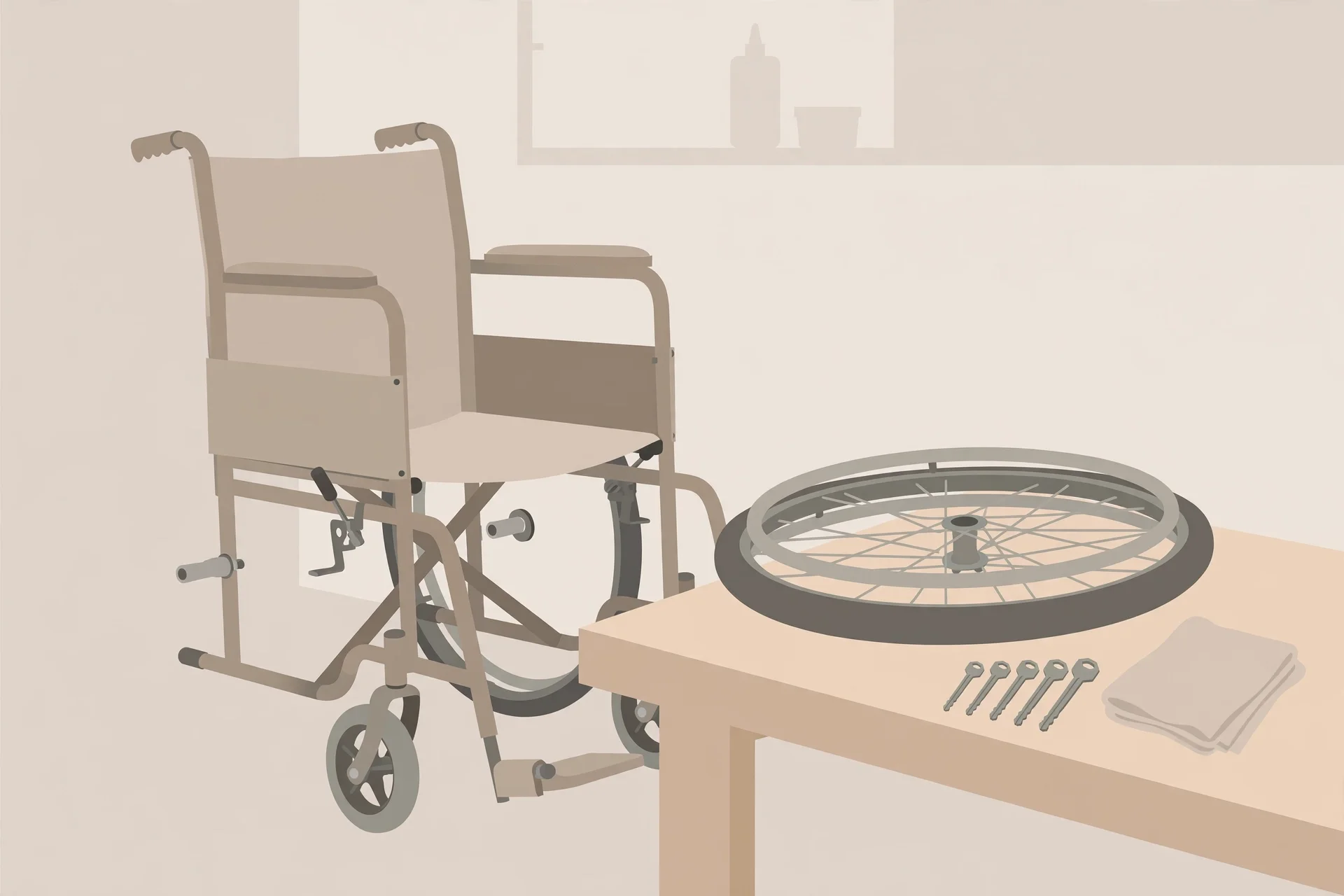
- **Tyre pressure.** Check pneumatic tyres against the pressure marked on the tyre sidewall. Soft tyres make pushing noticeably harder, wear unevenly and risk rim damage. Top up with a pump — many users carry a small one. - **Quick-release axles.** If your rear wheels use quick-release axles, confirm both are locked: press the button fully, slide the axle home, and check the button pops back out. Pull each wheel firmly — a wheel that moves is not locked, and an unlocked axle can come off in use. - **Wheel locks.** Engage both brakes and confirm they hold the chair on a slight slope. Worn or misaligned locks are a fall risk — get them adjusted rather than forcing them. - **Obvious damage.** Glance over handrims for cracks, spokes for looseness, upholstery for tears, and the frame for new bends or cracks. Anything new deserves a closer look before a long day out.
Monthly: the deeper inspection
Once a month, go a level deeper — Ottobock's manuals describe these as tasks a user with minimal technical skill can handle:
- **Screw connections.** Check the tightness of screws, especially during the first weeks of use and after any adjustment. If the same screw keeps loosening, stop re-tightening it yourself and consult your dealer. - **Spokes and wheels.** Check spoke tension on the rear wheels and look for bent or broken spokes; true a wobbling wheel promptly. - **Casters and forks.** Hair and dirt collect between the caster forks and the casters and gradually make steering stiff. Remove the casters and clean forks and wheels thoroughly with a mild household cleaner. - **Quick-release axles.** Keep the axles and their housings free of dirt, and lubricate the axle very lightly with resin-free oil so the locking balls keep working. - **Folding mechanism.** Check the cross-brace and folding joints for wear and tear. - **After wet weather.** Dry the chair as soon as possible. Avoid salt water, and keep sand away from the wheel bearings — both accelerate wear dramatically.
Cleaning, disinfection and when to call a professional
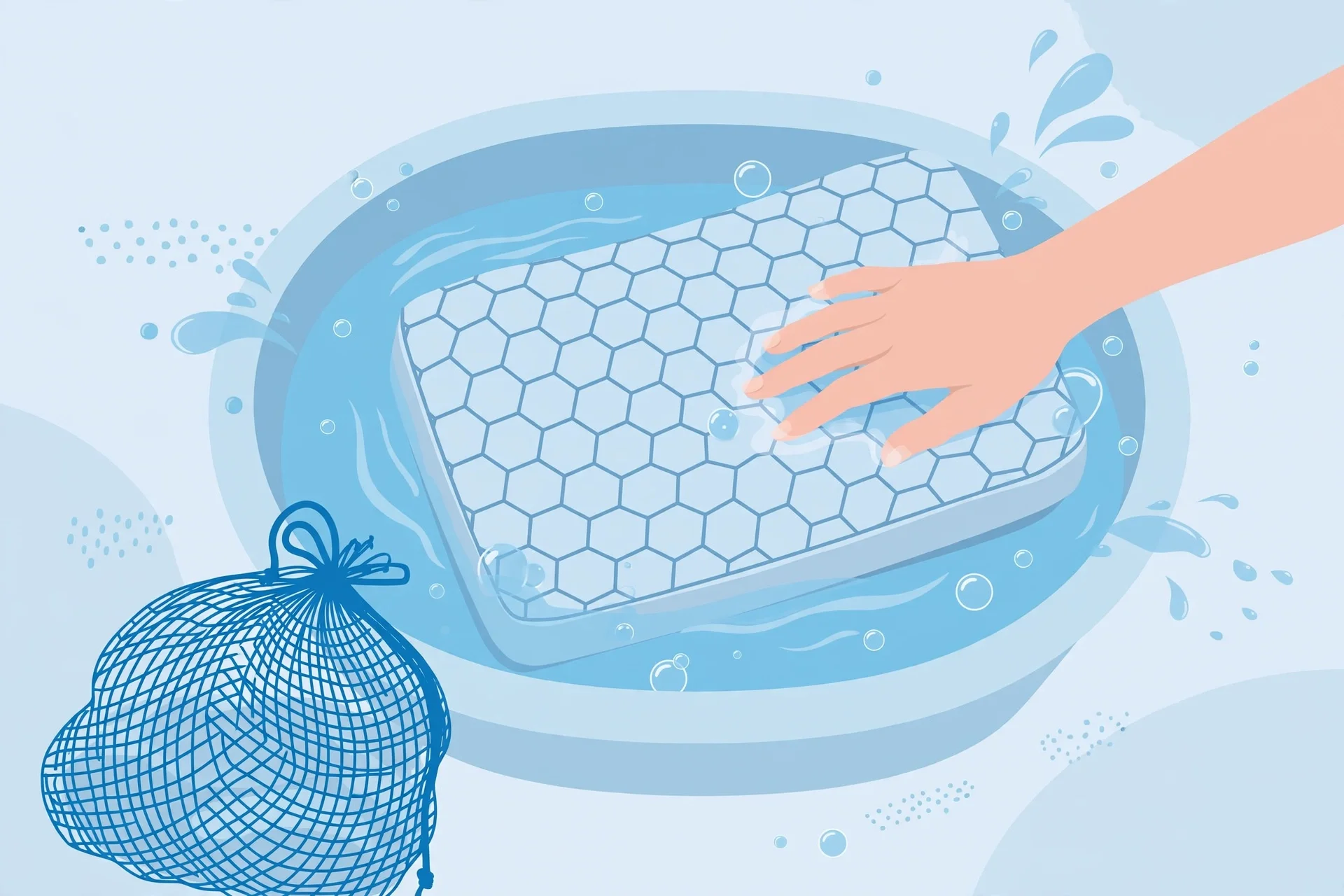
**Cleaning:** Wipe cushions and upholstery with warm water and a mild detergent, using a sponge or soft brush for spots; rinse with clear water and let everything air-dry. Frame parts, plastic parts and wheels can be cleaned with a mild cleaner and a damp cloth, then dried thoroughly. Do not use aggressive cleaners, solvents, hard brushes or pressure washers, and do not machine-wash components.
**Disinfection:** Use water-based disinfectants only, and always clean before disinfecting — disinfecting a dirty surface does not work properly. Follow the disinfectant manufacturer's instructions.
**Call your dealer or wheelchair service** if: wheel locks slip despite adjustment, the frame is cracked or bent, wheels wobble after spoke checks, the chair pulls to one side, or any screw connection loosens repeatedly. Book a full professional service at least once a year even if nothing feels wrong — bearings and brakes wear invisibly. Never attempt structural repairs yourself; a failed weld or axle is not a DIY job.