Methods drawn from Permobil's clinical measuring guide (hub.permobil.com) and Sunrise Medical's QUICKIE Life RT prescription form measuring instructions (a Sunrise Medical document). Units differ between the two guides (US inches vs EU millimetres) — use the units your supplier works in. Verified 2026-10-17. General information only, not medical advice: complex seating needs should be assessed by a clinician or dealer.
The two measurements that matter
Two body measurements drive almost every seat-size decision: width and depth. The manufacturer guides agree on how to take each one — and, just as importantly, on what people usually get wrong:
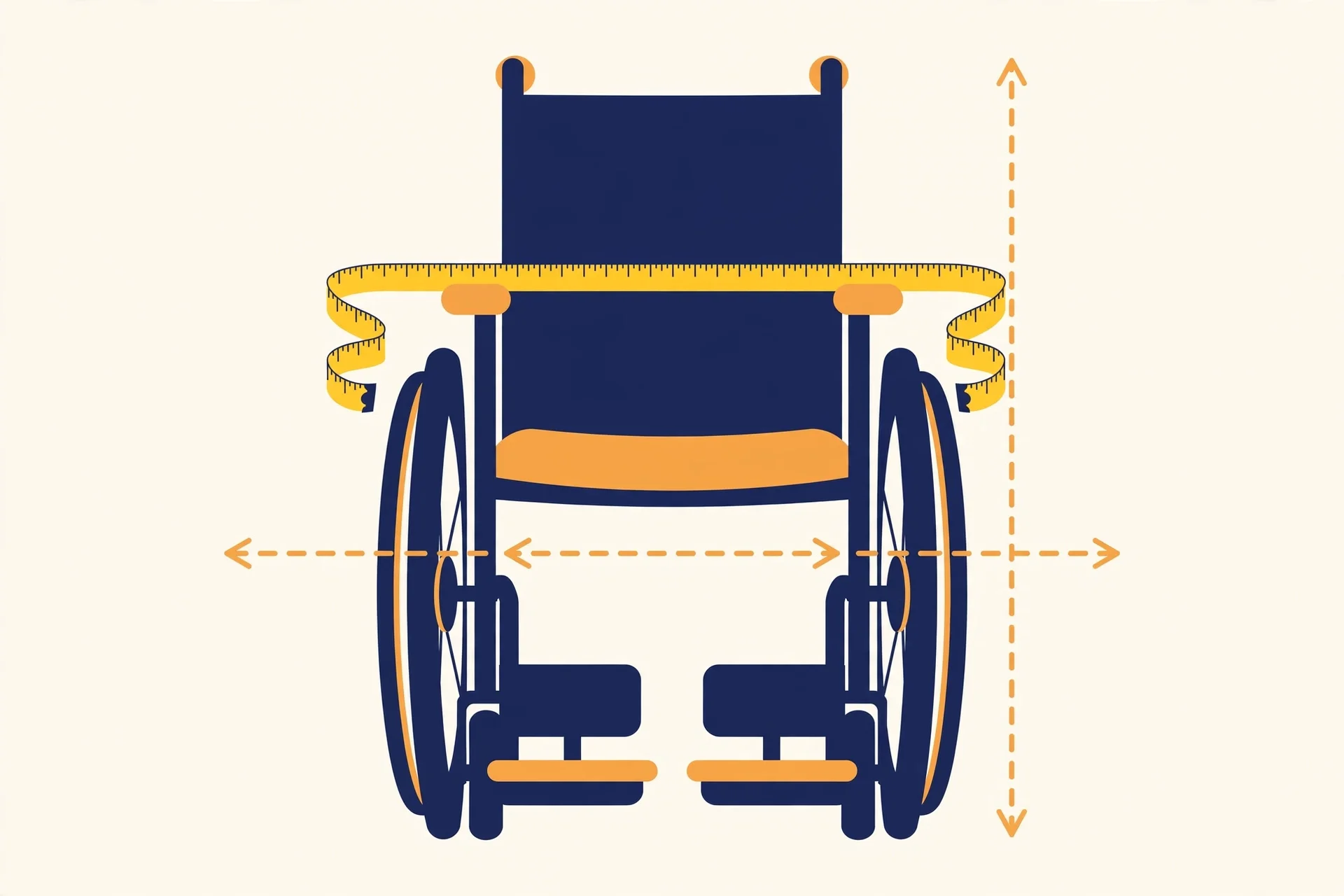
| What to measure | How to take it (per manufacturer guides) | Common mistake | |---|---|---| | Seat width | Sit upright; measure straight across the widest point of the hips and thighs, including soft tissue (Permobil). Sunrise Medical's fitting guide says to allow roughly 10–20 mm of total clearance between the sideguard and the hip on each side. On the chair itself, width is measured from outside frame tube to outside frame tube. | Measuring while slouched, or in bulky clothing you will not normally wear — both inflate the number. Too much room makes the chair harder to propel and reduces support. | | Seat depth | Sit upright; measure from the back of the buttocks along the thigh to the popliteal fossa — the crease behind the knee — then subtract clearance (Permobil's guide: subtract 2 inches). Sunrise says to leave 2–3 fingers (about 30–60 mm) between the front edge of the seat upholstery and the back of the knee. On the chair, depth runs from the back tube to the front of the seat upholstery. | Measuring to mid-thigh, or forgetting that a thick cushion eats into usable depth — both leave the seat pressing behind the knee. |
Notice that 'seat width' means two slightly different things: the body measurement (your hips plus a little clearance) and the chair measurement (frame tube to frame tube). Keep both straight when you compare your numbers with a manufacturer's size chart, or you will order the wrong size for the right reasons.
Measure yourself in five steps
1. Sit on a flat, firm surface — a hard chair, not a soft sofa — in the posture you will actually use in the wheelchair (Permobil stresses this; a slouched measuring posture gives slouched numbers).
2. Wear your normal clothing and the shoes you usually wear with the chair. Bulky winter layers that you will not always wear will inflate the width.
3. Have someone help if you can. It is hard to measure your own hips accurately while sitting on them, and a second pair of hands keeps the tape straight.
4. Width: run the tape straight across the widest point of the hips and thighs — not pulled tight — including soft tissue. Note the number, then add the small clearance (Sunrise: about 10–20 mm total).
5. Depth: measure from the back of the buttocks along the thigh to the crease behind the knee, then subtract clearance — two to three fingers, or about 30–60 mm (Sunrise), or 2 inches (Permobil's clinical guide). Write the number down before you stand up.
Turning your numbers into the right chair
Compare your two numbers against the seat width and depth options on the manufacturer's size chart — most manual chairs come in set increments such as 16, 18 or 20 inches. If you fall between sizes, the usual advice is to favour the fit that keeps you supported without squeezing: a slightly snug width propels better than a loose one, and a slightly short depth beats one that presses behind your knees. Remember that a thick seat cushion reduces usable depth, and that on-chair width is frame tube to frame tube, not upholstery edge to edge.
Two final cautions. First, Sunrise's own order form allows plus-or-minus 10 mm of manufacturing tolerance, so do not agonise over millimetres. Second, if your posture is asymmetric, if you need significant positioning support, or if your numbers land far from standard sizes, get a dealer or seating clinician to check the fit in person — the guides themselves say individual deviations are possible.