Based on Ottobock's Avantgarde 4 instructions for use (user) and Sunrise Medical's QUICKIE 2 product page, both checked 2026-10-17. Lock types and adjustment procedures vary by model — follow your own chair's manual and consult qualified personnel or your dealer for adjustments. This guide is general information, not medical advice.
The Main Types and How Each One Works
The knee-lever wheel lock is the most common type. A lever sits beside the seat within easy reach; you push it forward and a bolt presses into the tyre to hold the wheel, then pull the lever back up to release. Some chairs offer a longer lever version for easier reach. It is simple, visible, and easy to check at a glance.
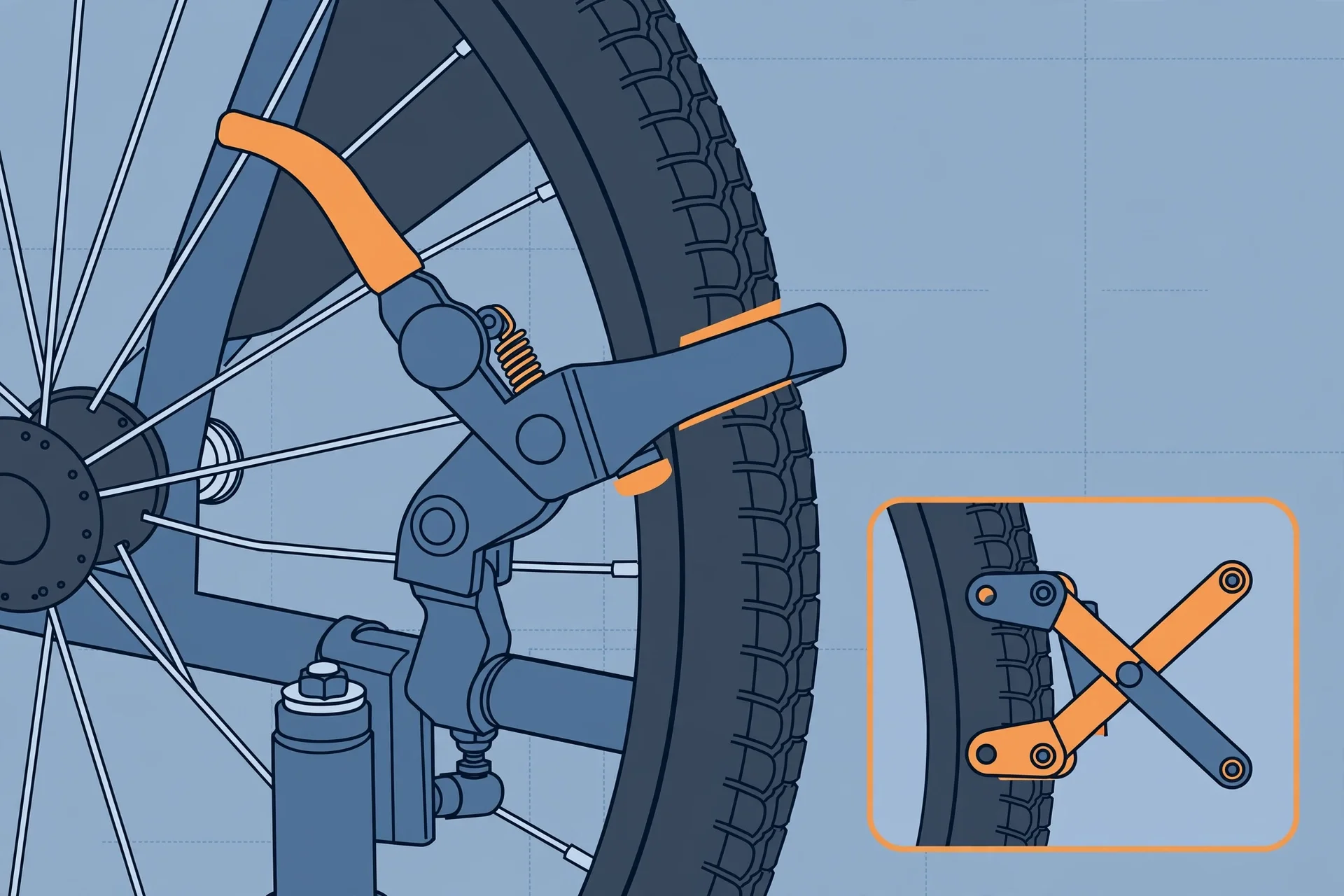
The scissor wheel lock sits lower on the frame and is operated by reaching under the seat from the side: pull the handle toward the back to engage it, push it forward to release. The low profile keeps it out of the way during side transfers, which is why active users often prefer it — but it demands more reach and hand function than a knee lever.
Push-to-lock and pull-to-lock are high-mount toggle locks on a clamp. As the names suggest, one engages by pushing the handle forward and the other by pulling it back. The motion is short and positive, and both types lock by driving the bolt into the tyre just like the others.
One-handed operation is a specialist variant: a single lever on one side locks both drive wheels at once through a cable system. Ottobock's instructions for use note this variant is recommended especially for people with hemiplegia, since one working hand can secure the whole chair.
The drum brake is not a wheel lock at all, but it is worth knowing about. It is operated by an attendant from the push handles and lets the attendant slow the chair smoothly and safely — useful on slopes or in crowds. If a carer regularly pushes the chair, this is the device to ask about, not a stronger wheel lock.
Finally, lever extensions: both Ottobock and Sunrise Medical offer extension handles that fit onto the lock lever, giving extra reach and leverage for users with limited hand strength or dexterity. They are a small accessory that can make a stiff lock usable.
One rule covers every type: wheel locks are parking locks. Both manufacturers warn that they must never be used as a driving brake — engaging a lock while the chair is moving risks a sudden stop, a fall, or crushed fingers. They hold a parked chair; they do not stop a moving one.
Everyday Checks That Keep Them Working
Make this a habit: both locks, every time, before transfers. Engage each lock and look at it — the bolt should press firmly into the tyre. If it only kisses the surface, slips under load, or one side feels different from the other, the lock needs attention before you trust it.
Check tyre pressure first. Wheel locks are adjusted for a correctly inflated tyre, so an under-inflated tyre changes the geometry and a perfectly good lock can start to slip. Pump the tyres to the pressure printed on the sidewall, then judge the lock.
Inspect weekly. Sunrise Medical's owner's manuals tell users to check the wheel locks against the maintenance chart every week, and Ottobock's instructions for use include scheduled maintenance intervals for the chair. Put it on a weekly routine — a quick look at both bolts, both levers, and the clamp screws takes less than a minute.
Re-adjust after any change to the chair. New tyres, a moved axle position, or a different wheel size all move the wheel relative to the lock, and the setting goes wrong with it. Whenever the wheels change, the locks need checking too.
Leave real adjustment to qualified personnel. Repositioning a clamp or changing the lock angle is a job for your dealer or the qualified person who set up the chair — and never use the chair unless both wheel locks engage fully. A lock that almost holds is a lock that fails when you lean on it during a transfer.
Keep the mechanism clean. Mud and grit around the bolt and pivot wear the parts and make the action stiff. A wipe-down as part of normal chair care costs nothing and keeps the engagement crisp.
Quick Answers
Q: Can I use the wheel locks to slow down on a slope? A: No. Wheel locks are parking-only devices, and using them as a brake while moving is dangerous. For slowing the chair while it is moving, an attendant-operated drum brake is the right tool.
Q: One of my locks barely holds. Can I adjust it myself? A: You can check the obvious things: tyre pressure, and whether the bolt meets the tyre squarely on both sides. Anything beyond that — repositioning the clamp or changing the angle — belongs to qualified personnel or your dealer, and you should not use the chair until both locks engage fully.
Q: What are wheel-lock extension handles for? A: They lengthen the lever, giving extra reach and leverage. They are designed for users with limited hand strength or dexterity who find the standard lever hard to operate.
Q: Knee-lever or scissor — which should I choose? A: It depends on your reach, hand function, and how you transfer. A dealer or therapist can match the type to you; the right answer is whichever one you can operate reliably every single time.
Q: How often should the locks be serviced? A: Inspect them weekly following the maintenance chart in your chair's manual, have them checked at the scheduled service intervals, and book an extra check any time a lock feels different from usual.