General guidance. Product details are from the manufacturers' own pages (Permobil US site; Sunrise Medical regional site) and apply to those models — availability and specifications vary by market.
What an attendant control is and how it works
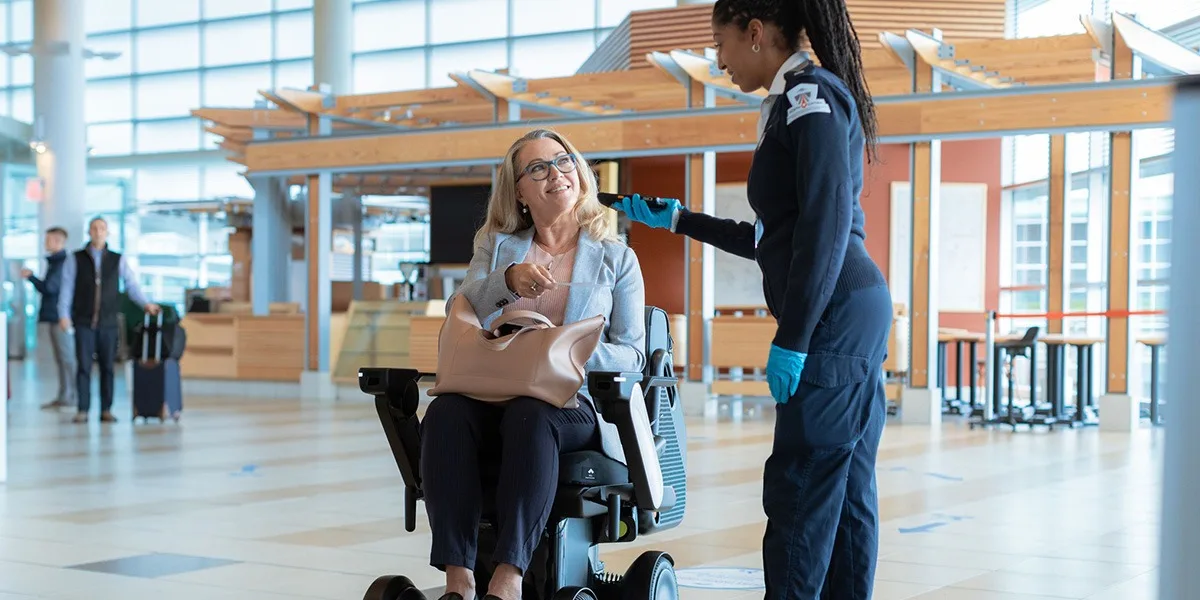
An attendant control hands driving over to someone else without removing the user's own controls. The idea is straightforward: a carer or companion walking behind or beside the chair can steer, stop, and manage speed, while the person seated stays put and stays comfortable. It is an accessory, not a separate chair — it bolts onto or plugs into the wheelchair's existing electronics and works with the same motors and seating functions the user would otherwise drive themselves.
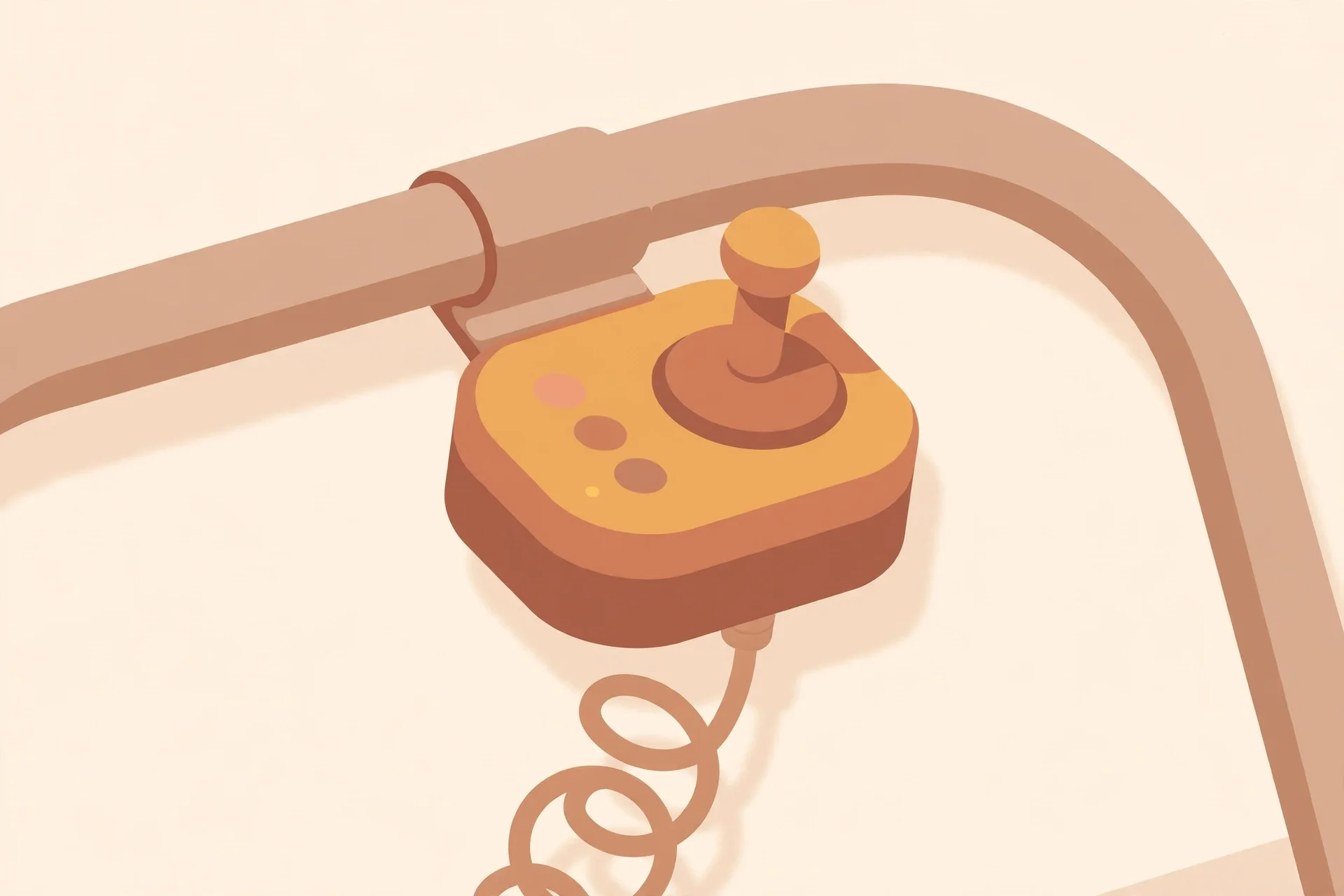
The hardware takes two main forms. The first is a dedicated attendant unit mounted at the rear of the chair. Permobil's mo-vis Scoot Control is a good example of the genre: it is intended to support an attendant in controlling or maneuvering a power wheelchair, indoors and outdoors, and it connects directly to the wheelchair's electronics. It uses a fully proportional handlebar with two rubber handles and two configurable thumb throttles, one on each side, and it gives the attendant full access to wheelchair functions such as lights, horn, and speed settings. Battery and speed are shown on the unit itself through LED displays, so the attendant can see at a glance how much range is left and what speed profile is active. Proportional matters here: unlike an on/off switch, the chair responds to how far the control is moved, which makes for smoother starts, gentler turns, and less of the lurch that nervous passengers hate.
The second form is a relocated version of the chair's own joystick. On Sunrise Medical's QUICKIE Q50 R Carbon folding powerchair, the attendant control mounting hardware allows the joystick to be quickly and easily moved into an attendant control position at the back of the chair. The Q50's manual is explicit about the catch: this does not include a second joystick, and only one joystick can be used on the chair at a time. So this design is a shared-control arrangement — the user drives when the joystick is at the armrest, the attendant drives when it is at the back — rather than two independent controls.
Either way, the attendant control is meant for situations where independent operation is not the best option at that moment. The attendant does not need to be a professional carer; a family member or companion can use it. What they do need is a few minutes of practice, because driving someone else is a different skill from driving yourself: you cannot feel the chair's response through your own body, and a proportional handlebar or joystick rewards small, smooth movements rather than big corrections.
On chairs where the attendant unit is a separate device rather than a relocated joystick, control transfer is handled by the electronics rather than by physically moving anything. The attendant's input and the user's input both feed the same control system, and the chair's programming decides who is in charge at any moment — which is exactly why the handover procedure deserves a clear conversation with your dealer. Whatever the hardware, the practical shape of attendant driving is the same: the attendant walks behind the chair, steers with small proportional movements, and manages speed with the unit's own speed control, while the seated person focuses on being comfortable rather than navigating. It is worth noting what an attendant control is not: it is not a remote control for driving the chair from across the room, and it is not a substitute for the user's own driving skills where those are intact. It is a shared-control accessory for the moments when a second driver is the safer or simpler option.
When it helps — and the trade-offs to weigh
An attendant control earns its place in several everyday situations. The clearest is when a user's ability to drive varies: someone with fatigue, a progressive condition, or recovering from illness may drive confidently in the morning and need help by the afternoon. Rather than the whole outing depending on how the day goes, the attendant control makes assistance a flick of a switch instead of a crisis. It also helps in busy or unfamiliar environments — crowded stations, hospital corridors, event venues — where even a confident driver may prefer a companion to take the wheel through the tightest spots.
It can be useful for new powerchair users, too. Learning to drive a power wheelchair takes time, and practising with an attendant who can take over in tricky moments lowers the stakes. Some families use the control for positioning as much as for travel: an attendant can make small adjustments to get the chair exactly where it needs to be at a table, a till, or a lift door, without the user having to drive at all.
The trade-offs are real and worth discussing with your dealer or therapist before you order. The first is cost: an attendant control is an additional accessory on top of an already expensive chair, and prices vary by manufacturer and system. The second is weight and complexity — extra hardware at the back of the chair adds both, and the unit needs to be mounted securely and kept clear of damage when the chair is transported. Third, the attendant has to learn it. A proportional control that feels intuitive to the person sitting down can feel twitchy to someone steering from behind, so both people should practise together in an open space before relying on it in a crowd.
There is also a control-sharing question to settle for your specific system. On designs like the Q50 R Carbon's, only one joystick can be active at a time, so the handover between user and attendant has to be deliberate and communicated. Ask your dealer how control transfer works on the chair you are considering, how the attendant's speed is limited, and whether any programming is needed so the chair behaves safely in attendant hands. Finally, treat this as a prescription decision, not an impulse accessory. An occupational therapist or your wheelchair service can assess whether an attendant control suits your needs, your environment, and the people who will actually be driving — because the best control system is the one the whole team is comfortable with.
Two practical questions come up in almost every assessment. The first is transport: a rear-mounted unit sticks out where luggage, car boots, and transit restraints also want to be, so check how the unit is protected when the chair is loaded and whether it interferes with folding. The second is who actually drives day to day. An attendant control works best when the designated attendant is the same person most of the time — a partner or regular carer who learns the chair's responses — rather than a rotating cast of helpers each discovering the proportional control for the first time. If several different people will drive, agree a simple routine: a fixed low speed setting for attendant driving, a practice run in an open space for each new driver, and a clear verbal handover ('you have it' / 'I have it') so both people always know who is steering. Finally, revisit the decision after a few months. Needs change — driving confidence grows, conditions progress — and the right answer today may not be the right answer next year. Your wheelchair service can reassess alongside your regular reviews.
Questions people ask before ordering
Q: Can I keep my own joystick as well? A: It depends on the system. Some designs, like the mounting hardware on the QUICKIE Q50 R Carbon, relocate the chair's single joystick to the back, so only one joystick can be used at a time. Others add a dedicated attendant unit alongside the user's own control. Ask your dealer exactly how your chair handles the handover, and make sure both drivers understand it before relying on it.
Q: Does the attendant need training? A: Formal training is not usually required, but practice is. A proportional handlebar or joystick responds to small movements, and driving someone else from behind feels different from driving yourself. Practise in a quiet, open space first, and agree with the user on a comfortable speed setting before you head anywhere busy.
Q: Will it add weight or change how the chair transports? A: Any rear-mounted unit adds some weight and bulk. Check how the unit is protected when the chair folds or is loaded into a vehicle, and make sure the mounting does not interfere with folding, seating functions, or transit tie-down points.
Q: Can the attendant control the seating functions too? A: On some systems, yes. Units that connect directly to the chair's electronics, such as the R-net-connected Scoot Control, can access functions like lights, horn, and speed settings — and on some chairs, powered seating. Confirm with your dealer which functions the attendant version of your specific chair can reach. Note that an attendant control is designed for close-range, attended driving — it is not a remote control for operating the chair from across the room.
Q: How do I know if it is worth it for us? A: Ask your occupational therapist or wheelchair service for an assessment. They can look at how your driving ability varies through the day, where you travel, and who would actually use the control — and advise whether an attendant control, a different driving control, or neither is the right answer.