
Rules and interpretations vary by airline; confirm with your carrier before booking. The IATA 2027 (68th edition) DGR requirements referenced here were announced on 2026-09-07 and take effect in 2027; they are not yet in force.
Why 300Wh Is the Line That Matters
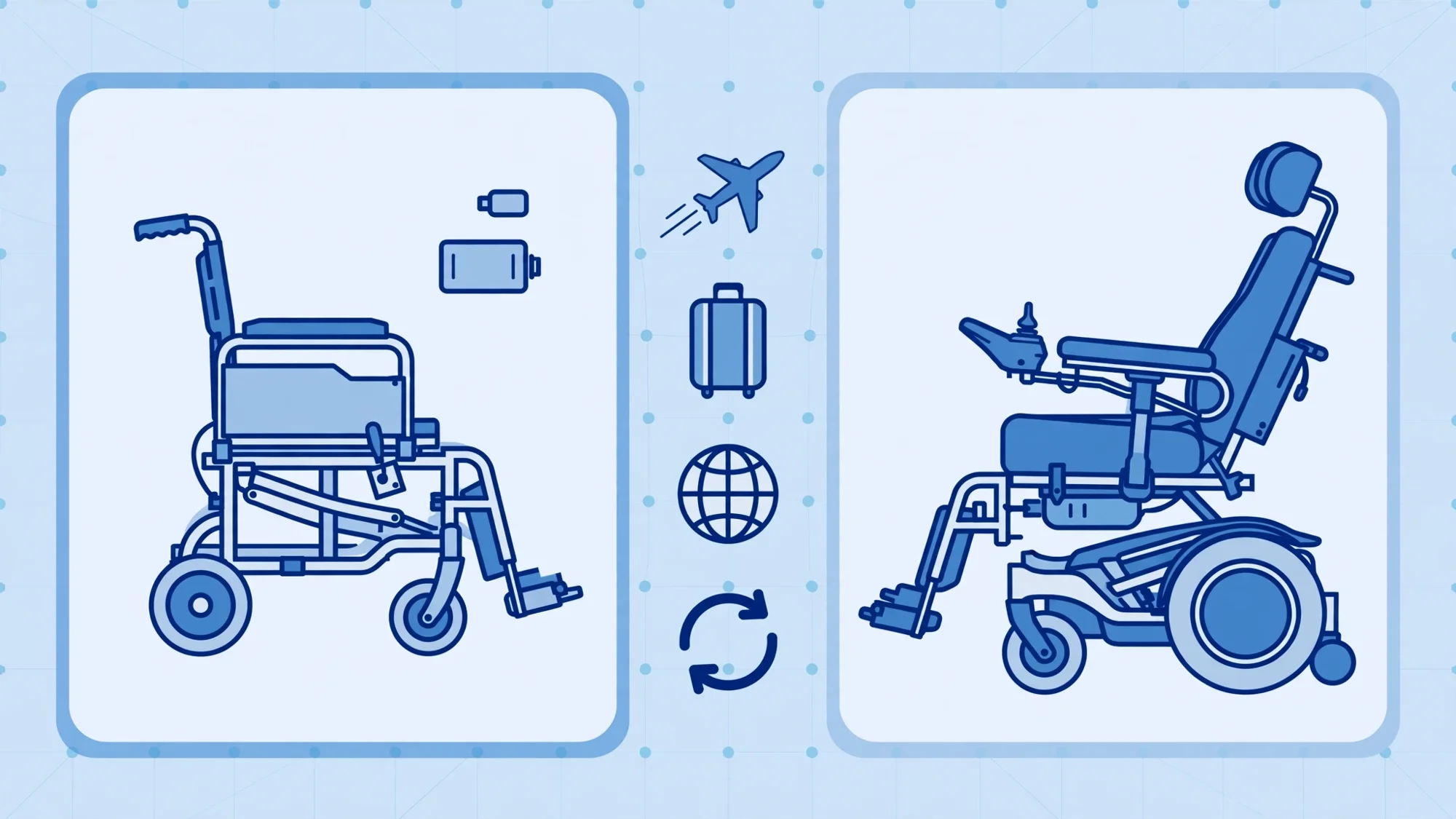
Most lithium batteries in power wheelchairs are rated between 100 and 300 watt-hours (Wh), and airlines handle them under the standard mobility-aid provisions of the IATA Dangerous Goods Regulations. Once a battery passes the 300Wh mark, the regulatory picture changes: IATA's 2026 passenger guidance treats higher-capacity lithium-ion mobility aids as a higher-risk case, and the 2027 edition of the DGR - the 68th edition, announced on September 7, 2026 - introduces new operator obligations specifically for lithium battery-powered mobility aids with batteries exceeding 300Wh. The Wh rating is printed on your battery label or in the wheelchair's compliance documentation, and it is the first thing the airline's special-assistance desk will ask about. Knowing the number before you book tells you which approval track you are on: the standard mobility-aid lane, or the over-300Wh lane with extra scrutiny and airline-specific conditions.
What the Current IATA Rules Require
Under the 67th edition of the IATA Dangerous Goods Regulations (effective January 1, 2026), battery-powered mobility aids with lithium-ion batteries fall under Subsection 2.3, Table 2.3.A, and the wheelchair is classified as a UN 3556 'Vehicle, lithium ion battery powered, Class 9' item, for which airline approval is required before travel. In practice, that approval means the battery must be firmly attached to the wheelchair (or removed and carried in the cabin if it is specifically designed to be removed), its terminals must be protected against short circuits, and the drive circuit must be isolated so the chair cannot power on accidentally. Only one spare lithium-ion battery for the mobility aid may be carried, and it must be individually protected against short circuits. Manufacturer compliance letters - such as the IATA confirmation letters issued by ergoflix Group for its wheelchairs, including models with 300Wh removable batteries - show what the airline needs to see: the UN 3556 classification, the watt-hour rating, and confirmation that the battery complies with the DGR. Those letters also carry a warning worth taking seriously: even with the confirmation presented, the airline can still raise questions or refuse transport - the final decision rests with the operator.
What Changes in the 2027 Rules
IATA released the 2027 editions of its cargo and ground operations manuals on September 7, 2026, and the 68th-edition DGR takes effect in 2027. Among the changes, the new DGR adds operator obligations for lithium battery-powered mobility aids whose batteries exceed 300Wh, plus updated state and operator variations from 17 states - which means individual countries and airlines can layer additional requirements on top of the global baseline. The 2027 update also formalizes the separation of power banks from other spare batteries: passengers are limited to two power banks for personal use, and recharging a power bank or spare battery in flight is prohibited. For mobility-aid users, the direction is clear: batteries above 300Wh will face more formalized airline-side checks. Until the 68th edition takes effect, the 67th-edition rules above are the operative standard - but if you are booking travel that spans into 2027, ask your airline whether the new obligations affect its policy.
Your Checklist Before You Book
First, read the battery label and note the Wh rating - and photograph the label in case it wears off. Second, contact the airline's special-assistance or dangerous-goods desk well before booking (not just the general call center): give the chair model, the battery's watt-hour rating, whether the battery is removable, and the UN 3556 classification. Third, ask for written confirmation of approval and keep it with your booking reference. Fourth, collect the paperwork airlines ask for most: the manufacturer's compliance statement or UN38.3 test summary for the battery, and a confirmation letter stating the watt-hour rating and UN 3556 classification. Fifth, if the battery is removable, plan to take it in the cabin; if it stays attached, confirm how the airline wants it protected and the drive isolated. Sixth, carry at most one spare mobility-aid battery, with terminals covered, and keep your power bank (two per person maximum, no in-flight charging under the 2027 rules) separate from the mobility-aid battery. Seventh, arrive early: ground staff will want to inspect the chair, and extra batteries always slow the process.
What the Airline Can Still Decide - and What This Guide Is Not
Airline policies differ, and IATA's framework is a baseline, not a guarantee. Some carriers cap battery ratings below what others accept, some require extra documentation for anything over 300Wh, and operator variations can add country-specific conditions to your route. A compliance letter proves your chair meets the international standard; it does not oblige any particular airline to accept it. This guide also does not promise that your specific chair will be accepted - no general article can, because acceptance depends on the airline, the aircraft, and the battery in front of the check-in agent that day. When in doubt, get the airline's decision in writing before you buy a non-refundable ticket. Note also the boundaries of this piece: it sits alongside general 2026 battery travel rules and the question of flying with a folding versus full-size chair, but it covers only the over-300Wh approval lane.