Caster inspection intervals, flutter description and cleaning steps verified 2026-10-15 against the MSKTC wheelchair maintenance guide (caster wheels section) and the Pride Jet 3 Ultra owner's manual care-and-maintenance chapter (monthly caster checks). No manufacturer torque figures quoted; adjustments and bearing replacement are directed to authorised providers per the manuals.
What caster wheels do, and how they go wrong
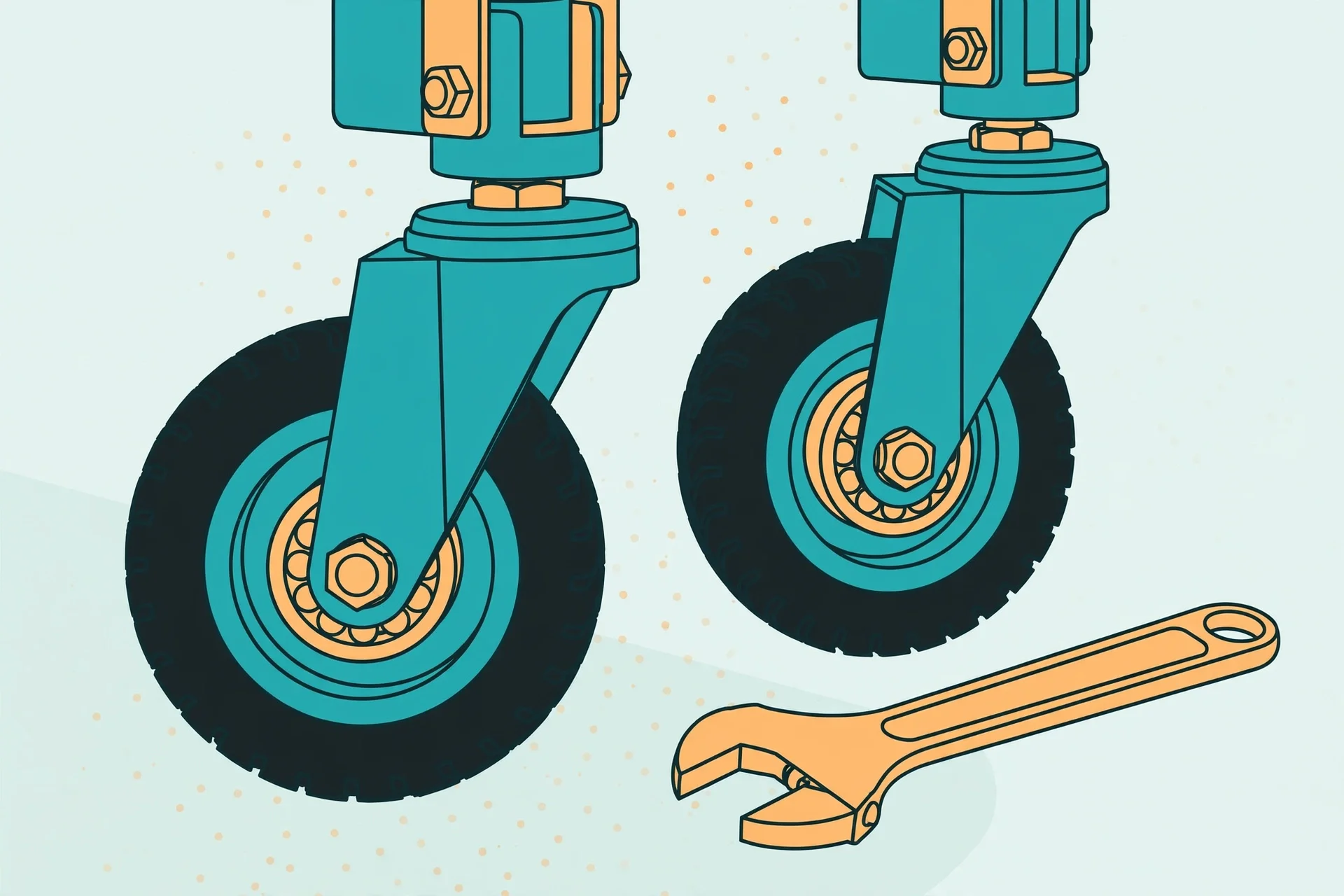
Caster wheels are the small wheels — usually at the front of a mid-wheel or front-wheel-drive powerchair — that swivel freely so the chair can steer. Each caster sits in a fork, which connects it to the frame through a stem and bearings, and the wheel itself runs on a small axle with its own bearings. The most talked-about caster problem is flutter: a shimmy or rapid vibration of the caster wheels, often felt at higher speeds or on smooth floors. Flutter usually means something is loose, worn or out of alignment — for example a worn caster wheel, a bent or damaged fork, or tired stem bearings — and it should not be ignored, because a caster that cannot swivel and track properly affects stability and steering. Other warning signs include visible wear, cracks, bulges or tears in the caster tyres, a wheel that wobbles side to side on its axle, grinding or knocking sounds from the bearings, and a chair that pulls to one side on flat ground. Hair, lint and dirt wound around the axle bearings are another quiet culprit: they wear out bearings and make the chair noticeably harder to manoeuvre.
The five-minute monthly caster check
You can do this routine yourself; the chair should be switched off and, ideally, empty while you work. Start by looking: inspect each caster wheel for wear, cracks, looseness, bulges and tears, and compare left and right — uneven wear is a clue that something is off. Give each wheel a spin and listen: it should turn smoothly and quietly, and the fork should swivel freely without sticking. Next, check alignment on a flat surface: both caster wheels should touch the floor evenly, and the forks should sit vertically. If one wheel hovers or a fork leans, stability and performance suffer. Then grab each wheel and wiggle it in all directions — there should be no play or clunking at the axle. Finally, clean out the axle bearings: pick away hair, lint and dirt with tweezers or an old toothbrush, because debris left in the bearings accelerates wear. Wipe the forks down with a damp cloth and check that any visible fasteners are present. That is the whole monthly routine — most caster faults announce themselves at exactly these steps.
When to adjust, when to replace, when to call your provider
Simple cleaning and visual checks are owner territory; adjustments and replacements are a judgement call. A caster wheel that is badly worn, cracked or has chunks missing should be replaced rather than nursed along — worn casters make the chair harder to drive and can strain the steering. Persistent flutter after cleaning and inspection usually points to a fork that needs adjusting or bearings that need replacing, and that is provider work: most manufacturer manuals say outright to have bearing or fork service done by an authorised provider, and they are right, because a mis-set caster affects the chair's stability. Never try to true a bent fork yourself, and do not over-tighten fasteners — a stem nut that is too tight makes the chair hard to steer, while one that is too loose invites flutter. Book a full professional service at least once a year, which is the interval most manufacturers recommend, and mention any flutter or pulling you have noticed so the technician can check the forks, stems and bearings properly. The golden rule from the maintenance guides is a good one to live by: do not try to fix or replace any part you are not comfortable with, and get an expert involved early — casters are cheap parts, but they carry the steering.