
P&O Cruises 2026 policy details (accessible-cabin mandate, 14-day declaration deadline, size limits, denied-boarding consequences) as reported by Cruise Lowdown's August 2026 Iona accessibility update; P&O policy wording and denied-boarding case from Cruise Hive; first-hand accessible cruising experience (gangways, crew assistance, excursion limits) from Travel Without Limits' Arvia review. On 2026-10-05 direct page fetches (browser_open) were unavailable, so facts were verified by cross-reading multiple search-result excerpts; all URLs below were copied verbatim from search results.
The 2026 rule change: declare or risk denied boarding
Cruise lines have always asked about mobility equipment, but enforcement in 2026 is stricter and more specific. P&O Cruises now requires passengers who use a powered mobility device, such as a powerchair or scooter, or who need to use a manual wheelchair inside their cabin, to book a designated fully accessible cabin, suite, or mini-suite. Booking a standard cabin with the intention of storing a powerchair there is no longer accepted. All mobility equipment must be declared through the My P&O Cruises portal at least 14 days before the sail date, and the line warns that failure to declare can mean being denied boarding at the terminal, with no storage available for devices that are refused. This is not theoretical: there are documented cases of P&O passengers being turned away at embarkation over undeclared mobility equipment, with the line pointing to its published Mobility Aids and Equipment policy, which states plainly that undeclared devices cannot come aboard. The lesson is simple and worth repeating: declare everything, in writing, well before you travel.
Book the right cabin: your chair has to fit through the door
The cabin question is really a geometry question. Standard cabin doorways are narrow, typically around 52 to 55 centimetres, and any device brought into a standard or partially accessible cabin must fit comfortably through that doorway and be stored fully inside the room. Crew check this, and corridors, elevator lobbies, and fire doors must stay clear at all times, so there is no option to park a chair in the hallway overnight. A fully accessible cabin solves this with wider doorways, more floor space for manoeuvring, and a wet-room-style bathroom with grab rails and a pull-down shower seat. When comparing ships, look at the actual door measurements rather than the cabin grade name, because doorway widths vary between ships and even between cabin categories on the same ship. If your powerchair is large, confirm the numbers with the cruise line or your travel agent before booking, and get the confirmation in writing. Booking the cheapest available cabin and hoping the chair fits is exactly the gamble the 2026 rules are designed to stop.
Declare everything, and do it early
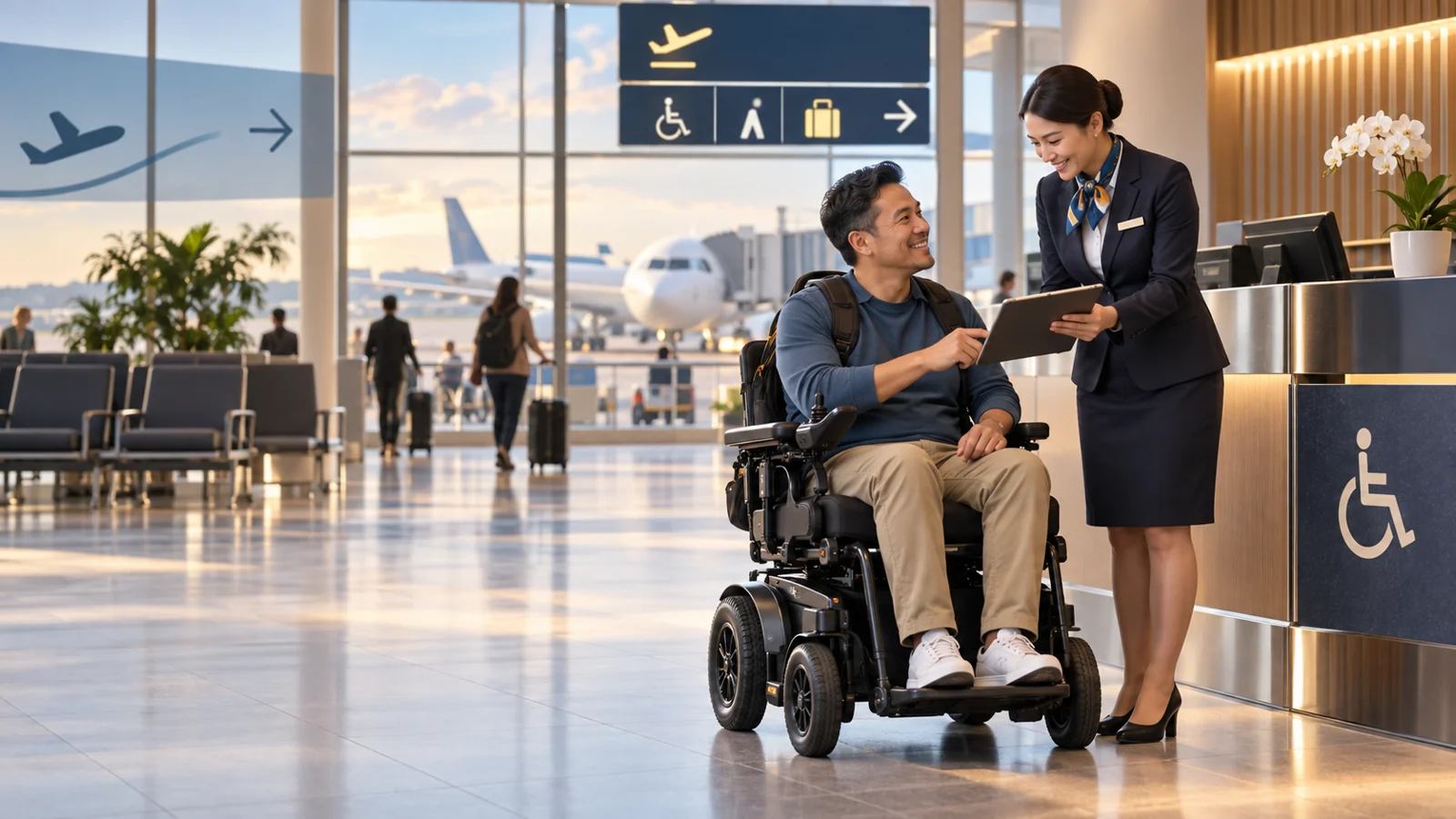
The declaration is where most problems start, so treat it as part of the booking, not an afterthought. Expect to provide the device type, its dimensions and weight, and battery information. Submit it through the cruise line's official portal as early as you can, and keep a copy of the confirmation. Beyond the paperwork, tell the line what assistance you actually need: help at embarkation and disembarkation, for example, which ports routinely provide with advance notice. Be realistic about what crew can do. Crew members can assist with boarding and guide you through the terminal, but they cannot lift guests or heavy equipment, so anything involving lifting needs a different plan, such as travelling with a companion or arranging equipment rental at the destination. If you plan to rent a scooter or chair through a cruise-equipment provider rather than bringing your own, that rental still needs declaring, and the device still needs to be stored and recharged inside your stateroom, never in corridors or elevator lobbies.
Tender ports and shore excursions need a separate check
The ship itself is only half the trip. At tender ports, passengers transfer from the ship to a small tender boat, which can involve steps and an unsteady platform. A passenger who cannot manage those steps may be unable to go ashore unless the port offers roll-on tender capability, so check each tender port on your itinerary individually rather than assuming they are all the same. Shore excursions vary just as much: activity levels differ, and surfaces range from smooth promenades to uneven streets with steep steps. One recent first-hand review of accessible cruising on P&O's Arvia found level-access gangways and proactive crew at every port, but also steep inclines at some stops and a limited number of the line's own accessible tours, with the booking team described as helpful and honest about which excursions genuinely suit wheelchair users. That is the right model: ask the cruise line or excursion operator specific questions about steps, distances, surfaces, and vehicle access before you book, and be wary of any excursion description that says nothing at all about accessibility.
Pre-booking checklist: six things to lock down
Run through this list before you pay the deposit. One, measure your powerchair: overall width, length, turning radius, and weight, plus battery type. Two, book a fully accessible cabin and confirm the doorway and bathroom measurements in writing. Three, submit the mobility equipment declaration through the cruise line's portal at least 14 days before sailing, earlier if you can, and save the confirmation. Four, confirm battery charging rules for your cabin and where the chair will be stored overnight. Five, check every tender port on the itinerary for step-free transfer options. Six, vet each shore excursion for steps, surfaces, and accessible transport, and ask directly when the listing is silent. Do all six and the cruise becomes what it should be for wheelchair users: one of the most step-free holidays available, with your cabin, your chair, and your plans all sorted before you leave home.