A chair and attachment, followed by training
Scott’s support team in Sudbury had found local hills difficult with his previous manual-chair arrangement. TGA’s March account describes a Strongback wheelchair paired with a Powerpack. A supplier assessment was followed by training for a staff trainer, who then instructed the support workers.
The reported sequence
- AssessmentThe supplier considered Scott’s needs and the local pushing difficulty.
- Equipment selectionA manual wheelchair and powered attendant attachment were chosen together.
- Staff trainingA trainer received instruction and passed it to the wider support team.
- Community useThe equipment was used for shops, social contact and familiar local destinations.
The outcome was visible at the shops
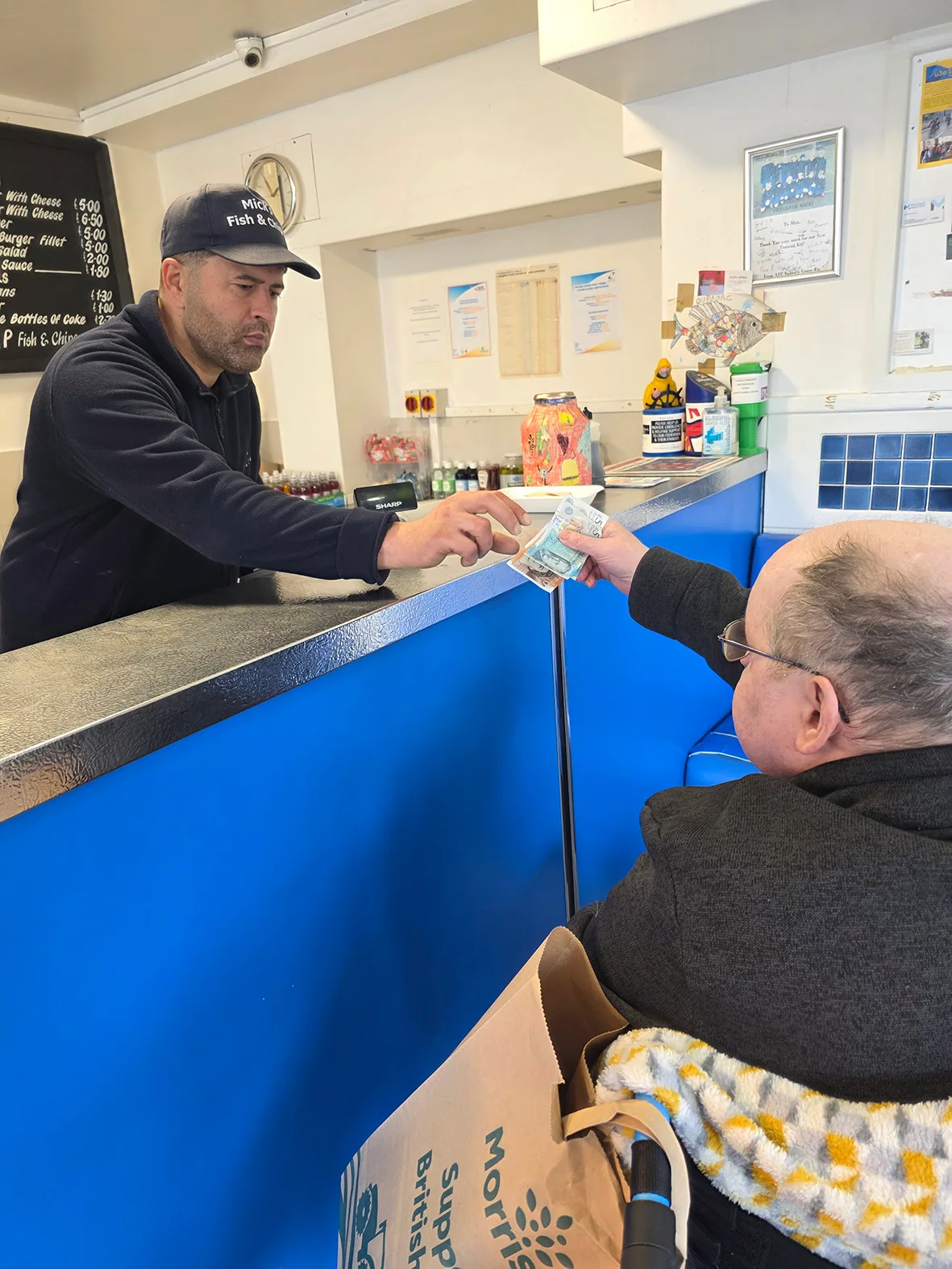
The story follows Scott into the community: visiting a church, choosing items in a supermarket and buying food at a local fish-and-chip shop. These are concrete changes in participation. They are more informative than calling equipment life-changing without saying what the person can now do.
The attachment remains attendant controlled. It helps the support team move the chair; the account should not be read as Scott switching to independent powerchair driving.
A handover needs to survive a staff change
In supported living, instructions that only one person remembers are fragile. The useful operational question is how the agreed routine is passed between staff: where the controls are, how the equipment is checked and which actions require a trained helper. A clear handover is part of access, because an unfamiliar staff member should not turn a routine outing into a cancelled one.