International baseline from IATA's dangerous goods guidance for passengers; US-specific size limits and packing requirements from FAA PackSafe for wheelchairs and mobility devices (49 CFR 175.10(a)(17)). Individual airlines may apply stricter rules — always confirm with your carrier. Verified 2026-10-06.
The one rule that never changes: spares fly in the cabin
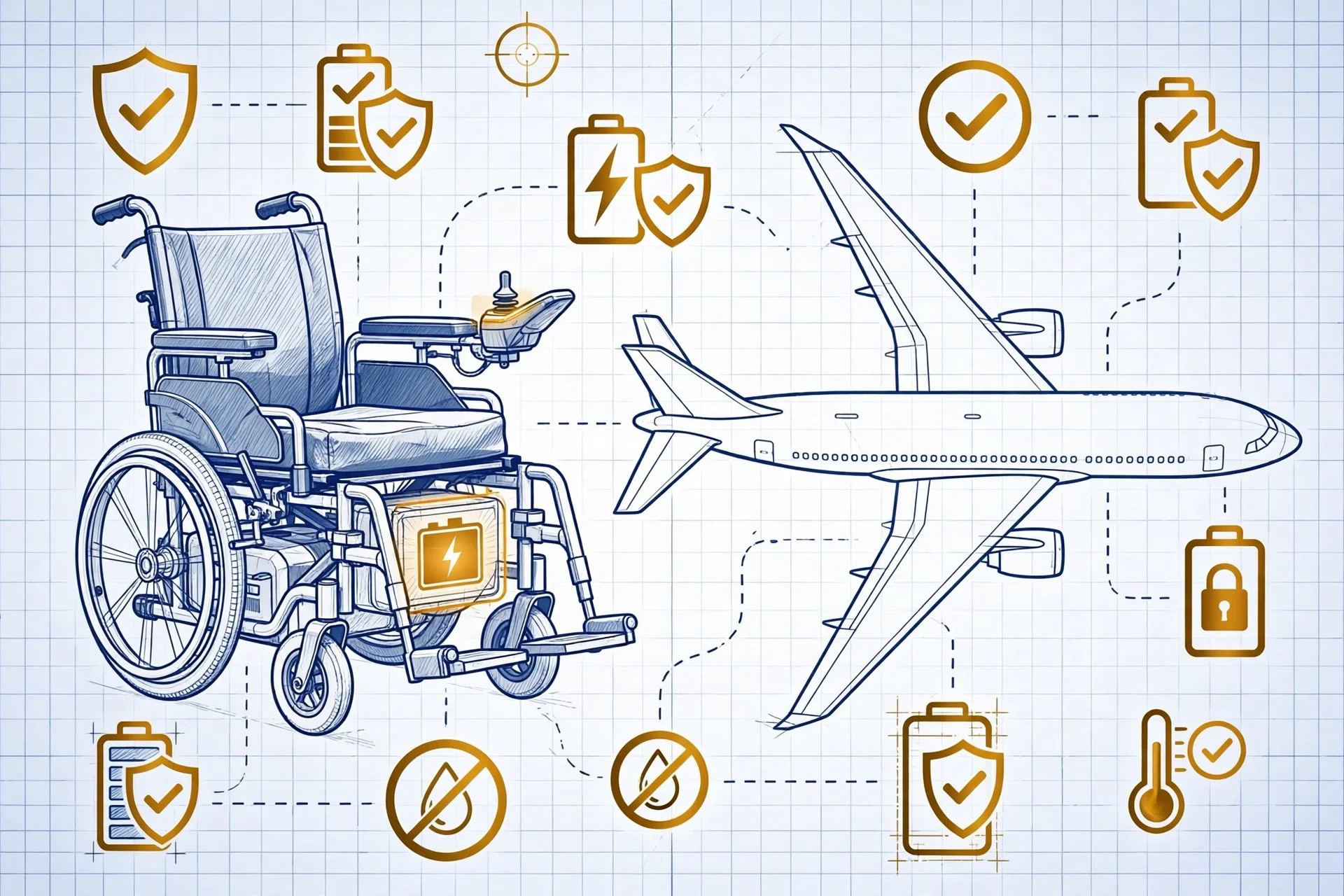
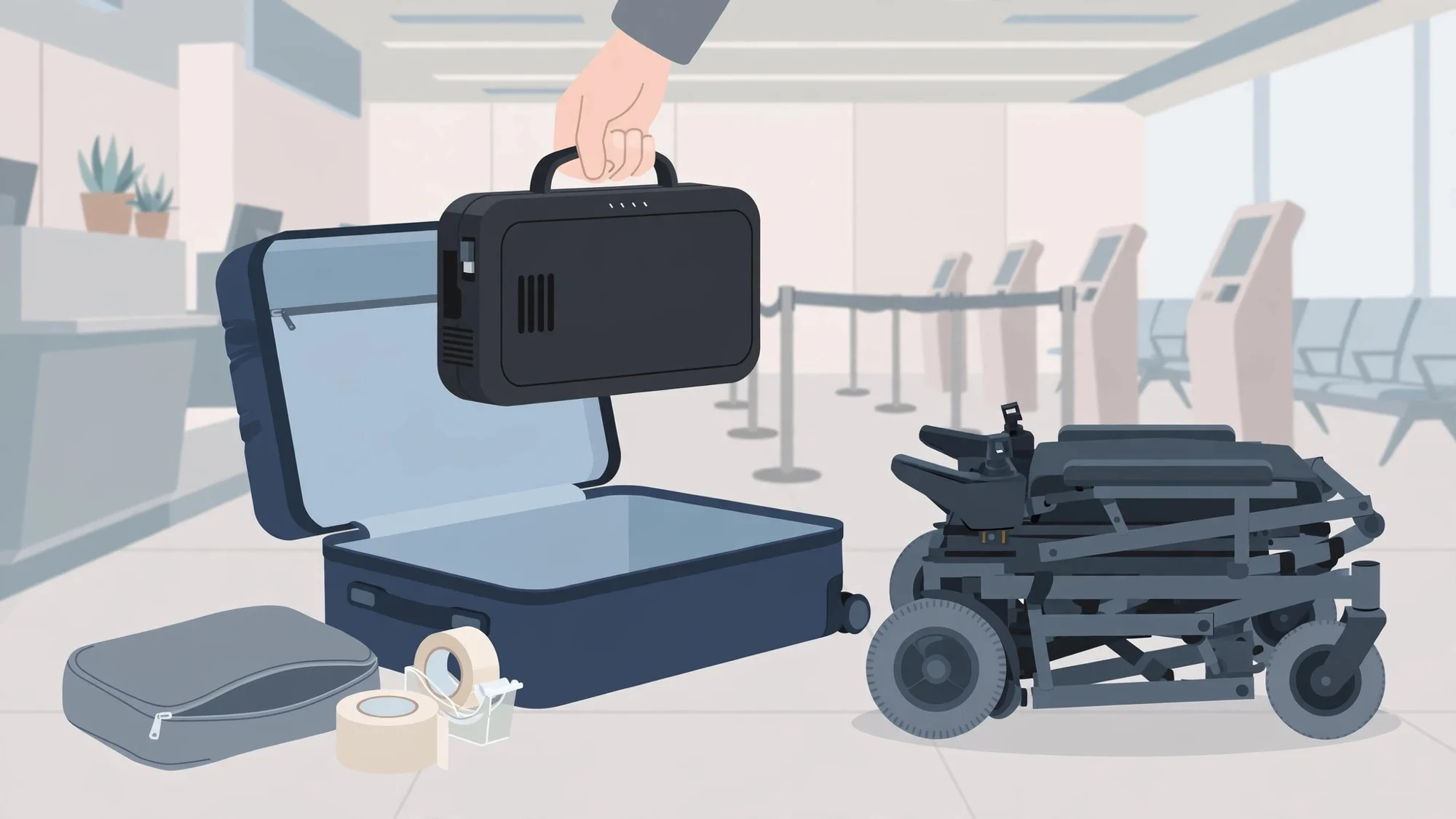
Whether your wheelchair runs on lithium-ion or another chemistry, the rule for spare batteries is the same everywhere: spares do not go in checked baggage. IATA's dangerous goods guidance for passengers states that spare batteries are not allowed in checked baggage, and the FAA's PackSafe guidance says lithium-ion spares for wheelchairs must be carried in carry-on baggage only — and never checked. The reasoning is practical: a battery that overheats or short-circuits in the cargo hold is out of the crew's reach, while one in the cabin can be dealt with. So if your chair has a removable battery and you travel with a spare, plan from the start for that spare to ride in your carry-on, not in the hold.
How big can your spare be: the 300Wh and 160Wh limits
US FAA rules for wheelchairs and mobility devices set the numbers for lithium-ion spares: one spare battery not exceeding 300 watt-hours, or two spare batteries not exceeding 160 watt-hours each, carried in carry-on baggage. These are US rules under 49 CFR 175.10(a)(17); IATA's own passenger guidance sets the international baseline that spares must be in the cabin with short-circuit protection, and your airline may set stricter limits than either. Non-rechargeable lithium metal batteries are forbidden with these devices under the FAA rules. Watt-hours are usually printed on the battery label — multiply the voltage by the amp-hours if only those figures are shown — and non-spillable (gel or absorbed-electrolyte) spares have their own separate limit of one spare per passenger under airline instructions.
Packing checklist: terminals, pouches, and where it goes
Treat the spare as the regulated item it is, not as ordinary luggage:
- Keep the installed battery in the wheelchair where the chair's design protects it; remove the battery only where the chair does not give it adequate protection. - Protect the terminals from short circuits: cover them with tape, keep the battery in its original packaging, or place each battery in its own protective pouch so it cannot be damaged. - Carry the spare in your carry-on baggage only, and keep it accessible — never in checked baggage. - If your carry-on is gate-checked, take the spare out first and keep it with you in the cabin. - Do not travel with a damaged, defective or recalled battery; leave it behind. - Bring the battery's documentation — watt-hour rating and manufacturer information — in case staff ask at check-in or security.
Tell the airline before you fly
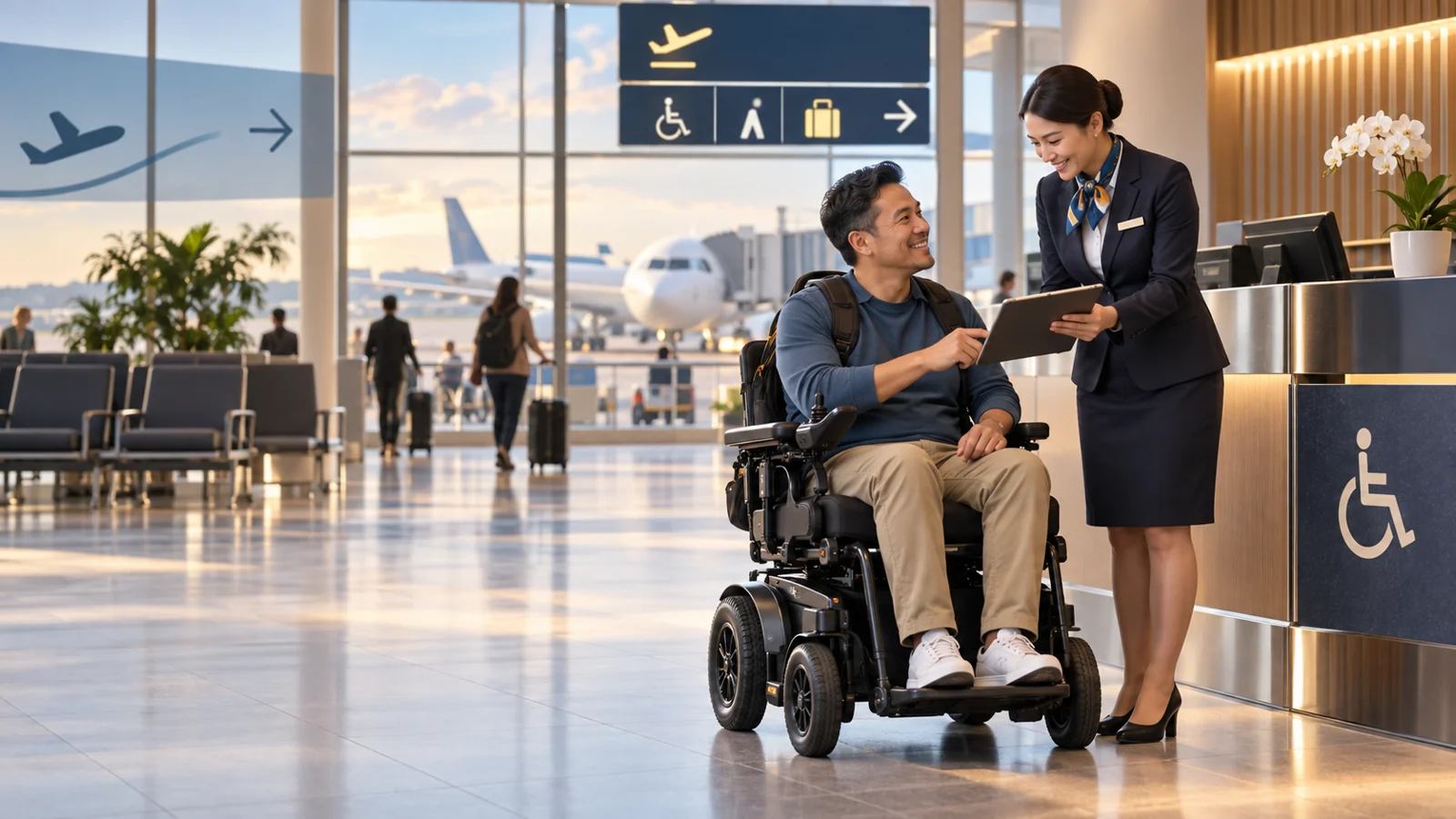
Both IATA and the FAA expect advance arrangements. IATA's guidance asks passengers to tell the airline the type of battery installed and how the mobility aid should be handled, including how to isolate the battery. The FAA goes further on spares: the passenger must advise the airline of the battery's location, and the airline must notify the pilot-in-command of where the battery is in the cabin. In practice, that means mentioning the spare when you book assistance or at check-in — not discovering the rule at the counter. Allow extra time at the airport: battery-powered mobility aids routinely need additional screening, and having the watt-hour rating confirmed and the packing already sorted is what keeps that screening short. And because individual airlines may apply more restrictive rules than the regulator, confirm your carrier's battery page after you have checked the official guidance.