WCHR/WCHS/WCHC are industry-standard IATA SSR codes; code definitions verified on Delta Air Lines' published wheelchair services page (opened 2026-10-15). Airline procedures, notice periods and equipment vary by carrier and airport — always confirm with your own airline.
The three codes, decoded
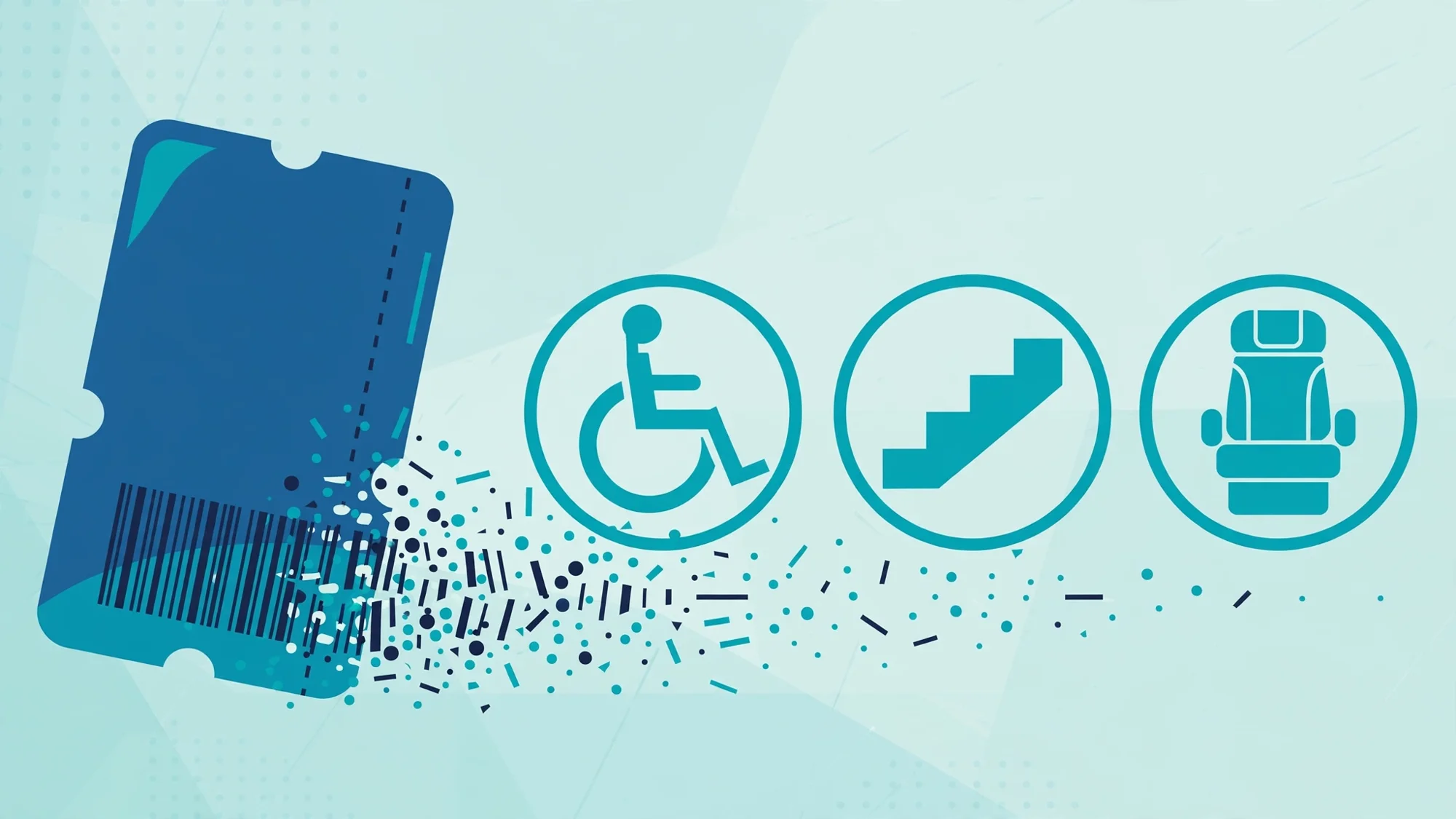
WCHR, WCHS and WCHC are not airline-specific inventions. They are IATA SSR (special service request) codes — the industry's shared shorthand for the level of wheelchair assistance a passenger needs. Airlines store them in the reservation so that the departure airport, the arrival airport and every connecting point all see the same instruction. Here is what each one means, based on the definitions airlines publish:
| Code | Full name | What it means | |------|-----------|---------------| | WCHR | Wheelchair – Ramp | You can walk up and down stairs and make your own way to and from your cabin seat, but you need a wheelchair for longer distances through the airport. | | WCHS | Wheelchair – Stair | You cannot use stairs, though you can make your own way to and from your seat once inside the cabin. You need a wheelchair for distances plus help — or carrying — up and down steps. | | WCHC | Wheelchair – Cabin | You are completely immobile in the airport environment. You need a wheelchair to and from the aircraft, and a narrow aisle chair (sometimes called a boarding chair) to get to your seat. |
A fourth code worth knowing is WCOB: the on-board wheelchair. Every mainline aircraft carries one — a slim chair that fits the aisle so passengers can move to and from the lavatory. It is different from the WCH codes: WCOB describes equipment used during the flight, while the WCH codes describe the assistance you need getting to your seat.
In practice, ground staff read the code and prepare accordingly: a WCHR request means a wheelchair and pusher waiting at the terminal; WCHC means the aisle chair must be at the gate before boarding begins. The wrong code can mean the wrong equipment — which is why getting it right matters.
Who usually gets which code
Which code fits you depends on two questions: can you manage stairs, and can you get to your seat unaided?
WCHR is the most common. It suits travellers who can walk short distances — to the seat, to the lavatory — but cannot manage the long walks modern terminals demand. Many older travellers with limited stamina, or people with respiratory conditions who tire easily, travel on WCHR.
WCHS is about stairs rather than distance. If you cannot ascend or descend steps at all, this is your code — even if you are otherwise mobile. It matters most where boarding happens by stairs rather than an air bridge: regional airports, remote stands, and smaller aircraft. Airlines publish explicit guidance for stair boarding, because an ambulift or a carry team has to be arranged in advance.
WCHC is for travellers who need full assistance throughout: wheelchair from check-in to the aircraft door, an aisle chair to reach the seat, and the reverse on arrival. If you cannot transfer independently or bear weight, WCHC is almost certainly the right code.
One important note from IATA itself: disability legislation varies across the globe, and there is no single universal definition of a passenger with reduced mobility. The three codes are described consistently across airlines, but each airline's assistance procedures, notice periods and equipment differ. Always confirm the details with your own carrier rather than assuming one airline's rules apply everywhere.
How to get the right code on your booking
Request assistance at the time of booking, not at the airport on the day. Describe your needs in plain language: can you climb stairs? How far can you walk without resting? Can you transfer to a seat on your own? The agent translates your answers into the right SSR code — but ask them to read the code back to you so you know what was recorded.
If your travel involves connections, be thorough. Delta's published guidance, for example, advises documenting the wheelchair service with the appropriate SSR for all segments of the reservation, even if the passenger only needs assistance for part of the itinerary. Every airport on your route needs the instruction, including the return journey.
If you travel with a battery-powered wheelchair, extra notice applies. Delta requires at least 48 hours' advance notice for battery-powered equipment and recommends checking in at the ticket counter at least one hour before departure so staff can arrange proper handling. Keep assembly and disassembly instructions and the battery type attached to the chair — Delta even provides a printable wheelchair handling form for this purpose, designed to be laminated and reused on every trip.
At the airport, tell a staff member on arrival that wheelchair assistance is needed for travel to the departure gate, even if the code is on your booking. A verbal confirmation closes the loop between the reservation system and the people on the ground.
Connections and a quick pre-flight checklist
Connections are where assistance plans most often break down. One thing to know: your personal wheelchair may not be returned to you at a connecting airport if the layover is too short for the unloading and reloading involved — especially where the chair needs disassembly and reassembly. Delta's own guidance warns that the time between connecting flights may be insufficient, and in that case recommends using the airline-provided wheelchair service for the transfer instead of insisting on your own chair.
If you have a tight connection and travel on WCHC, consider asking for the aisle chair to be confirmed at the connecting gate as well, not just at departure.
Before every trip, run through this checklist:
- Confirm the correct code (WCHR, WCHS or WCHC) is recorded on every flight segment, including the return. - State honestly whether you can manage stairs — this decides between WCHR and WCHS. - If you need an aisle chair to reach your seat, make sure WCHC (not WCHR) is on the booking. - Send battery and equipment details to the airline at least 48 hours ahead for powered chairs. - Attach handling and disassembly instructions to your own wheelchair. - At the airport, verbally confirm the assistance with a staff member and ask where to meet on arrival.
If something looks wrong on the day — the wrong code, the wrong equipment, no aisle chair at the gate — ask to speak to the airline's assistance coordinator before boarding begins. The codes exist precisely so that every person handling your journey knows what you need; making sure the right one is on the booking is the single most effective thing you can do.