UK cinemas and theatres. CEA Card price and validity as stated in nidirect guidance checked 2026-10-25; individual cinemas and theatres set their own booking methods.
In brief
- Check wheelchair space position, companion seating and toilet level before booking
- The CEA Card gives a free companion ticket at participating cinemas
- For theatres, ask about view, step-free route and evacuation plan
Cinema wheelchair spaces: what to check before booking
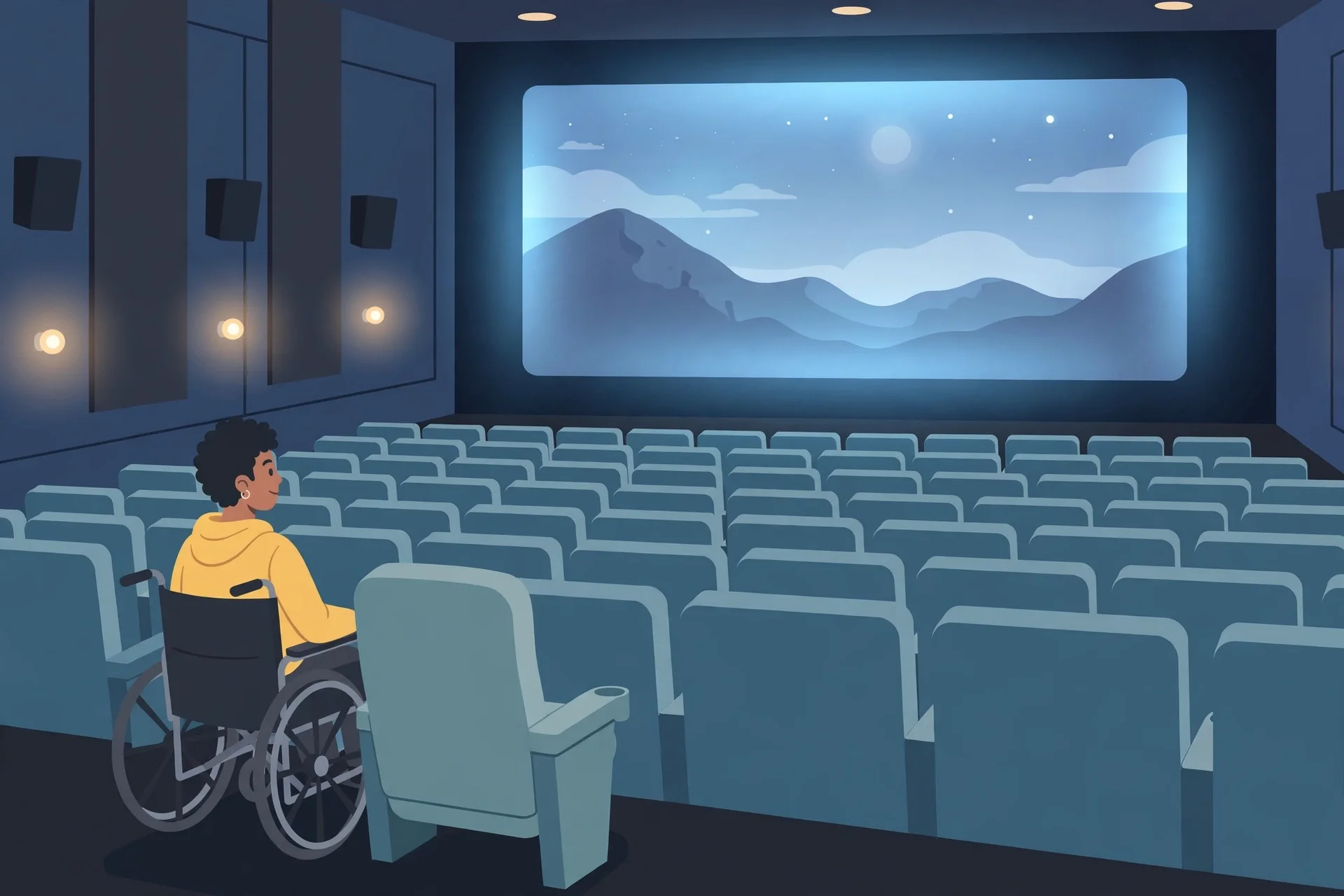
Most modern cinemas have wheelchair spaces, but the number, position and booking method differ from site to site. Before you book, check whether the wheelchair space is on the flat stalls level or reached by lift, whether a companion seat can be booked directly beside it, and whether the screen has step-free access from the entrance. Some cinemas only release wheelchair spaces by phone or at the box office, even when standard seats are sold online, so if the website will not let you select a wheelchair space, call the cinema rather than assuming the screening is full. Ask about accessible toilets on the same level as your screen, and about parking and drop-off, because a cinema with a wheelchair space but no nearby accessible toilet is only half accessible.
The CEA Card and companion tickets
The CEA Card is a UK-wide scheme run for cinemas by the UK Cinema Association. It is one way for participating cinemas to make sure reasonable adjustments are made for disabled guests, and it includes a free ticket for someone to go with you. Northern Ireland government guidance notes that cards cost 6.50 pounds and are valid for one year, and that even if a cinema does not take part in the scheme, it is worth asking whether it offers reduced or free admission for a carer or assistant. Eligibility is based on receiving certain disability-related benefits or registrations, and proof is required when you apply. Apply well before the film you want to see, because processing takes time and the card is not issued instantly at the cinema.
Theatre seating: older buildings, different rules
Theatres are often harder to access than cinemas because many occupy older buildings, and seating arrangements vary much more. Some theatres run their own access schemes with discounted tickets and reserved wheelchair spaces, while others handle access bookings only through the box office. When you book, ask where the wheelchair spaces are in relation to the stage, whether the view is affected by standing audiences, how you reach the space step-free, and what happens in an evacuation. If you use an assistance dog, tell the theatre in advance so staff can offer the most suitable seating. Book early for popular shows, because wheelchair spaces are limited and are often sold before standard seats. If a theatre cannot offer a suitable space, ask whether it can suggest an alternative performance or a different seating arrangement rather than accepting a poor view.