Applies to England; specialist services vary by local area. Figures and phone numbers as published by the services on 1 November 2026.
Start with the practice you already use
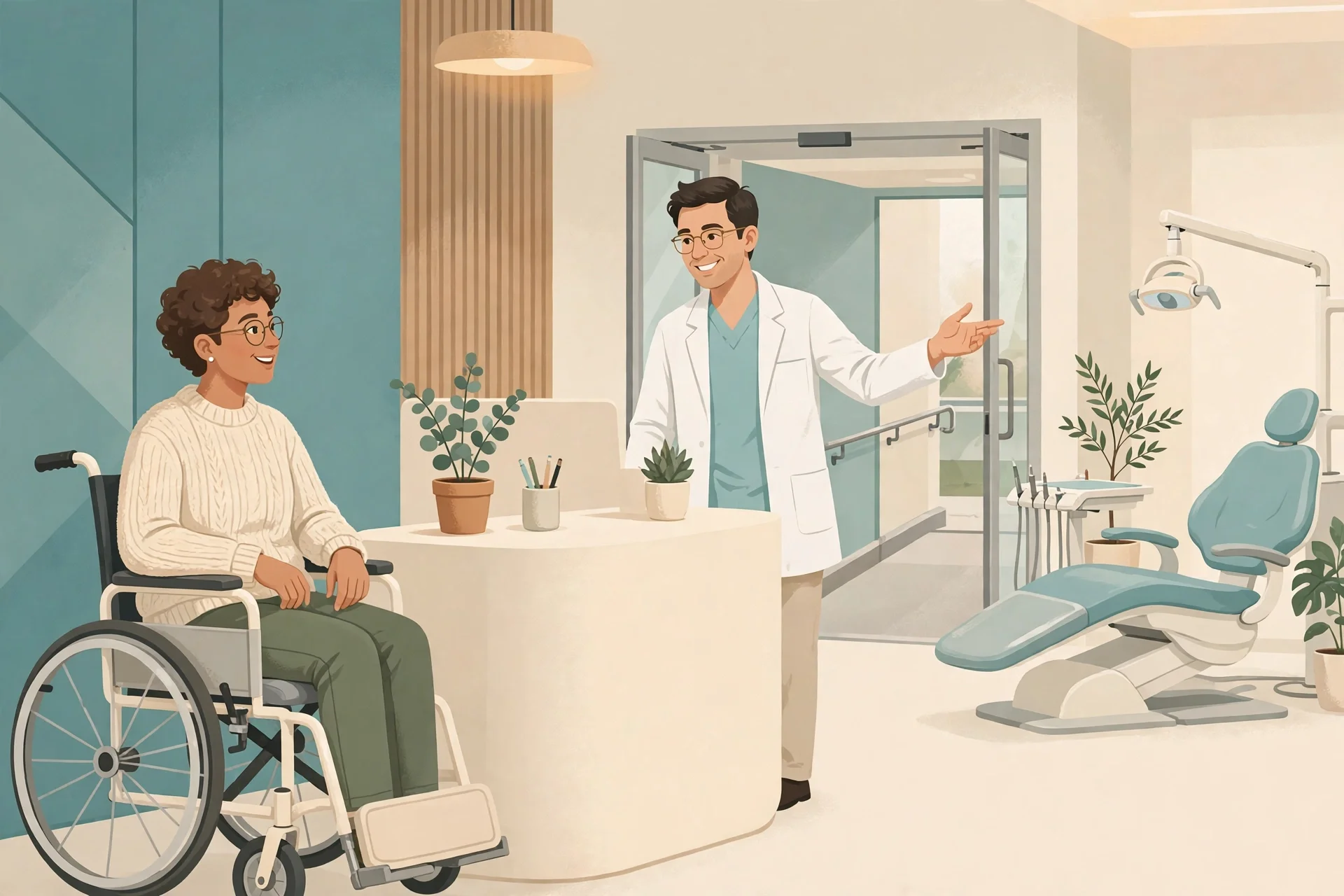
If you already have a dentist, start there. Many practices list step-free access, accessible toilets and wheelchair access throughout their premises on their NHS service pages, and some list dental treatment using a wheelchair recliner as a facility. Before booking, it is worth asking four practical questions: is the surgery step-free from the street to the treatment room, is there an accessible toilet, can treatment be given while you stay in your wheelchair or with a recliner, and is there somewhere to wait that works for you. The answers decide whether a routine visit is straightforward or whether you need a different setting. If the practice cannot meet your needs, ask the dentist to refer you on rather than simply accepting that treatment is out of reach.
When a specialist service is the right route
Gloucestershire's specialist dental service says all of its clinics are wheelchair friendly, but notes that it may be necessary to book an appointment at an alternative location to access specialist equipment such as a wheelchair recliner or a bariatric dental chair. Its checklist for eligibility includes being unable to weight-bear or transfer to a dental chair, needing a risk assessment or specialist equipment, and needing help to communicate or to maintain oral hygiene. Northamptonshire's adult specialist service describes the same shape of service: specialists in special care dentistry for adults who cannot visit a general practice because of physical disability, learning disability, severe mental health problems, complex medical needs or social vulnerability, using mobility aids, dental sedation and home visiting options. Both services accept referrals from general dentists and other healthcare professionals, and Northamptonshire also allows patients to self-refer if they meet its criteria.
High-street practice or specialist service: how they compare
The two routes differ in how you get in, what equipment is available, and how long the wait may be. The table below summarises the practical differences described by the two services.
| | High-street practice | Specialist dental service | | How you book | Directly, as any patient | Usually by referral from a dentist, GP or healthcare professional; some services accept self-referral | | Equipment | Varies by practice; some offer a wheelchair recliner | Specialist equipment such as wheelchair recliners and bariatric chairs, plus sedation options | | Home visits | Rare | Offered by some services, for example Northamptonshire's home visiting options | | Best for | Routine check-ups when access and transfer are manageable | People who cannot transfer, need specialist equipment, or need communication support |
Neither route is a promise of a particular outcome: Northamptonshire states clearly that it cannot accept patients simply because they cannot register with a normal dentist, and that each referral is assessed against its criteria.
What to do if you are stuck
If you cannot find a dentist at all, Northamptonshire's service points people to NHS England's Customer Contact Centre on 0300 311 2233 or NHS 111 for urgent care, and notes that local dentists are listed on the NHS website. Gloucestershire's service can be contacted on 0300 421 8100. When you do get an appointment, bring a short note of what you need: how you transfer, whether you can weight-bear, what equipment helps, and how you communicate pain or consent. Putting that in writing before the visit gives the practice time to set up the right room and equipment, and it gives you a record of what was agreed. If a practice says it cannot treat you, ask for the reason in writing and for a referral to the specialist service, so the next step is a referral rather than a dead end.