Skip to content
HomeGuidesdaily living
Guides / DAILY LIVING

Wheelchair-Accessible Libraries: In-Branch Help, Large Print and Free Home Delivery

Libraries are one of the most accessible public services in the UK, and they offer far more than step-free shelves. Every Brighton and Hove library is wheelchair accessible, Bristol libraries all carry large print books and accessibility software, and both cities run free home delivery for residents who cannot get to a branch. This guide explains what to expect in the building, what you can use from home, and how to set up delivery if visiting in person is difficult.

Wheelchair-Accessible Libraries: In-Branch Help, Large Print and Free Home Delivery

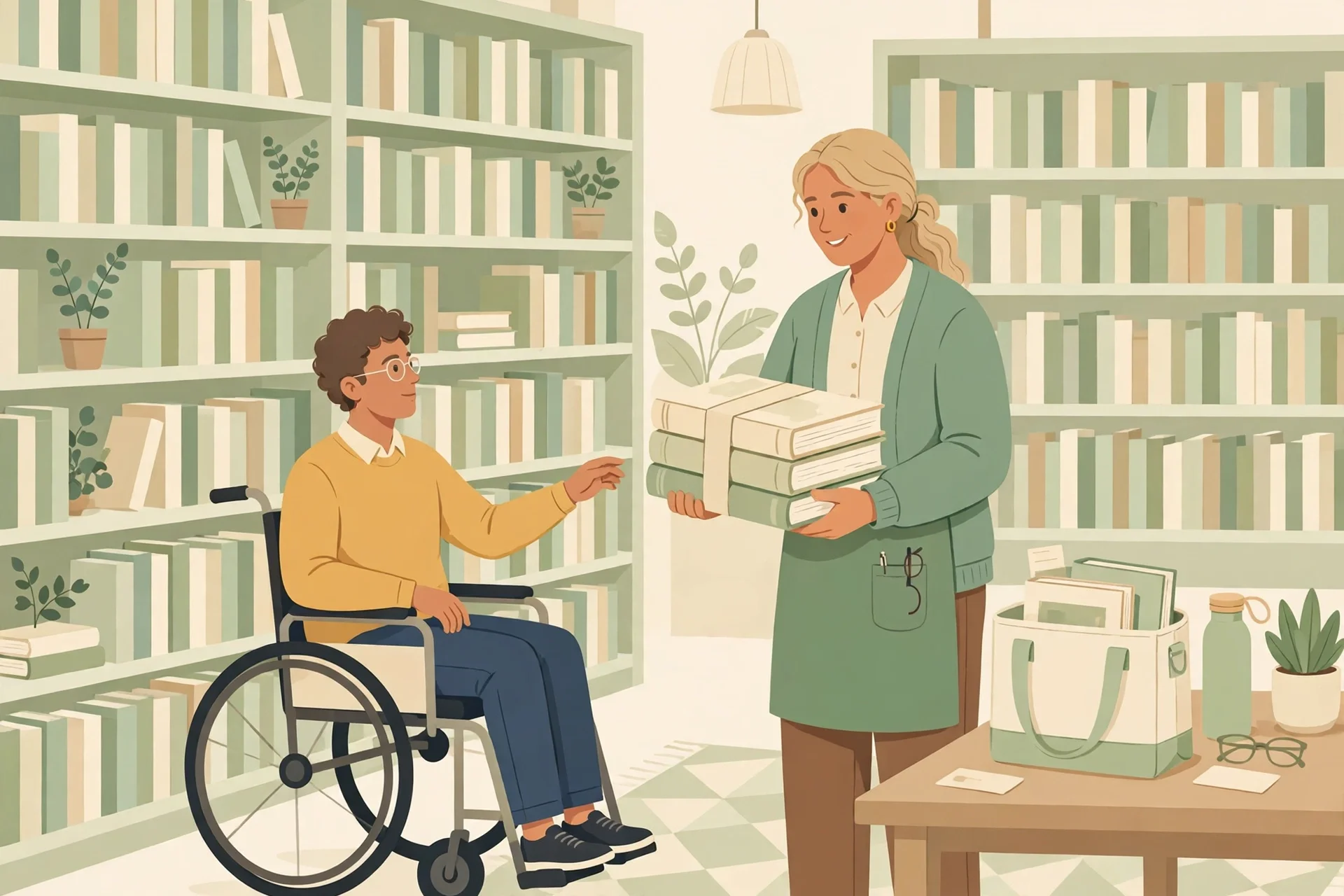
Illustration of a wheelchair user browsing library shelves while a librarian hands over a stack of large-print books.

Examples from Brighton and Hove and Bristol library services, checked 1 November 2026; other councils run equivalent services with local details.

Inside the library: what is already in place

Brighton and Hove states that all of its libraries are wheelchair accessible, that assistance dogs are welcome, and that adjustable desks and accessible keyboards and mice are provided for PCs in all libraries. It also offers virtual tours of its libraries so you can familiarise yourself with the layout before you visit, which is worth doing if you want to check where the accessible toilets, desks and shelving are. Bristol libraries all stock large print books and Reading Well titles recommended by health experts and people with lived experience, and their computers carry Microsoft Ease of Access tools including magnifier, text-to-speech narrator, on-screen keyboard, language options and high contrast. For blind or visually impaired readers, Brighton and Hove offers an Access library card with a longer loan period and free audiobook loans and reservations, plus a free e-library of e-books, newspapers and magazines with adjustable font sizes.

If you cannot get to a branch: home delivery

Both cities run a free home delivery service for residents who cannot reach a library because of health, mobility, disability or caring responsibilities. In Brighton and Hove the service delivers to residents who are unable to get to libraries, and a separate quarterly Book Box service supplies residential units and care homes with large print and standard print books, talking books on CD, jigsaw puzzles and reminiscence items. In Bristol the home library service is run with the Royal Voluntary Service: volunteers deliver books chosen around your tastes, and the service notes that volunteers can also provide a useful check on your safety and wellbeing. You can be referred or self-refer, using the online request form or the service email address. The key difference from an ordinary loan is that you do not need to carry anything home or return items yourself; delivery and collection are part of the service.

A checklist before your first visit or delivery

First, check your own council library pages, because the details above are Brighton and Hove and Bristol, and other councils run their own versions. Second, ask about a card that fits your needs: an Access card for longer loans and free audiobooks, or an exempt card if planning and organising tasks is difficult. Third, if you visit in person, look at the virtual tour or call ahead to confirm the accessible desk and toilet locations. Fourth, if you want home delivery, say what formats you prefer, large print, standard print or audio, and whether you want a volunteer to choose for you or to request specific titles. Libraries are free, the delivery services described here are free, and asking for adjustments costs nothing, so there is no reason to wait until a visit becomes a problem.
Sources & further reading

How our libraries support people with sensory needs and disabilities - Brighton and HoveAccessible library services - Bristol City Council

Our editorial approach

CONTINUE EXPLORING

A little more useful reading.

Wheelchair Access at Places of Worship: Seating, Toilets and a Warm WelcomeGUIDES

Wheelchair Access at Places of Worship: Seating, Toilets and a Warm Welcome

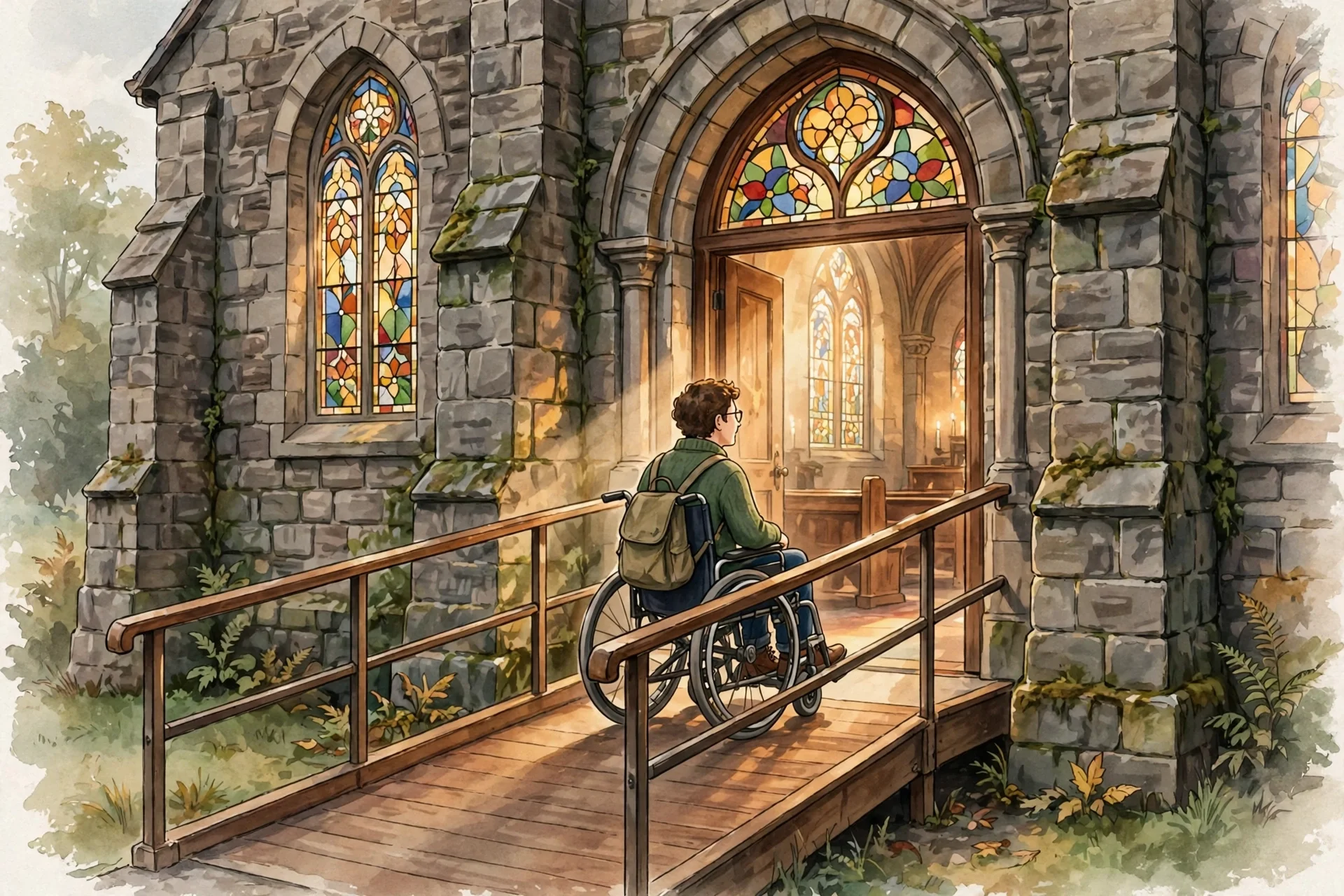
A place of worship can be welcoming in spirit and still hard to use in practice: the entrance may be step-free while the seating puts you alone at the back, or the service may be accessible while the toilet is not. Church of England guidance describes reasonable adjustments including step-free access, accessible toilets, hearing loops and clear signage, and a recent Parish Accessibility Fund offers small grants of up to £5,000 for practical improvements. This guide turns that picture into checks for your first visit to any church, mosque, synagogue, temple or meeting house.

Read the guide
Access to Work for Wheelchair Users: What It Can Pay For and How to ApplyGUIDES

Access to Work for Wheelchair Users: What It Can Pay For and How to Apply

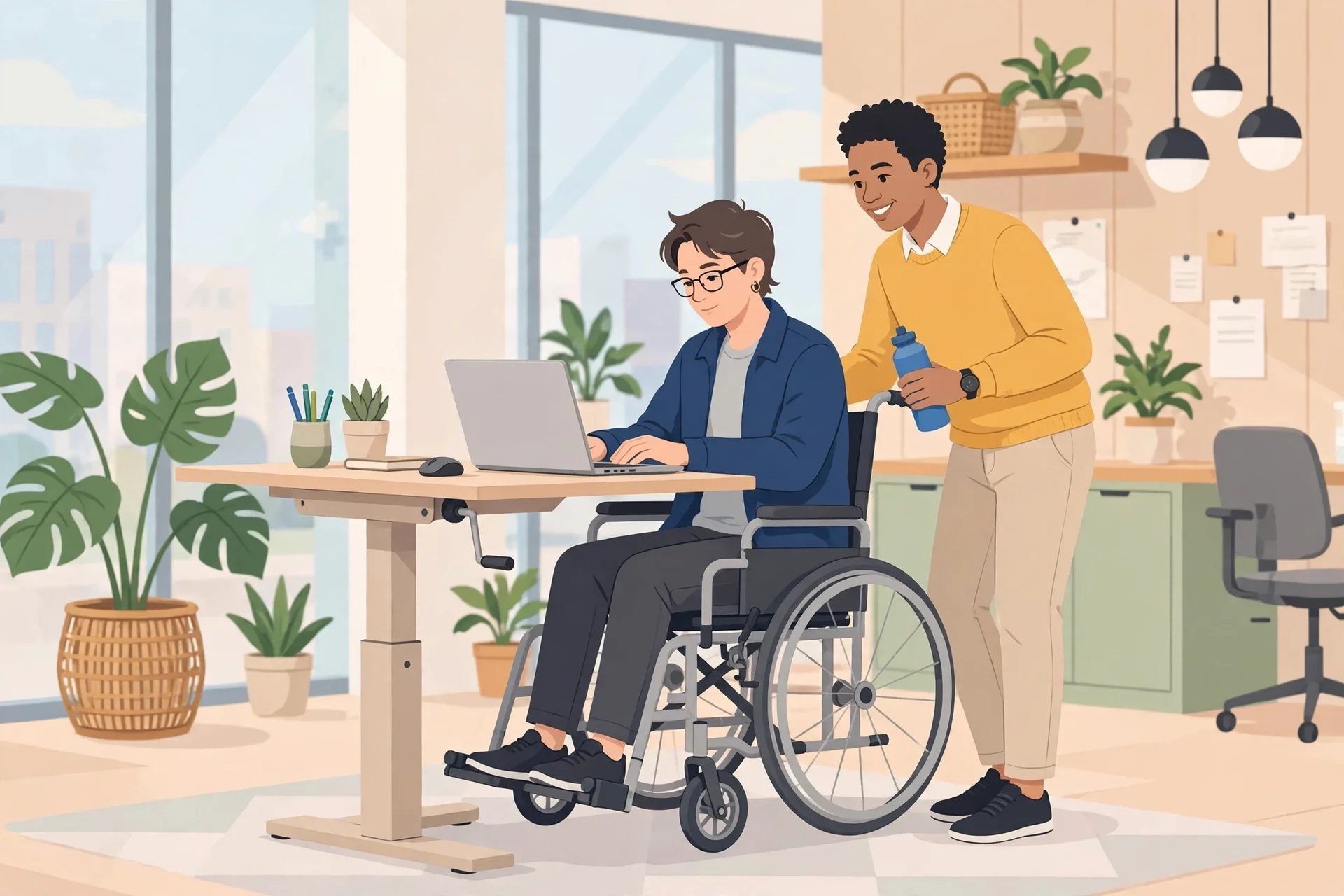
If a disability or health condition means you need extra support to do your job, Access to Work may help with costs that go beyond what your employer is expected to provide. This guide explains who can apply, what kind of support is covered, and what to have ready when you contact the scheme, so you can apply with a clear picture rather than guesswork.

Read the guide
AccessAble's Accessibility Guides: How to Read Them and Plan a Trip Without the Phone CallsGUIDES

AccessAble's Accessibility Guides: How to Read Them and Plan a Trip Without the Phone Calls

AccessAble publishes free, surveyor-verified Detailed Access Guides for thousands of UK venues – not ratings or reviews, but measured facts, photographs and step-by-step descriptions of the whole visit, from parking to toilets. Used well, a guide answers the questions you would otherwise spend hours phoning venues to ask. This guide explains how to read one, how to use the symbols and filters to match your own needs, and where the limits of any access guide lie.

Read the guide