UK restaurants. Venue details from Euan's Guide and CSPA guidance checked 2026-10-25; individual restaurants set their own layouts and booking methods.
In brief
- Ask about entrance, route, table, toilet and parking before booking
- Good access pages describe each step of the visit, not just the word accessible
- Write down who confirmed what, and raise gaps on the night
The five questions to ask before you book
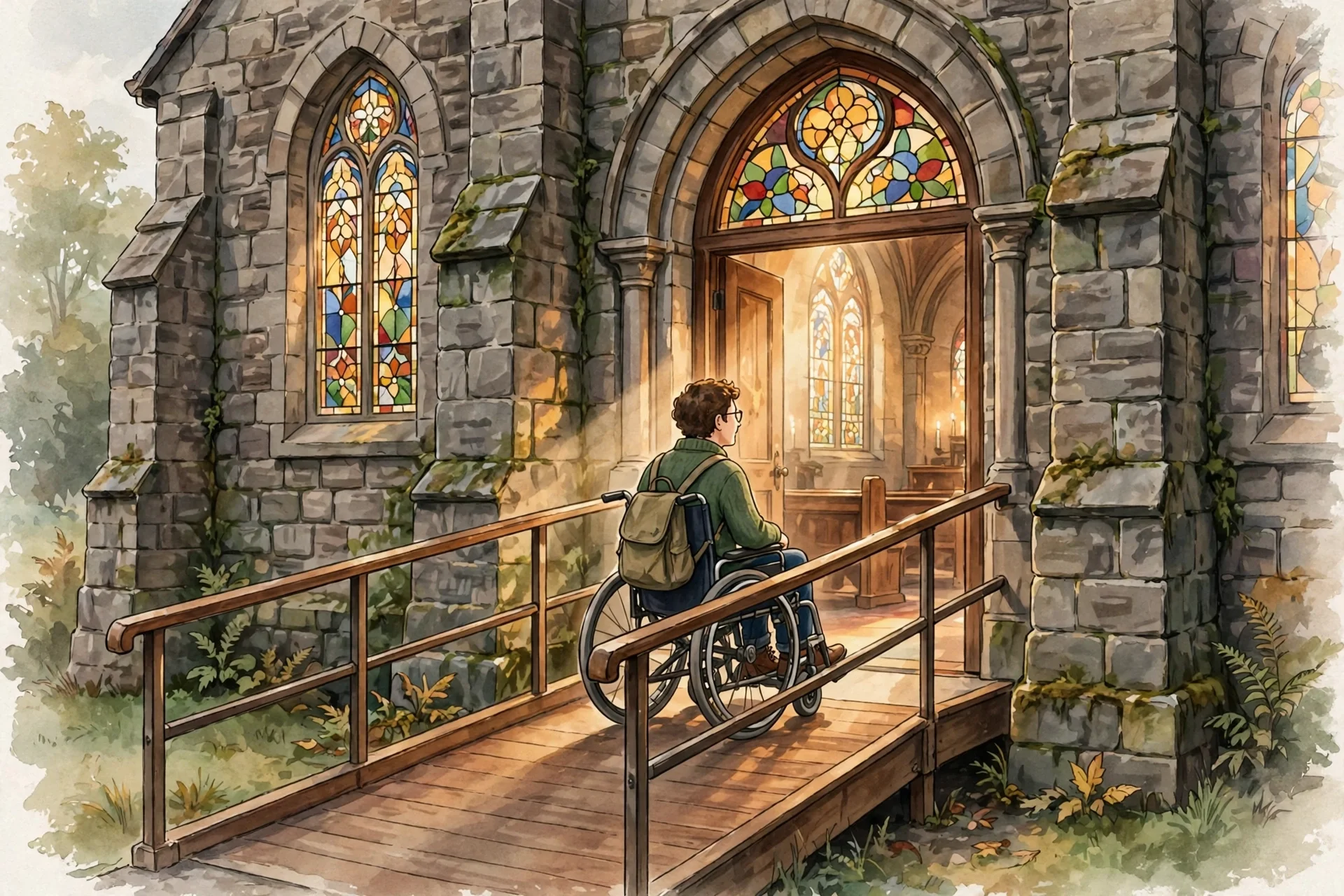
Ask about the entrance first: is there step-free access, or is there a step with a lift or ramp nearby? Then ask about the route to the table: are there internal steps, and is there a lift if the dining room is on another level? Third, ask about the table itself: can you roll under it, or will you need to transfer, and can the restaurant keep a suitable table free? Fourth, ask about the toilet: is there an accessible toilet on the same floor as your table, and is it unlocked or RADAR locked? Fifth, ask about parking and drop-off: where can a car stop safely, and how far is it to the entrance? Write down the answers and the name of the person who gave them, because access details change when a restaurant rearranges its layout.
What good access information looks like
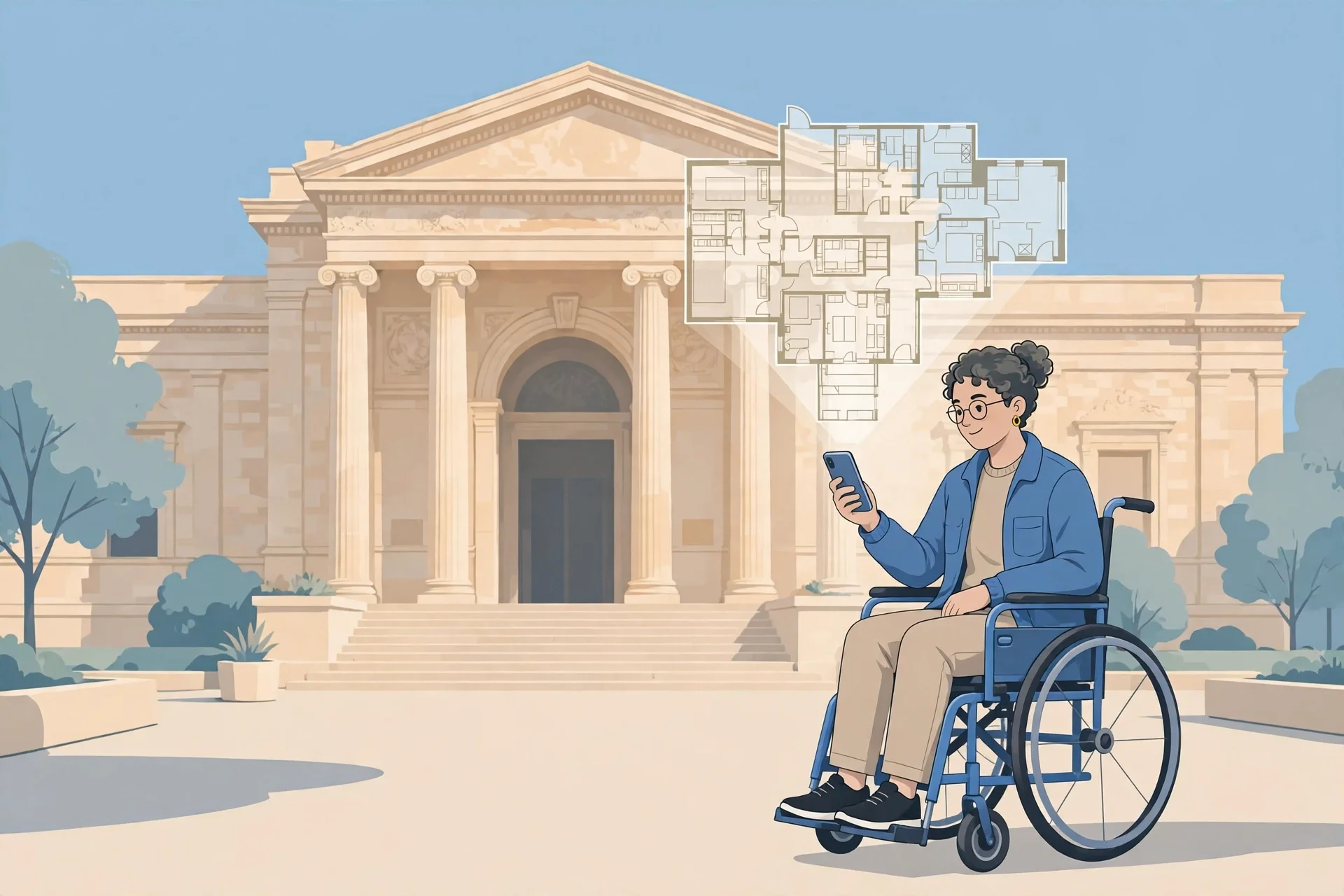
Good venue access pages describe the entrance, the route, the toilets and the seating in plain terms, rather than simply saying accessible. The Wardrobe in Leeds, for example, publishes that its main entrance has steps but a step-free alternative is available via the venue entrance, that the main bar is accessible except for two raised stage areas, that a lift behind the box office serves the venue, and that gender neutral access toilets are available on both floors. That level of detail lets you judge whether the venue works for you before you travel. When a restaurant page gives no detail, treat it as unconfirmed and call. Visitor reviews on access listing sites can fill gaps, but check the date of the review, because layouts and ownership change.
On the night: arrival, seating and the table itself
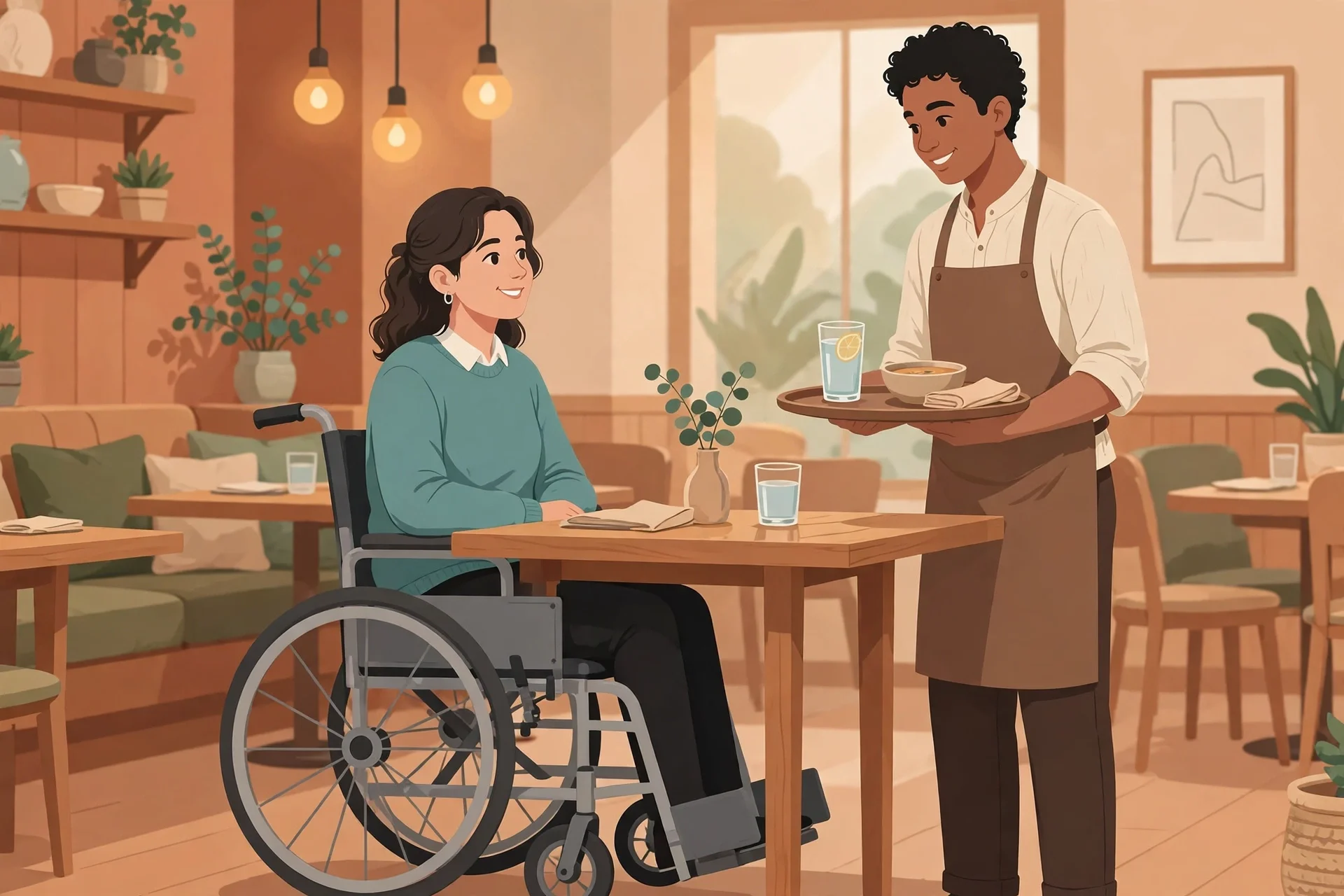
Arrive a little early so staff can seat you before the room fills, and confirm your booking notes the wheelchair space and any table requirements. Check the table height and the space beneath it: a table with a central pedestal is often easier than one with four legs close together, and a table that is too low or too high can make a meal uncomfortable. If the table does not work, ask to move rather than struggling through the meal. Tell staff if you need a particular chair removed or a different chair brought, and if you use an assistance dog, confirm in advance where the dog can settle. If the restaurant cannot meet the access needs it confirmed, say so politely at the time and follow up in writing afterwards.
If access fails: what to do next
Keep your booking confirmation and any notes from your earlier call, because they show what was promised. Raise the problem with the manager on the night if you can, and keep it factual: which step, which table, which toilet. Afterward, a short written note to the restaurant helps future visitors more than a vague complaint, because it gives the venue something specific to fix. You can also add a dated review to an access listing site, describing the entrance, the route, the table and the toilet separately, so other wheelchair users can judge for themselves. If a restaurant repeatedly advertises access it does not provide, that pattern matters more than a single bad night.
A reusable booking script
Try this on the phone: I use a wheelchair and I would like to book a table. Is your entrance step-free? Is there a step-free route to the dining area? Can I roll under the table, and can you keep a suitable table for us? Is there an accessible toilet on the same floor? Where can we park or be dropped off? Short, specific questions get specific answers, and they signal to the restaurant that access is part of the booking, not an afterthought. If the person answering cannot answer, ask to speak to a manager or to be called back, and do not rely on a guess.